/dqc/media/agency_attachments/2026/08/21/2026-08-21t061716244z-dq-channels-logojpg-2026-08-21-11-47-17.jpeg)

/dqc/media/media_files/2026/09/10/dq-channels-whatsapp-2026-09-10-17-07-48.png)

 Follow Us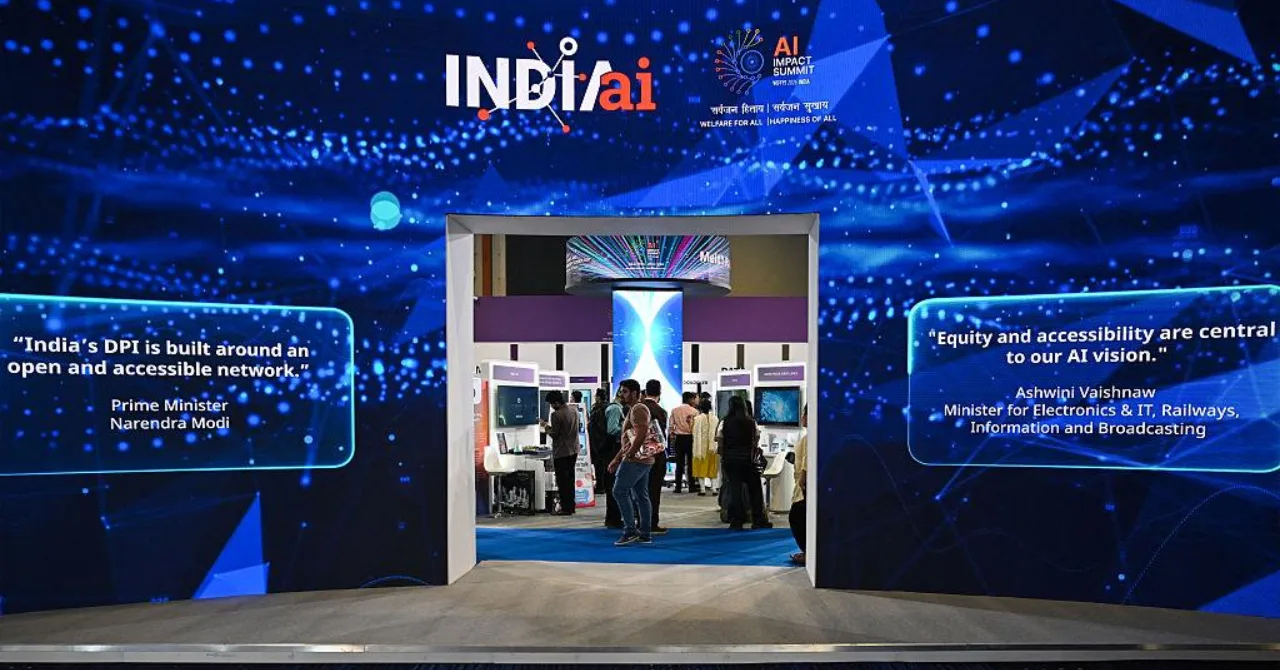
Away from the cameras and the crowd control chatter, something more important was unfolding. Enterprise India was recalibrating its AI expectations.
The AI Impact Summit became a reality check for CIOs, Cloud leaders and business heads who have moved past experimentation.
The industry voice: Discipline over drama
Shailesh Dudani, Senior Vice President & BU Head Sales, CMS IT Services, captured the mood succinctly:
“As the conversations at the India AI Impact Summit gain momentum, one theme is becoming increasingly clear for enterprise and cloud leaders: AI’s real value lies not in experimentation, but in disciplined execution at scale.
Across enterprises, AI is now moving from innovation labs into core business processes, reshaping customer experience, modernising operations, and enabling data-driven decision-making. However, industry discussions also highlight a critical gap between ambition and readiness. Challenges around data quality, legacy integration, security, and responsible AI governance continue to slow enterprise adoption.
What stands out from this Summit is the growing consensus that cloud-first architectures, strong operating models, and accountable leadership will determine whether AI delivers measurable ROI or remains a strategic aspiration. The shift from ‘AI action’ to ‘AI impact’ will require enterprises to align technology, talent, and trust at scale.
The next phase of AI leadership will belong to organisations that treat AI not as a trend, but as a long-term business capability built with purpose, responsibility, and outcomes in mind.”
That’s not marketing language. It’s operational pressure speaking.
What enterprises are really grappling with
Across panels and closed-door sessions, five themes dominated:
1. Production over pilots
AI is moving more into predictive maintenance, fraud detection, customer service automation, and real-time analytics. But scaling exposes weaknesses. Legacy systems resist integration. Data silos refuse to cooperate.
2. ROI scrutiny
CFOs are watching. Enterprises are being forced to link AI initiatives to measurable business outcomes - Revenue growth, Cost reduction, Risk mitigation, Efficiency gains. The era of open-ended experimentation is ending.
3. Governance gaps
Responsible AI is now a board discussion topic. Yet many organisations still lack Internal audit frameworks, clear model accountability structures, and bias monitoring systems. Trust is not automatic. It must be designed.
4. Vendor concentration risk
Many AI deployments rely heavily on a limited set of Cloud and AI platform providers. That creates exposure for pricing power imbalance, data sovereignty concerns, and Limited architectural flexibility. Enterprises are beginning to question how diversified their AI stack really is.
5. Talent strain
AI architects, data engineers and governance specialists are in short supply. Meanwhile, mid-level operational roles face automation pressure. The talent equation is shifting fast. And not everyone is prepared.
Basant Mehta, CEO, BlueBell Computers, shared his insights, "Artificial Intelligence (AI) is no longer a concept confined to science fiction; it is a transformative force shaping the modern world. From smartphones to self-driving cars, AI has become deeply integrated into our daily lives. As technology continues to advance, AI is poised to redefine industries, economies, and human potential. For these reasons, AI is not just a part of the future, it is the future.
One of the most significant impacts of AI is in the field of healthcare. AI-powered systems can analyse vast amounts of medical data faster and more accurately than humans. AI also assists doctors in diagnosing illnesses, personalising treatments, and even performing robotic surgeries with greater precision. As research continues, AI could help cure diseases that were once thought incurable.
In education, AI is transforming how students learn and teachers teach. Platforms powered by AI can personalise lessons according to each student's strengths and weaknesses. This personalised approach makes learning more efficient and accessible, especially for students in remote areas. In the future, AI could make high-quality education available to everyone, regardless of location or economic background.
AI is also revolutionising industries and the global economy. Automation powered by AI increases productivity, reduces costs, and creates new job opportunities in emerging fields like data science and machine learning. Although some fear job displacement, history shows that technological revolutions often create more opportunities than they eliminate.
Moreover, AI plays a critical role in addressing global challenges. It can analyse climate data to predict natural disasters, optimise energy usage, and support sustainable development. Governments and organisations worldwide are investing in AI research to tackle issues such as poverty, hunger, and environmental degradation. By processing massive datasets and identifying patterns beyond human capability, AI provides solutions that were previously unimaginable.
However, as AI continues to grow, ethical considerations must be addressed. Concerns about privacy, bias, and job displacement require responsible development and regulation. Governments, companies, and individuals need to collaborate in ensuring that AI is used ethically and for the benefit of humanity. Transparency, fairness, and accountability must guide AI innovation.
In conclusion, AI represents the next frontier of human progress. It enhances healthcare, transforms education, drives economic growth, and helps solve global problems. While challenges exist, the potential benefits of AI far outweigh the risks when managed responsibly. As we move forward into an increasingly digital age, one thing is clear: artificial intelligence is not merely shaping the future; it is the future."
The turning point
The summit marked a subtle but important shift. Earlier AI events focused on possibility. This one focused on accountability.
Enterprise leaders are no longer asking, “Can we deploy AI?”
They are asking:
Can we sustain it?
Can we govern it?
Can we measure it?
Can we trust it?
That shift from AI action to AI impact will define the next 24 months. For Indian enterprises and the wider SAARC ecosystem, the message is simple.
AI is infrastructure now. Infrastructure demands discipline. And discipline, more than enthusiasm, will determine who leads and who lags.
Read More: