/dqc/media/agency_attachments/2026/08/21/2026-08-21t061716244z-dq-channels-logojpg-2026-08-21-11-47-17.jpeg)

/dqc/media/media_files/2026/09/10/dq-channels-whatsapp-2026-09-10-17-07-48.png)

 Follow Us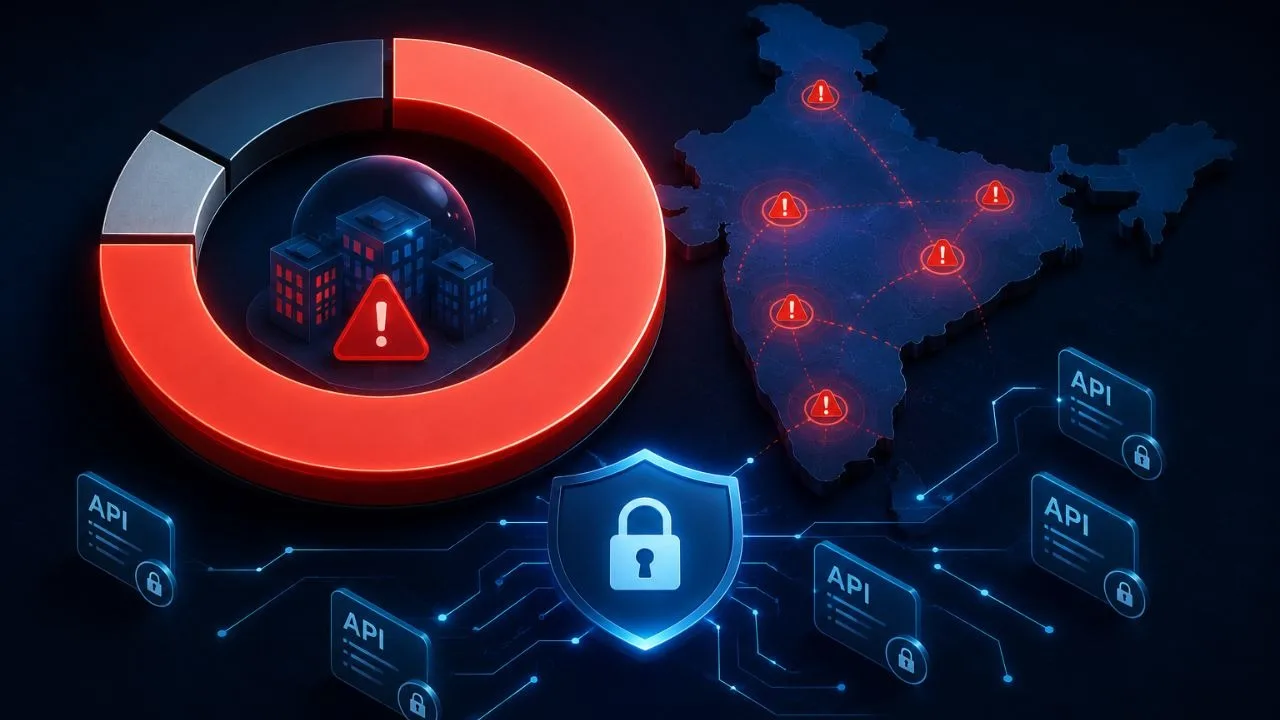
The latest Akamai API Security Impact Survey paints a worrying picture for enterprises rushing into AI adoption. Across Asia Pacific, companies are deploying AI-enabled applications faster than their security systems can keep up. The result is a growing wave of API security incidents India and other APAC markets are now struggling to manage.
The study found that 81% of organisations surveyed experienced an API security incident in the past 12 months. More striking is the financial impact. The average cost per incident has crossed US$1 million, almost doubling from last year’s figure of US$580,000. For businesses trying to scale digital services quickly, this points to a deeper operational challenge rather than just a cybersecurity problem.
India stood out sharply in the findings. Around 93% of organisations surveyed in the country reported at least one API security incident in the past year, placing India among the highest exposure markets in the region alongside Singapore.
AI systems are expanding faster than API security
The report suggests that APIs connected to AI technologies have become one of the weakest points inside enterprise infrastructure. Attacks involving AI applications, agents and large language models were identified as the most common incident type by 43% of respondents.
This shift matters because APIs now sit at the centre of modern AI systems. They connect applications, move data between environments and allow AI tools to operate at scale. But many organisations still lack basic visibility into those connections. Only 22% of respondents said they have a complete API inventory and know which APIs expose sensitive data.
That visibility gap is becoming more dangerous as enterprises experiment with Securing AI agents and LLM APIs. Without clear governance, businesses may struggle to track vulnerabilities, monitor data exposure or respond quickly when attacks happen.
Confidence gaps are quietly growing
The Akamai API Security Impact Survey also uncovered a disconnect between leadership confidence and operational readiness. While more than half of C-suite executives believed their organisations were prepared for API-related threats, fewer AppSec teams shared the same confidence.
The findings suggest many enterprises are discussing compliance and governance at a strategic level without fully embedding API protection into development workflows. Only 19% said security testing is fully integrated across the API software development life cycle and CI/CD pipelines.
This is where API attack surface management tools and stronger discovery systems may become increasingly important. As APIs spread across cloud platforms, AI applications and edge environments, security teams will need clearer visibility and faster validation processes.
The larger takeaway is difficult to ignore. AI expansion may be accelerating digital innovation, but weak API governance is quickly becoming one of the biggest risks hiding underneath that growth.
Read More:
XProtect VMS ROI study reveals a bigger shift towards security
LTTS and Emerson partnership targets future-ready engineering
HP AI PC launch expands beyond traditional computing
Vehere and Redington partnership signals a bigger cybersecurity push