
How consumer tech brands must evolve to stay relevant in a saturated market

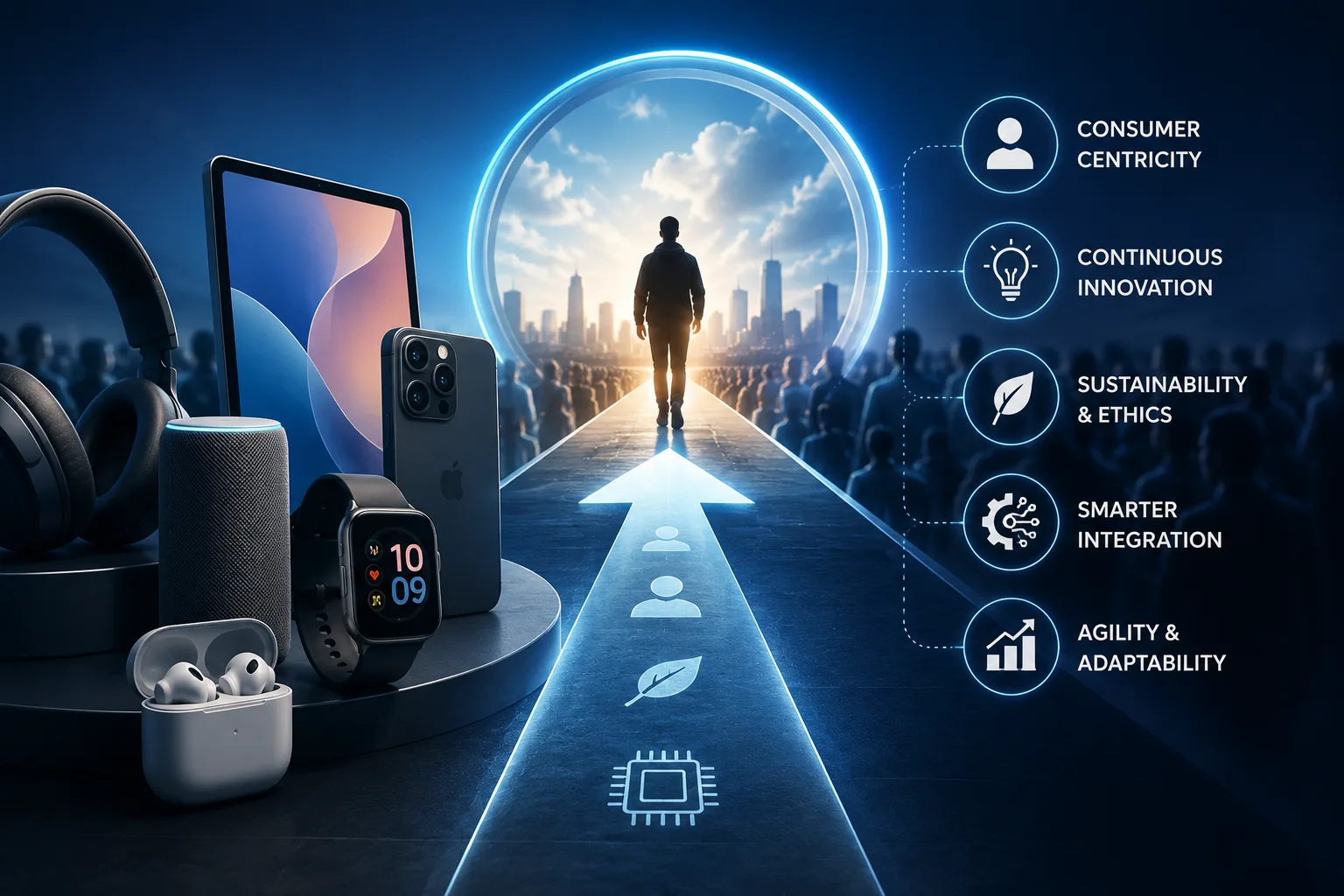
There was a time when launching a consumer tech product with a sharp feature or a competitive price point was enough to carve out meaningful market share. That time has passed. Today, nearly every category from true wireless earbuds to smart home devices is crowded with options that are technically competent, reasonably priced, and visually indistinguishable from one another. The question facing consumer tech brands is no longer how to build a better product. It is how to build a brand that people actually choose to stay with.
The feature race is a dead end
For years, product differentiation in consumer tech was driven by specifications. Faster processors, longer battery life, better cameras, thinner profiles. Brands invested heavily in engineering incremental improvements and marketing those improvements loudly. The problem is that when every brand pursues the same strategy, specifications become table stakes rather than differentiators. A consumer scrolling through options on an e-commerce platform today faces dozens of products with nearly identical feature lists and near-identical price points. Specification-led marketing no longer cuts through because the specification gap between brands has narrowed dramatically.
Research from Deloitte's Global Consumer Trends report consistently shows that consumers in saturated categories increasingly make purchase decisions based on brand trust, user experience, and perceived values alignment rather than raw product capability. The implication for consumer tech brands is significant. The battleground has shifted from the product page to the relationship.
Experience is the new product
The brands gaining ground in saturated consumer tech markets share a common characteristic. They obsess over the complete experience rather than individual product moments. Unboxing, setup, daily use, customer support, software updates, and even the return process all form part of what the customer actually experiences. A technically superior product delivered through a frustrating customer journey loses to a slightly less impressive product that feels effortless to own.
Apple built its sustained dominance in consumer electronics less on specification leadership and more on ecosystem coherence and experience consistency. Customers stay not because each individual Apple product is objectively superior but because the overall ownership experience is seamlessly connected and reliably pleasant. Smaller brands that cannot match Apple's scale can still apply the same principle at their level by designing every customer touchpoint with the same intentionality they apply to the product itself.
Trust, transparency, and the sustainability imperative
A younger generation of consumers is bringing a different set of expectations to their purchasing decisions. Brand values, environmental responsibility, and supply chain transparency have moved from niche concerns to mainstream evaluation criteria. A 2023 IBM Institute for Business Value study found that nearly half of global consumers say they pay a premium for brands that demonstrate environmental sustainability credentials.
For consumer tech brands, this creates both a challenge and an opportunity. Electronics manufacturing carries a significant environmental footprint, and consumers are increasingly aware of that reality. Brands that address it honestly, through repairability programmes, recycled materials, extended software support that delays device obsolescence, and transparent sustainability reporting, build a form of trust that specification sheets simply cannot generate. Those that ignore it face growing scrutiny from both consumers and regulators.
Community and belonging as competitive advantage
The consumer tech brands that have built the most durable loyalty have done something that goes beyond product and experience.
They have created communities where ownership feels like membership. GoPro's relationship with its action sports community, Nothing's cultivation of a design-literate audience, and Sonos's engagement with audiophile communities all demonstrate that when a brand successfully connects its users to each other around shared interests or identities, retention becomes significantly more organic.
This is not about running social media campaigns. It is about genuinely understanding who your customers are, what they care about beyond your product, and building spaces, physical or digital, where that identity is reflected and celebrated.
The path forward
Relevance in a saturated consumer tech market is not achieved through a single strategic move. It is built through consistent decisions across product design, customer experience, brand communication, and community building that collectively signal to the customer what a brand actually stands for.
Brands that continue treating saturation as a pricing problem will find themselves in a permanent margin war with no clear exit. Those that treat it as a relationship problem, and invest accordingly, will discover that in crowded markets, genuine connection is the scarcest and most valuable resource of all.
Written By - Lalit Arora, Co-Founder of UBON
Read More:
Why AI governance is becoming the biggest opportunity for cybersecurity partners
AI Channel Partners: Why Advisory Services Will Define the Next Growth Phase
AWS AI Strategy: Praveen Sridhar on Partner Growth
The missing layer in enterprise AI: Why data trust is becoming the new priority








 2 Min read