
Data Lineage Matters in the Age of AI, and Graphs Make It Possible

India’s advancement in artificial intelligence (AI) is evident. Companies across banking, telecom, retail, manufacturing, and the public sector are using AI in important decision-making processes. From detecting fraud and optimising supply chains to personalising citizen services, AI is moving steadily from experimentation to production at scale. As adoption deepens, however, a more fundamental question is emerging: can we fully trust the outputs we are generating?
The answer increasingly depends on data lineage, the ability to understand where data originates, how it moves across systems, how it transforms, and how it ultimately informs decisions.
When More Data Doesn’t Mean More Clarity
India’s digital ecosystem is expanding at an extraordinary speed. Studies from the IT industry’s trade body NASSCOM suggest an ongoing increase in digital adoption across sectors. At the same time, initiatives supported by the Ministry of Electronics and Information Technology continue to enhance digital public infrastructure, linking enterprises and citizens at scale.
Modern architectures span cloud, on-prem, SaaS, and streaming systems. Capturing end-to-end lineage across all these tools is complex and often incomplete. All these public and private initiatives have led to a rapid proliferation of data, much of which remains siloed across disparate systems and environments. The result is a data-rich environment. Yet abundance can create fragmentation. Data sets are stored in diverse forms, owned by separate teams and processed through multiple transformation stages before reaching AI models. When insights are developed, retracing the exact route that led to a choice can be difficult. In regulated industries, that opacity creates risk. In fast-moving markets, it slows confidence.
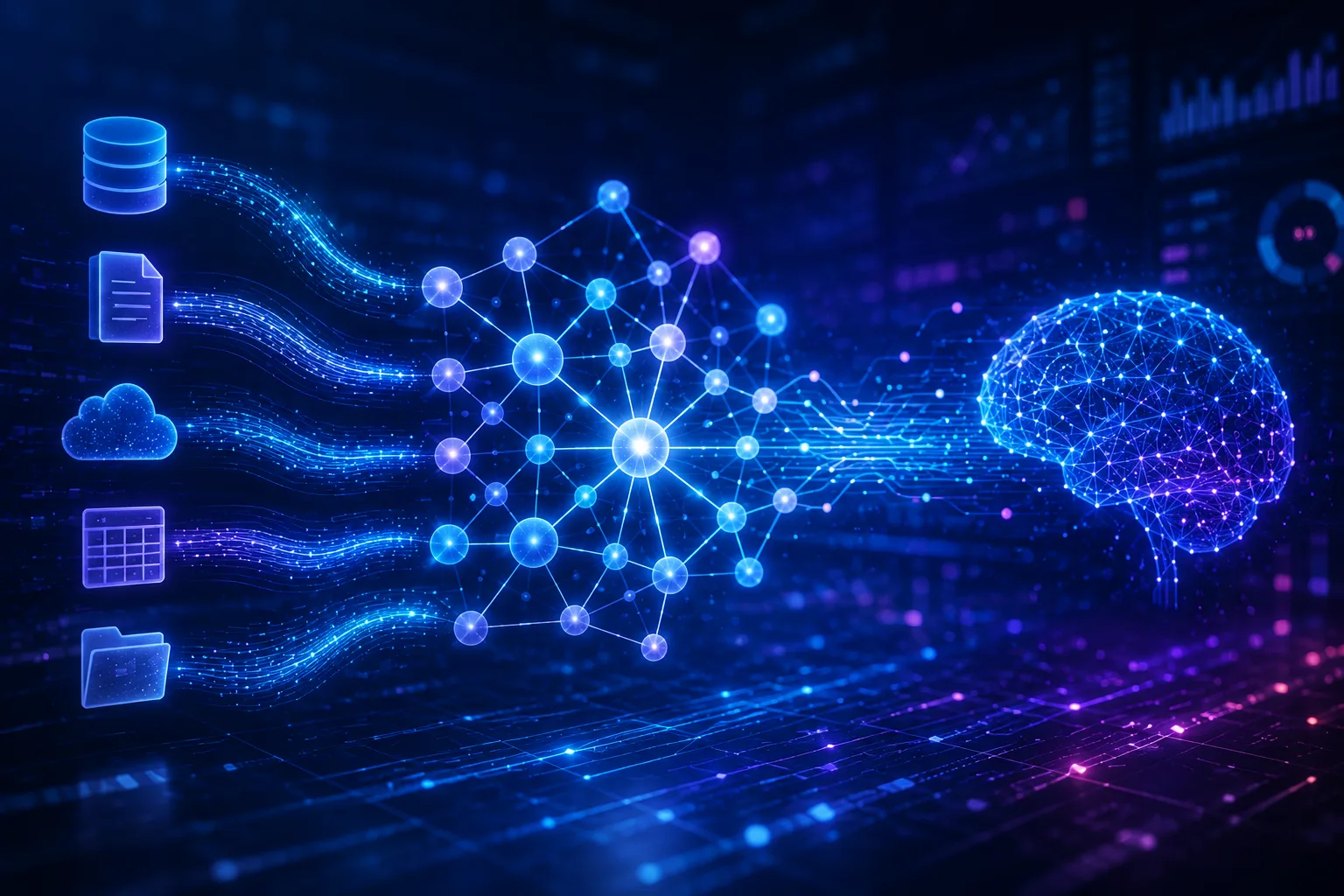
Data lineage provides the missing thread, allowing us to trace how data moves from its source to transformation and finally to insight. Without this, AI systems risk becoming black boxes. Data lineage enables impact analysis, reliable migrations, data trust, faster troubleshooting, governance, compliance, and high-quality analytics.
Neo4j uses a graph-based approach to unify fragmented metadata, model complex relationships, and deliver scalable, end-to-end lineage with real-time visibility and faster insights.
AI Decisions and their Hidden Complexity
AI doesn’t work effectively with isolated data points. A fraud detection system examines patterns across accounts, devices, regions, and transaction histories. A supply chain optimisation engine connects logistics data with supplier performance and demand signals. Similarly, a customer personalisation model relies on behavioural history, environmental context, and third-party inputs. In all cases, decisions are shaped by the relationships between these different data points.
Traditional relational databases store records effectively, but they aren't built to represent and navigate complex networks of connected entities. As organisations try to scale AI across
departments, this limitation becomes clearer. When issues such as biased outputs, inaccurate forecasts, or compliance queries arise, tracing the chain of dependencies can take a lot of time and often lacks clarity.
In the age of generative AI, where models create responses from various knowledge sources, the need for clear context is more important than ever. Insights from firms like EY emphasise that governance and understanding are essential for responsible AI use.
Seeing the System as a Network
Graph technology provides a fresh approach to data architecture. Instead of relying solely on tables, graph databases represent entities and their relationships. This reflects how businesses and economies work as interconnected systems rather than isolated components.
With graph platforms, organisations can track how datasets connect across systems and over time. They can observe how data enters models, what changes occur along the way, and how outputs relate to later processes. Lineage becomes clear, easy to navigate, and actionable, rather than buried in documentation.
This relationship-focused approach builds trust. It helps teams quickly find the root cause of issues when they occur. It also prepares them for audits. Teams can see how a change in one dataset or pipeline affects the bigger picture. Most importantly, it bases AI systems on a connected context instead of separate pieces.
This emphasis on relationships builds trust. It helps identify root causes more quickly when problems arise. It also supports audit readiness and helps teams understand the wider effects of changes in a dataset or pipeline. Most importantly, it keeps AI systems based in a connected context rather than isolated fragments.
Trust as the Real Differentiator
India’s digital economy is inherently interconnected, spanning digital payments networks, multilingual consumer platforms, cross-border trade ecosystems, and millions of MSMEs integrated into formal systems. As AI becomes embedded in these networks, the stakes increase. Decisions influenced by algorithms can affect credit access, supply chain resilience, and customer experiences at a national scale.
Competitive advantage will not come from deploying AI alone. It will come from deploying AI that is explainable, traceable, and resilient. Data lineage provides that foundation.
In the coming years, companies that see lineage as a key skill rather than just a compliance requirement will be better positioned to innovate with confidence. Graph technology enables this change by revealing the connections that already exist within complex data ecosystems.
In the age of AI, the ability to connect the dots is powerful. The ability to trace them is transformative.
Written By - Suhail Gulzar, Senior Manager, Solutions Engineering, Neo4j
Read More:
Salesforce Partners: Why AI is changing the channel opportunity
Warranty under pressure: Nehru Place channel raises questions







 2 Min read