
Siliconops bets on managed services, Sovereign Cloud and AI

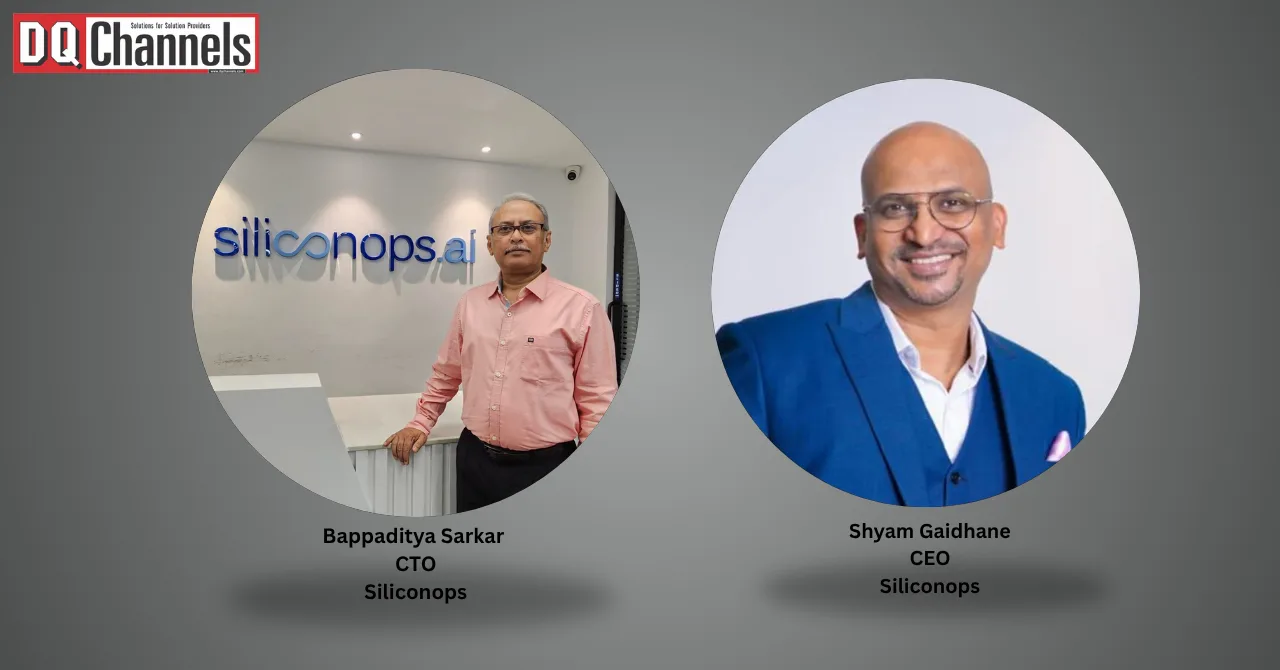
Siliconops is using its long experience as a system integrator to move further into managed services, Sovereign Cloud and AI-led solutions. The company's journey reflects a wider shift in the channel, where customers are moving from buying individual technologies towards integrated solutions and outcome-driven services.
Speaking to DQ Channels, Shyam Gaidhane, CEO, Siliconops, and Bappaditya Sarkar, CTO, Siliconops, discussed how the company is adapting its business model, the role of channel partnerships and the opportunities emerging around Sovereign Cloud and AI.
Siliconops began its journey in 1988 as a system integrator. According to Gaidhane, the company has seen the IT industry move from hardware-led purchases to solutions and now towards outcome-driven services. This evolution is shaping its current strategy as it expands its managed services and Cloud capabilities.
From system integrator to managed services partner
The shift from technology resale towards managed services is central to Siliconops' strategy. Gaidhane said customers increasingly want partners that can provide solutions rather than simply sell products.
“People now depend on a partner who provides solutions rather than somebody who is simply pushing boxes or owning a particular technology.”
Sarkar said the change is also driven by the skills required to manage increasingly complex technology environments. Customers may not have all the capabilities needed to extract value from the technologies they deploy, creating an opportunity for managed service providers to take greater responsibility.
For Siliconops, this means positioning itself as a partner that can help customers improve efficiency, predictability and operational performance rather than simply delivering technology.
Sovereign Cloud brings compliance into the channel conversation
Siliconops' move into Sovereign Cloud is another important part of its evolution. Sarkar said the company is aligning its Cloud services with regulatory and compliance requirements across sectors, including BFSI, pharmaceuticals and healthcare.
The focus includes areas such as data security, infrastructure security, cybersecurity and IT service management. Sarkar said these requirements need to be built into service delivery rather than treated separately.
Gaidhane also highlighted the distinction between data localisation and data sovereignty. While data may physically reside in India, he said this does not necessarily mean the customer has complete control over it.
“Ownership and control of the data matter, and the data needs to be governed by Indian laws.”
For channel partners, the distinction creates a more strategic conversation around Cloud. The opportunity is not simply where data is hosted, but how it is controlled, governed and managed.
Vendor-agnostic does not mean vendor-neutral
Siliconops also sees its multi-vendor approach as important to its managed services proposition. Gaidhane explained that complex enterprise environments cannot always be built around a single OEM.
“While we say we are vendor agnostic, we are not vendor neutral.”
The company's approach is to bring together multiple technologies and OEMs while providing integration and managed services through its own expertise. Gaidhane said this is also important for protecting margins as the traditional resale model comes under pressure.
“If we purely resell, there will always be margin pressure.”
By moving towards managed services, Siliconops aims to differentiate itself through integration, operational expertise and end-to-end service delivery rather than competing only on product margins.
AI could move partners towards value-based services
AI is creating another potential shift in the channel business model. Sarkar believes managed services will continue to grow but that their delivery will increasingly involve automation and AI.
The key, he said, is to evaluate AI according to the business requirement it addresses rather than treating it simply as a technology trend.
This could also change how partners charge for their services. Instead of relying entirely on server-based or time-and-materials pricing, partners could move towards models linked to the value delivered to customers.
“It becomes expertise as a service.”
This creates an opportunity for system integrators and channel partners to move towards consulting and transformation-led engagements. Sarkar also sees room for partners to contribute specialised skills where an SI does not have every capability in-house.
Reskilling will shape the next channel opportunity
The transition towards AI-led services will also require changes in skills. Sarkar argued that automation should not simply be viewed as replacing existing roles. Instead, employees with process knowledge can develop into functional advisors who help design and implement AI-enabled solutions.
He also sees opportunities for partners through what he describes as “skill renting”, where an organisation brings in a partner's specialised capabilities for a particular project.
For the channel ecosystem, this points towards a more collaborative model involving SIs, OEMs, distributors and specialised technology partners. The value increasingly comes from combining different capabilities to solve a customer's business problem.
The channel's next move is towards outcomes
Siliconops' journey from system integration to managed services and Sovereign Cloud reflects the broader evolution of the channel from product transactions towards business outcomes.
For partners, the opportunity lies in combining technology expertise with integration, compliance, managed operations and increasingly AI-led capabilities. As Sarkar puts it, the objective is to translate technology into measurable customer value.
For Siliconops, that means building a model where customers can rely on a partner not only to deploy technology but also to manage, secure and continuously improve it.
Read More:
OVHcloud sees managed services replacing traditional cloud resale in India
How AI and managed services are transforming BFSI operations
Acer India 2026 Lineup: AI, Mobility and Channel Strategy




 2 Min read