
How AI transformation is replacing traditional IT services for enterprises

Enterprise technology is entering a new phase where customers are no longer looking for implementation partners that deploy systems and move on. Instead, they expect technology partners to remain engaged throughout the lifecycle of AI initiatives, continuously optimising platforms, improving business processes and co-owning long-term outcomes. As organisations modernise hybrid and multi-cloud environments, system integrators are also redefining their role around AI engineering and managed transformation services.
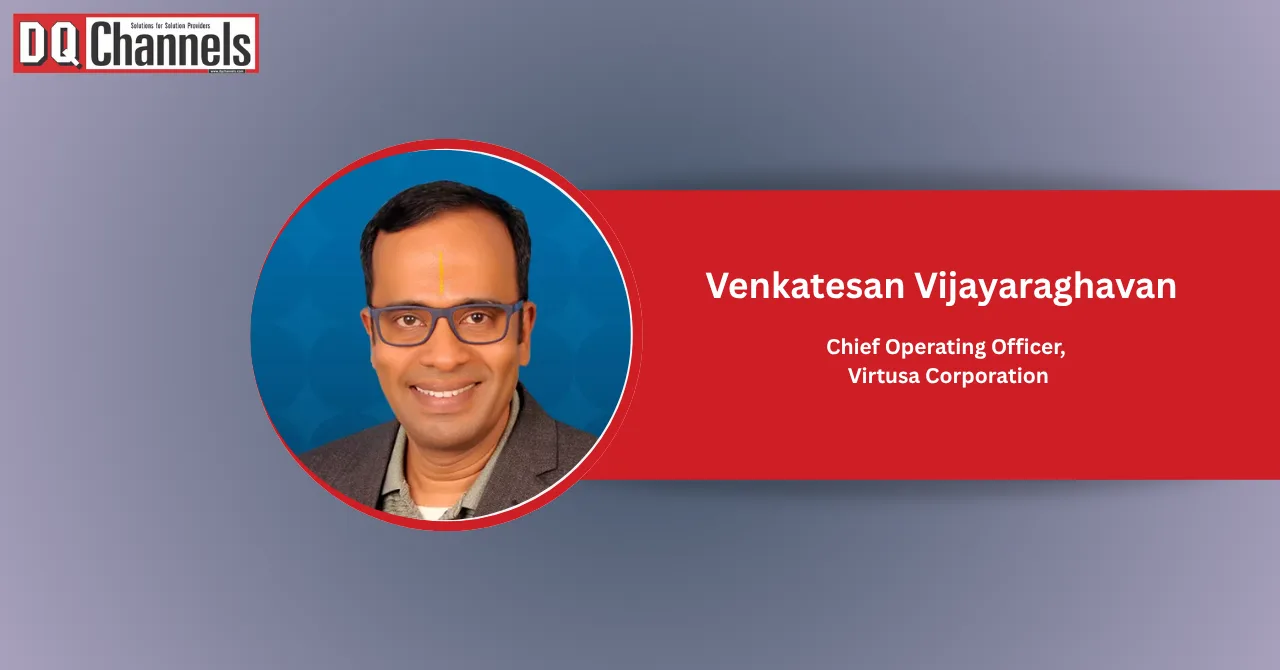
Venkatesan Vijayaraghavan, Chief Operating Officer, Virtusa Corporation, explained how this shift is changing enterprise engagements, recurring revenue models and the skills that system integrators must build to remain relevant.
AI engineering is moving system integrators beyond implementation
According to Vijayaraghavan, enterprise transformation is increasingly centred on domain-led AI engineering rather than standalone technology deployment. He explained that Virtusa focuses on combining deep process expertise with AI to solve business problems across industries such as financial services and technology, where hybrid and multi-cloud environments have already become the norm.
"Our goal over the last three years has been to become a domain AI engineering organisation for enterprises. We take domain processes at a much deeper level, combine them with AI outcomes and deliver transformation around that."
He added that interoperability has become equally important as enterprises adopt AI across multiple cloud ecosystems. Rather than relying on a single technology stack, organisations now require AI environments where data, applications and intelligent agents work seamlessly across platforms.
Customers now expect long-term AI outcomes instead of project delivery
Vijayaraghavan believes one of the biggest changes in enterprise engagements is the expectation that system integrators remain accountable beyond implementation. Customers increasingly expect partners to share responsibility for delivering measurable business outcomes rather than simply completing deployment projects.
He cited the example of a global customer establishing a Global Capability Centre in Pune, where discussions focused not on replicating traditional operating models but on designing an AI-first organisation.
"Customers are no longer talking to us about deploying systems and walking away. They are asking us to co-own long-term outcomes."
He believes this shift fundamentally changes the role of system integrators, positioning them as long-term transformation partners rather than implementation providers.
AI transformation is creating the next decade of recurring revenue
Drawing a parallel with the evolution of cloud computing, Vijayaraghavan argued that AI will create another long-term transformation cycle for enterprise technology services.
He noted that cloud transformation continued generating opportunities for more than a decade, extending far beyond initial migration projects. In his view, AI is following a similar trajectory because organisations still need to modernise infrastructure, prepare data and redesign business processes before AI can deliver value at scale.
"This is very similar to what happened with cloud transformation. Infrastructure evolution, data convergence and process redesign will continue creating revenue opportunities over the next six to eight years."
He emphasised that AI cannot simply be added to existing workflows. Instead, enterprises must rethink processes so AI becomes embedded throughout operations rather than functioning as an isolated technology layer.
AI orchestration is helping enterprises simplify complex environments
Many enterprises continue to struggle with fragmented cloud environments, disconnected workflows and operational silos. Vijayaraghavan believes AI can help address these challenges by orchestrating existing automation rather than replacing it entirely.
He explained that organisations already have multiple automated processes operating independently. AI enables these individual capabilities to work together by coordinating higher-level business workflows while preserving previous automation investments.
"AI plays the orchestration role very effectively. You do not lose the value of previous automation while creating higher-order business processes."
He also highlighted that AI deployments have progressed beyond experimentation. Virtusa has implemented large-scale production environments where generative AI supports more than 20,000 users, demonstrating that enterprises are increasingly moving from proof-of-concept projects to operational AI at scale.
Enterprise AI requires continuous optimisation and governance
Scaling AI successfully requires far more than deploying models into production. Vijayaraghavan explained that enterprises need strong governance, evaluation mechanisms and continuous monitoring to maintain accuracy as AI systems evolve.
He described how enterprise AI platforms incorporate guardrails around explainability, bias detection, hallucination management and traceability before solutions are deployed at scale.
"When AI is put at scale, guardrails become critical. You need explainability, bias management and continuous evaluation to ensure the original accuracy is maintained."
Virtusa also uses AI operations frameworks that periodically evaluate deployed models to ensure they continue delivering the performance initially committed to customers. This continuous optimisation enables organisations to maintain confidence in production AI environments over the long term.
Workforce transformation is becoming part of enterprise AI adoption
Beyond technology implementation, Vijayaraghavan sees workforce transformation emerging as a significant opportunity for system integrators. As enterprises adopt AI-first operating models, entirely new roles are beginning to appear across technology organisations.
He highlighted roles such as forward deployment engineers, evaluation engineers, context managers and AI orchestrators, explaining that these capabilities barely existed two years ago but are rapidly becoming essential for production-scale AI deployments.
"It is no longer AI-assisted. It is AI-first, where AI leads and humans direct, control and prepare it for production at scale."
The company's own workforce transformation initiatives have also attracted customer interest, with organisations requesting similar programmes to prepare their own teams for AI-driven operations. According to Vijayaraghavan, workforce transformation is evolving into a standalone advisory offering alongside enterprise AI implementation.
AI is redefining the future of enterprise transformation
Looking ahead, Vijayaraghavan believes enterprises have largely moved beyond AI experimentation and are now investing confidently in production-scale deployments. As AI becomes embedded across business operations, he expects system integrators to shift further towards outcome-based engagements supported by smaller teams working alongside AI agents.
"AI is not following a blockchain trend. It is following a cloud trend, which means it is here to stay."
He noted that projects previously requiring teams of 40 people can now be executed with significantly smaller teams supported by AI, highlighting how delivery models are evolving across cloud migration, application modernisation and enterprise transformation. For system integrators, adapting to this shift will require continuous learning, new operating models and a stronger focus on measurable business outcomes rather than traditional implementation metrics.
Read More:
Arrow Powertech enters online retail with dedicated UPS webstore
Why managed detection and response will define the future of cybersecurity partners
Why cybersecurity in India needs stronger AI, threat intelligence and partner collaboration
AI Channel Partners: Why Advisory Services Will Define the Next Growth Phase





 2 Min read