
Why cybersecurity in India needs stronger AI, threat intelligence and partner collaboration

India's rapid digital transformation has brought enormous opportunities for businesses, governments and citizens. At the same time, it has significantly expanded the country's cyber risk landscape. As digital payments, AI adoption and connected infrastructure continue to grow, cybersecurity is not just about protecting devices. It is more about securing digital ecosystems, critical infrastructure and public trust.
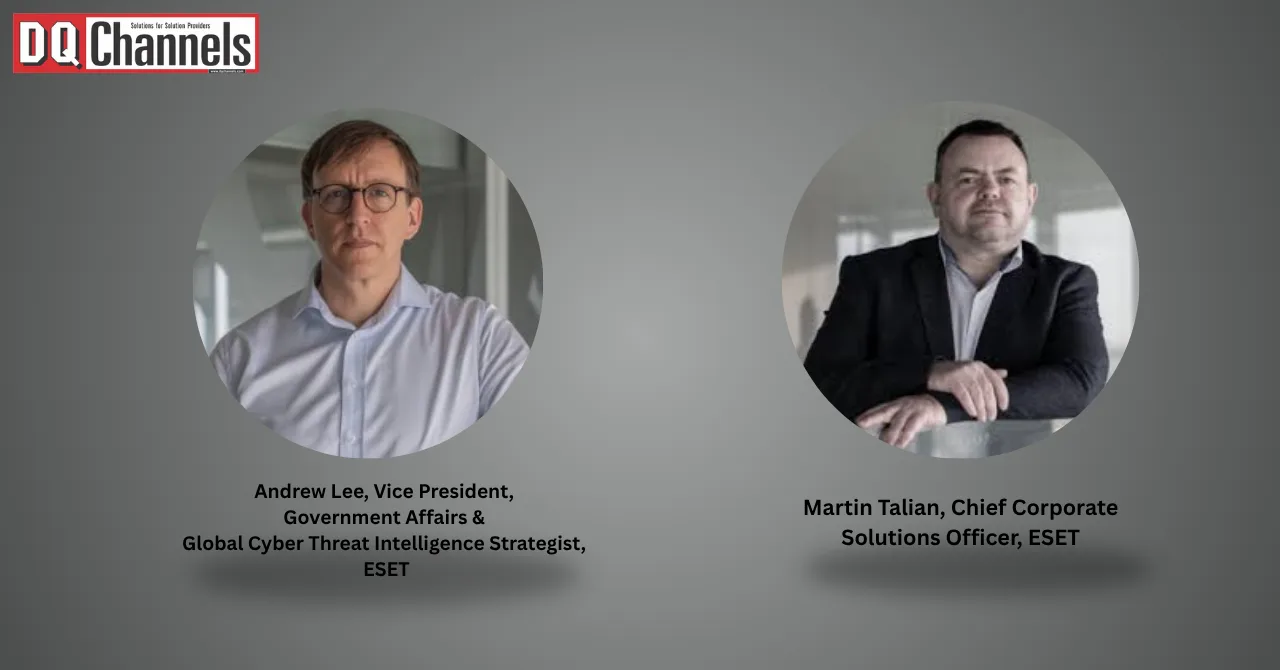
Martin Talian, Chief Corporate Solutions Officer, ESET, and Andrew Lee, Vice President, Government Affairs & Global Cyber Threat Intelligence Strategist, ESET, explained why India has become a strategic market for the company and how AI, threat intelligence and channel partners will define the next phase of cybersecurity.
Cybersecurity in India requires protection beyond traditional endpoints
ESET has been present in India for several years, but the company now sees a broader opportunity to contribute to the country's cybersecurity ecosystem. During discussions around its growing presence, the leadership highlighted India's ambition to become a global technology and AI hub while simultaneously addressing rising cyber threats.
According to Martin Talian, one of the strongest impressions from recent engagements was India's commitment to protecting citizens and small businesses from growing cybercrime.
"We want to build more of a presence here. We believe we already have solutions running in other countries that can help secure citizens, not only through software but also by working with telecom operators and banks to provide protection against common attacks such as phishing."
He explained that such collaborations could help extend cybersecurity protection to large sections of the population within a relatively short period, strengthening security beyond individual enterprise deployments.
AI is changing both cyberattacks and cyber defence
Artificial intelligence has accelerated the sophistication of cyberattacks, particularly phishing campaigns, malware development and social engineering. However, Andrew Lee believes AI has also strengthened defenders when applied with the right expertise.
He noted that ESET has been applying machine learning techniques in cybersecurity since the mid-1990s, well before AI became mainstream.
"Attackers are using AI to create much more convincing phishing campaigns and to build exploit chains faster. But we are also using AI to detect new attacks and build security layers that identify malicious activity before it causes damage."
Rather than viewing AI as an advantage for attackers alone, Lee described cybersecurity as a continuing arms race where research, experience and responsible use of AI remain critical to staying ahead of evolving threats.
Threat intelligence is becoming as important as prevention
Martin Talian believes cybersecurity strategies should extend beyond protecting enterprise perimeters. While traditional security solutions remain essential, he argues that early warning and intelligence capabilities are becoming equally important.
With visibility across more than one billion devices globally, ESET analyses attack patterns across industries and geographies to identify emerging risks before they spread.
"We are not only building walls around customer environments. We are also focusing on early warning. By identifying attack patterns across countries and industries, we can help organisations prepare before they become the next target."
He added that internal threats also deserve greater attention, explaining that organisations often invest heavily in external security while overlooking insider risks that may bypass traditional defences.
Channel partners remain central to enterprise cybersecurity
Both executives emphasised that channel partners will continue to play a pivotal role in ESET's India strategy. Rather than shifting away from the channel, the company intends to deepen partner engagement as enterprise security requirements become more specialised.
Andrew Lee explained that partners possess valuable knowledge of customer environments, industry requirements and regional challenges that cannot easily be replicated.
"ESET has always been a partner-driven company. Building a strong channel and a strong partner network of people who really understand local businesses is extremely important."
The decision to establish a local office in India is also intended to strengthen knowledge transfer, technical enablement and long-term collaboration with partners while supporting their own business growth.
Managed security services are evolving for critical infrastructure
As enterprises increasingly seek managed security services, Talian believes industry-specific security capabilities will become increasingly important. Standard cybersecurity products alone cannot always address the operational realities of sectors such as healthcare, government and critical infrastructure.
He highlighted examples where ESET supports large-scale Security Operations Centres monitoring multiple healthcare organisations from a centralised environment before transferring operational knowledge to local teams.
This approach enables customers to benefit from advanced threat intelligence while gradually building their own operational capabilities. It also allows security controls to be adapted for industry-specific scenarios that standard software may not adequately address.
India's talent and AI ambitions present long-term opportunities
Looking ahead, both executives see India becoming increasingly important for research, engineering and cybersecurity innovation. Rather than imposing a predefined operating model, the company intends to expand capabilities based on customer demand across areas such as threat intelligence, security operations and research.
Andrew Lee believes India's diversity, technical talent and growing AI ecosystem offer unique advantages for long-term collaboration.
"The beauty of India is in its diversity, the immense amount of talent, the enthusiasm and the willingness to solve problems. We want to partner with India as a genuine way to increase the resilience of society."
Martin Talian echoed that sentiment, saying the country's ambition to lead emerging technologies aligns closely with ESET's own vision.
"I really like the vision of this country, not just to follow innovations developed elsewhere but to drive them. Our values are very similar, and I believe opening our office here was one of the best decisions we could make for this region."
Building long-term cyber resilience through collaboration
The conversation makes it clear that ESET's India strategy extends beyond expanding its market presence. The company sees long-term success being built through collaboration with governments, enterprises, telecom providers, financial institutions and channel partners. As AI reshapes both cyber threats and cyber defence, sustained investment in threat intelligence, local expertise and industry-specific security capabilities will become increasingly important. For partners, this creates opportunities to move beyond product delivery and contribute to building stronger cyber resilience across India's rapidly evolving digital economy.
Read More:
Why AI governance is becoming the biggest opportunity for cybersecurity partners
The missing layer in enterprise AI: Why data trust is becoming the new priority
AWS AI Strategy: Praveen Sridhar on Partner Growth
AI Channel Partners: Why Advisory Services Will Define the Next Growth Phase







 2 Min read