
National Engineers’ Day 2026: How AI is reshaping engineering and B2B technology

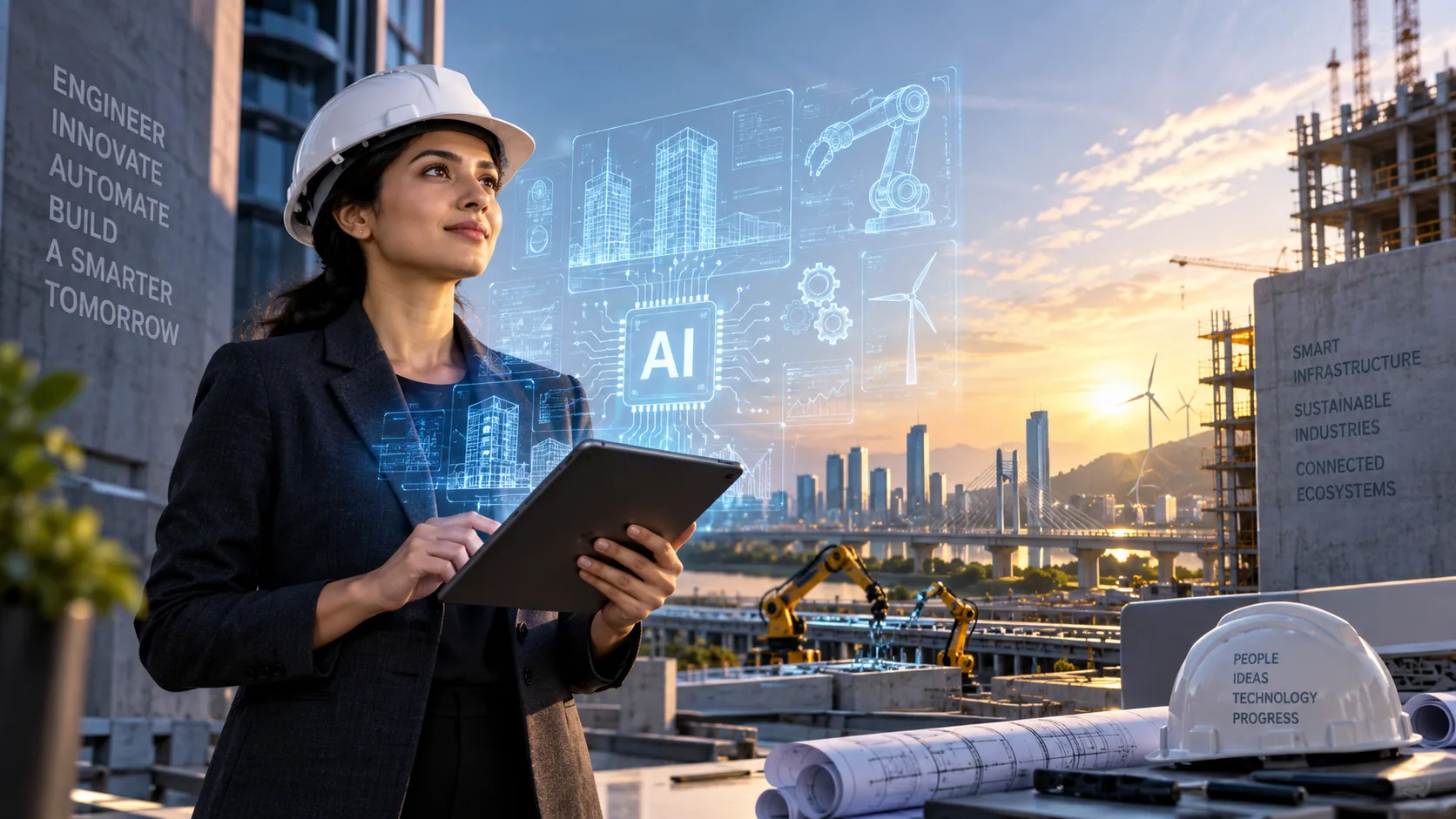
Engineering is entering a different phase. The job is no longer only about designing machines, building infrastructure or making software work. For businesses, engineers are increasingly being asked to connect technology, people, data and processes to solve problems that have a direct impact on productivity, efficiency and growth.
As India observes National Engineers’ Day on September 15, 2026, this shift is becoming particularly important for the B2B technology sector. AI, robotics, IoT, digital infrastructure, cybersecurity and industrial automation are changing how enterprises operate. But the industry voices below point to a common message: technology alone does not create business value. Engineering judgement still matters.
For B2B organisations, that means engineers are moving closer to business decisions. They are helping decide what should be automated, where AI can add value, how infrastructure should be designed and how technology can be deployed responsibly.
Ridhima Sawant, Chief Transformation Officer, Orient Technologies Limited, puts the shift in perspective:
“Engineering has never been just about building what exists; it has always been about expanding what is possible. From critical infrastructure to AI, cybersecurity, deep tech and digital innovation, engineers have continually changed the way we live, work and solve problems. Today, that role is being redefined. In an AI-driven world, technology can solve known problems faster than ever. But lasting impact will come from engineers who know which problems are worth solving, challenge assumptions and apply technology with judgement and purpose. AI can accelerate what we build, but human judgement will continue to define why we build it and the value it creates. For the next generation of engineers, preparing for this future means more than keeping pace with technology. It means staying curious, learning continuously, experimenting boldly and having the confidence to challenge conventional thinking. The real opportunity lies in turning emerging technologies into solutions that create meaningful, lasting value. Engineering today is not simply about working with the technologies shaping the future; it is about helping shape what comes next. The future of engineering will not be defined only by how quickly we adopt technology, but by how thoughtfully we use it to solve problems that matter.”
From building technology to taking responsibility
The arrival of generative AI has made this question even more important. AI can increasingly assist with coding, analysis and other technical tasks. That changes the engineer’s role, but does not remove it.
Sudhir Goel, Chief Business Officer, Acer India shared insights,“National Engineers’ Day is a celebration of the minds and ideas that have consistently transformed challenges into opportunities and possibilities into progress. As India moves towards an AI-led and digitally driven future, the role of engineers has become more critical than ever. They are shaping technologies that are transforming industries, businesses, and everyday experiences. From AI and intelligent computing to sustainable innovation, engineering is helping address some of the most complex challenges of our time. At Acer India, we believe engineering excellence is fundamental to creating meaningful and responsible technology. With India’s strong engineering talent and thriving technology ecosystem, the country is well positioned to shape the next wave of global innovation.”
Tejesh Kodali, Group Chairman, Blue Cloud Softech Solutions, draws a clear line between what machines can do and what engineers must still decide:
“Engineers’ Day honours Sir M. Visvesvaraya, who built dams, irrigation systems and an entire industrial city with a slide rule and an iron will. A century later, India’s engineers face a harder question than how to build: what to build, and for whom. Artificial intelligence now writes code, designs circuits and drafts contracts. That does not make the engineer obsolete. It makes the engineer indispensable, because someone must decide what problem is worth solving, judge whether the answer is right, and take responsibility for the outcome. Those three things- choosing, judging and owning- cannot be delegated to a machine. At Blue Cloud, we are building AI that runs on Indian infrastructure, trained on Indian data, answerable to Indian institutions, and we are betting the company on the engineers who will make it trustworthy. My message to every young engineer this Engineers’ Day is simple: do not learn to compete with AI. Learn to command it.”
For enterprise technology buyers, this distinction is important. Businesses are not simply buying AI models or automation tools. They are investing in systems that have to work within existing infrastructure, processes, security requirements and business goals.
That puts engineering at the centre of implementation.
Engineering connects innovation with business outcomes
The same shift is visible across industrial technology and digital infrastructure.
Joseph Sudheer Reddy Thumma, Chairman & Managing Director, Magellanic Cloud, highlights the role engineers play in moving emerging technologies into practical applications:
“Engineering continues to be at the heart of how new technologies move from ideas to real-world impact. On National Engineers’ Day, we recognise the contribution of engineers in advancing areas such as AI, drones, IoT and digital infrastructure, while solving increasingly complex challenges across industries. At Magellanic Cloud, we believe innovation thrives when engineers are empowered to experiment, build and scale solutions with purpose. Creating an environment that encourages continuous learning, problem-solving and applied innovation will be critical to developing resilient, future-ready technologies and strengthening the country’s broader technology ecosystem.”
For B2B technology providers and their customers, this is where engineering becomes a business function rather than only a technical function. The success of an AI, IoT or digital infrastructure project is ultimately measured by what it improves — whether that is productivity, service quality, operating efficiency or the ability to respond to changing demand.
Ranga Jagannath, Senior Director - Growth, Agora, sees a similar evolution in digital experiences and infrastructure:
“Engineering has always been about solving the problems of today while anticipating what comes next. As digitalisation and AI reshape how we build, work and connect, the role of engineers is evolving from simply making technology work to making it smarter, more efficient and sustainable.
The real opportunity lies in how we apply innovation to solve complex challenges responsibly. From real-time digital experiences to intelligent infrastructure, engineers are rethinking how systems are designed to be more adaptable, resilient and resource-efficient. At Agora, we see this shift in how developers are building across voice, video and Conversational AI, using technology to create experiences that are more responsive while simplifying the infrastructure behind them.
At its core, smart engineering is not just about adopting new technologies; it is about using them with purpose to create lasting value. On National Engineers’ Day, we celebrate the engineers who challenge conventional thinking, turn ideas into practical solutions and help shape a more connected, innovative and sustainable future.”
The sustainability question
Efficiency is also becoming a bigger part of engineering decisions. Enterprises are looking at technology not only for what it can deliver but also for how efficiently systems consume energy and resources.
S.Sriram, Director and COO, Mitsubishi Electric in India, said:
“We believe the true measure of technology's success is its impact on the planet and society as a whole. By combining smart engineering with digital innovation, we are helping industries become more efficient and sustainable. For us, it is not just about reaching new technical milestones, but about building intelligent systems that keep carbon footprints as low as possible.
In a changing world, our digital tools help businesses work smarter and more efficiently. Every algorithm we improve, every control system we automate, and every green solution we create is designed with one goal: to build a better, stronger future. Through continuous progress and forward-thinking digital solutions, we remain committed to a greener tomorrow”
For B2B customers, the implication is practical. Engineering decisions around automation, control systems and digital infrastructure can influence both operating performance and resource use.
Manufacturing moves towards intelligent systems
India’s manufacturing ambitions are also changing the demands placed on engineers. Production environments are becoming more connected, with software, data, robotics and AI increasingly working alongside physical machinery.
Prateek Jain, COO & Co-founder, Addverb, said:
“India’s manufacturing ambitions are opening a new chapter for engineering. The opportunity now is not just to build better machines, but to design intelligent systems where machines, people, software, and data work together to raise productivity, flexibility and precision. That is fundamentally changing the role of engineers, whose expertise increasingly spans the entire production ecosystem.
We are already seeing this take shape as India expands its capabilities in manufacturing, electronics and semiconductors. Robotics, AI and industrial data are giving engineers a deeper understanding of production and enabling faster decisions around demand, equipment performance and resource use. The focus is consequently shifting from automating individual tasks to building systems that can respond, adapt and improve as conditions change.
This is where smart engineering can make its biggest impact. Digitalisation gives engineers the ability to improve output while using energy and materials more intelligently. Bringing these capabilities together will help India build manufacturing systems that are not only more productive, but more flexible, competitive and prepared for the scale of industrial growth ahead.”
Priti Sawant, Founder & CEO, JoulestoWatts, shared her viewpoints: “Engineering is entering a phase where the hardest questions are no longer just about what we can build, but what we should build and how responsibly we build it. As AI accelerates software development and digitalisation reshapes enterprises, the engineer’s role is becoming broader, connecting technical possibilities with business priorities, operational realities, and long-term impact. This is especially important as GCCs evolve into centres for product innovation, transformation, and global decision-making. At JoulestoWatts, we see this as contextual engineering, applying technology with a deep understanding of the enterprise, its people and the outcomes it needs to deliver. The engineers who create the greatest value will be those who can move beyond building faster to building with greater purpose, resilience, and efficiency. That is where engineering can play a defining role in creating a more sustainable future.”
What National Engineers’ Day means for B2B technology
Taken together, these industry perspectives point to a broader change in the role of engineering.
The engineer of the AI era is not simply a person who knows how a technology works. Increasingly, the role involves understanding the business problem, judging the technology, connecting different systems and taking responsibility for the result.
For B2B technology companies and enterprise customers, that creates several priorities:
AI needs engineering judgement, not just deployment.
Digital transformation needs practical problem-solving, not technology for its own sake.
Industrial automation needs connected systems where machines, software and data work together.
Infrastructure needs to become more efficient and sustainable as digital workloads grow.
Engineers need continuous learning as technology and business requirements change.
The common thread is purpose.
National Engineers’ Day 2026 is therefore not only a celebration of the people who build technology. It is also a reminder of the responsibility that comes with building systems that businesses, industries and society increasingly depend on.
AI may help engineers build faster. Automation may help them scale. Data may help them make better decisions. But the final value still depends on people asking the right questions and making the right choices.
That may be the most important engineering challenge of all. Not simply what can technology build next, but what should we build, why does it matter, and how can we build it responsibly?
Read More:







 2 Min read