
Sophos Report: Why ransomware is becoming an identity problem

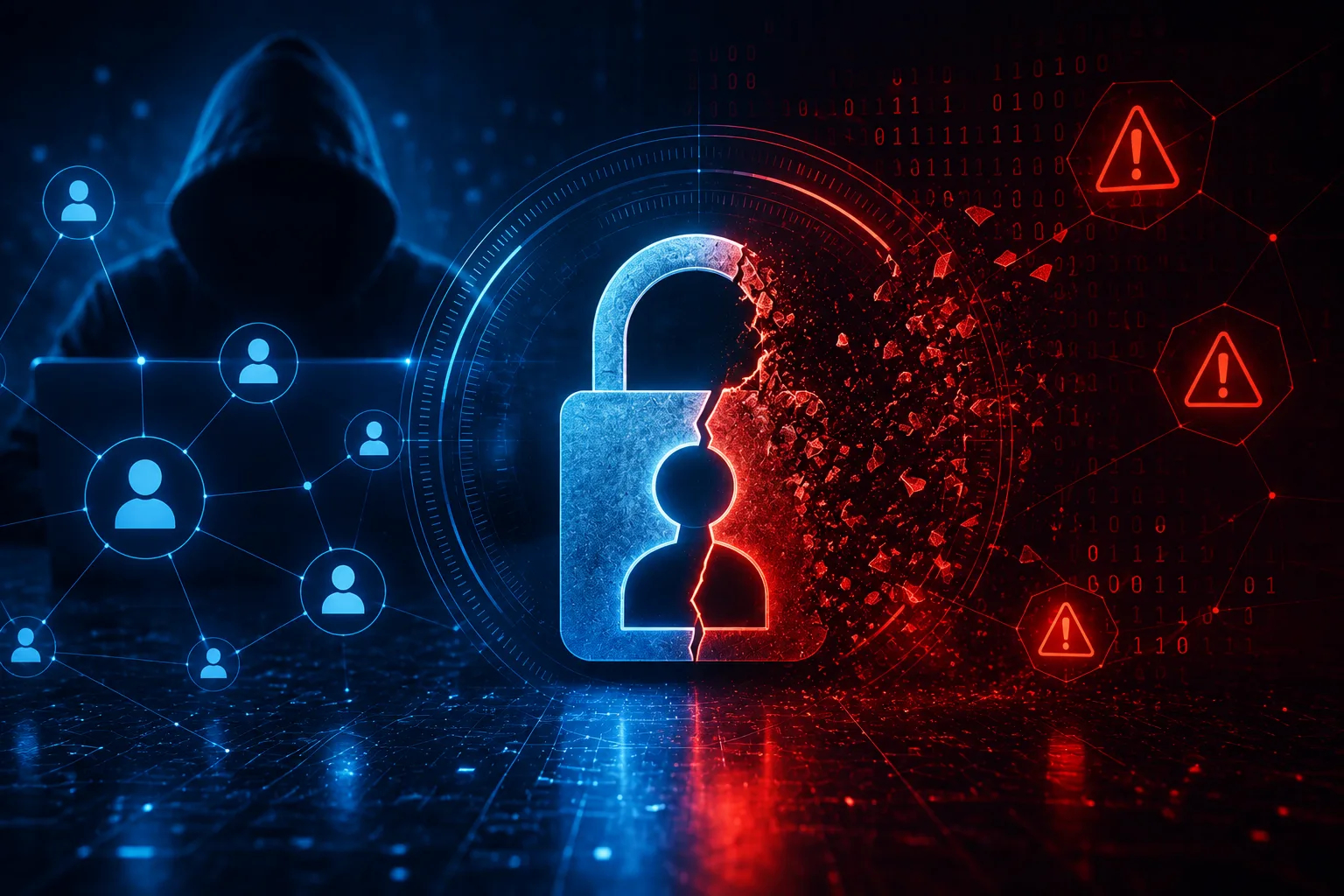
For years, ransomware conversations largely revolved around patching vulnerabilities. That assumption is beginning to change.
Sophos' State of Ransomware 2026 finds that identity compromise has overtaken exploited vulnerabilities as the primary route into organisations. Malicious email accounts for 26% of attacks, phishing contributes another 24%, while compromised credentials remain responsible for 23% of incidents. Together, identity-based techniques now account for nearly four out of every five ransomware attacks.
When we see this from the channel ecosystem perspective, this is more than another ransomware statistic. It signals a shift in where customers need help and where managed security providers can create long-term value.
Identity is becoming the new security perimeter
The report shows 79% of ransomware attacks now begin through identity-based techniques. Even more significant, two-thirds of organisations confirmed their ransomware incident was also their biggest identity-related breach.
This changes the conversation for MSPs and system integrators. Traditionally, ransomware engagements centred on endpoint protection, firewall refreshes and vulnerability assessments.
Those remain important. But they are no longer sufficient. Customers increasingly need continuous identity monitoring, privileged access management, phishing defence, credential protection and rapid incident detection rather than isolated infrastructure upgrades.
For MSPs, identity is steadily becoming a recurring managed service instead of a one-time deployment project.
Security gaps remain the biggest business problem
The report identifies three operational weaknesses behind successful ransomware attacks:
Security gaps (62%)
Lack of cybersecurity skills (58%)
Poor or inadequate protection (57%)
These findings closely align with challenges channel partners encounter across mid-market customers. Many organisations have already invested in multiple security technologies. What they often lack is someone to manage them consistently.
That creates opportunities for:
Managed Detection and Response (MDR)
Extended Detection and Response (XDR)
Security Operations Centre (SOC) services
Continuous monitoring
Security posture assessments
Cyber resilience consulting
The report does not suggest organisations require more standalone security products. Instead, it indicates they need better operational execution. That distinction matters for partners building recurring revenue.
Skills shortages continue to favour managed services
One finding deserves particular attention.
Lack of people or cybersecurity capacity affects organisations across every size category, including enterprises employing up to 5,000 staff. Smaller businesses report the highest shortages, but even large enterprises continue facing significant resource constraints.
For MSPs and MSSPs, this reinforces an existing market trend. Customers are no longer outsourcing only because technology has become complex.
Increasingly, they are outsourcing because skilled cybersecurity professionals remain difficult to recruit, train and retain. This makes managed services a response to operational reality rather than simply a cost-saving exercise.
MFA alone is no longer enough
One of the report's most surprising findings concerns multi-factor authentication. Among attacks caused by compromised credentials, 97% of affected organisations already had MFA deployed in some form.
This does not mean MFA has failed. The report carefully notes that deployment gaps and evolving MFA bypass techniques remain likely contributors. For channel partners, the implication is straightforward. Selling MFA should no longer represent the end of the customer journey.
Partners increasingly need to complement MFA with:
Identity threat detection
Conditional access
Continuous authentication monitoring
Zero Trust implementation
Identity governance
Identity protection is becoming a layered service rather than a single product deployment.
Customers are asking for resilience, not simply prevention
The report also reveals an encouraging trend.
Backup-based recovery increased to 66% among organisations whose data was encrypted, while ransom payments declined to 48%, the lowest level reported during the past three years.
This suggests organisations are improving recovery readiness. For channel partners, backup should no longer be positioned merely as storage.
It is increasingly part of a broader cyber resilience strategy that combines:
Immutable backups
Disaster recovery
Business continuity
Incident response planning
Recovery testing
Customers appear increasingly willing to invest in recovery capabilities that reduce dependence on ransom negotiations.
Firewall data becomes more valuable when integrated
Another finding has practical implications for managed security providers.
Sophos reports that firewalls detected ransomware activity before payload execution in 61% of incidents. Where firewalls failed to detect attacks, successful encryption rates were considerably higher. The report further notes that firewall telemetry becomes significantly more valuable when combined with endpoint, email and broader security data through XDR platforms or MDR services.
This supports an important shift already underway across the channel. Security products increasingly derive value from integration rather than operating independently.
System integrators and MSSPs capable of correlating telemetry across multiple security layers are likely to deliver stronger customer outcomes than partners focused on individual products.
The conversation is moving from products to outcomes
One statistic summarises the broader transition. Despite better security investments, average ransomware recovery costs have reached approximately USD 1.7 million.
Customers therefore evaluate security differently.
Instead of asking which product blocks ransomware, they increasingly ask:
Can we detect attacks sooner?
Can we recover faster?
Can someone monitor our environment around the clock?
Can we reduce business disruption?
These are service questions.
And service questions naturally favour MSPs, MSSPs and systems integrators capable of delivering continuous operational support.
The bigger opportunity for the channel
Perhaps the biggest takeaway from Sophos' latest research is that ransomware defence is becoming less about deploying another security appliance and more about sustaining cyber resilience.
Identity protection, continuous monitoring, skilled security operations, backup readiness and integrated detection increasingly work together.
For the channel ecosystem, that represents a business opportunity as much as a technology shift. Partners that continue competing primarily on security products may find growth slowing.
Those building recurring managed security services around identity, detection, response and resilience appear better aligned with where customer demand is heading.
The Sophos report does not predict the end of ransomware. It does, however, suggest that the definition of effective ransomware defence is changing, and the channel will likely play a central role in helping customers adapt.





 2 Min read