
Managed security services driving cybersecurity transformation and business resilience

For years, cybersecurity was treated like an IT purchase. A tool. A project. Something you deployed, configured, and moved on from. That model is quietly breaking.
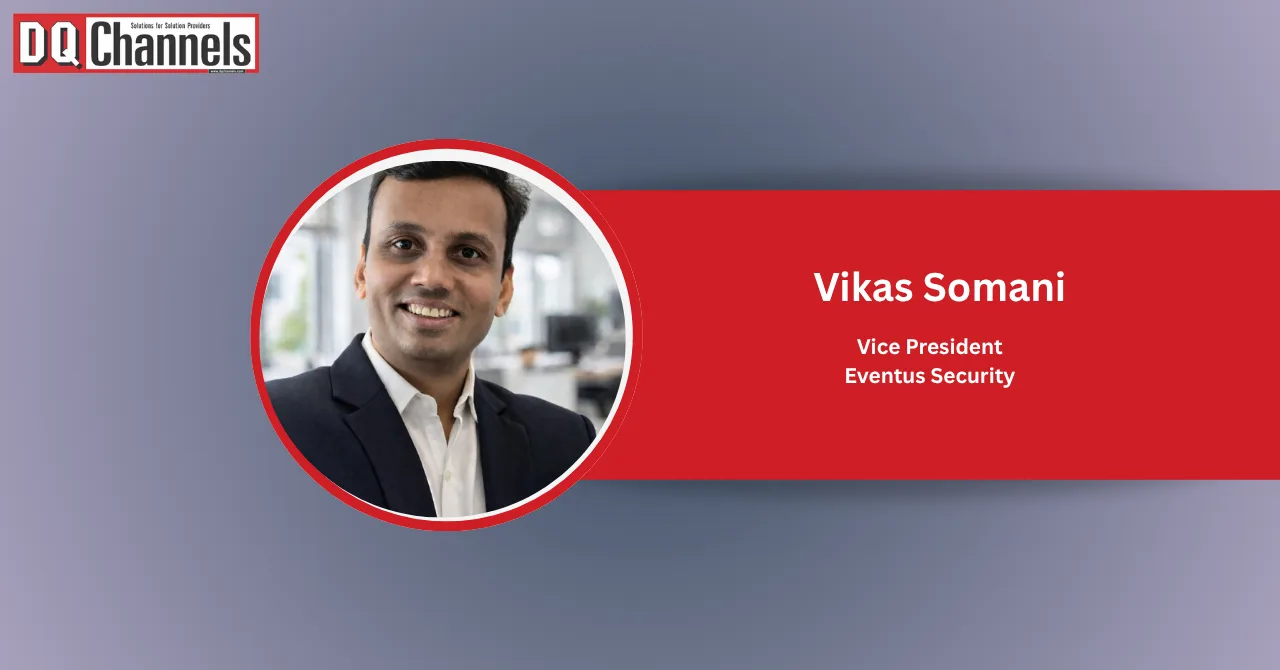
In an interaction, Vikas Somani, Vice President atEventus Security, laid out how cybersecurity is shifting into a continuous, outcome-driven function, one that sits at the heart of business resilience rather than IT operations.
From tools to outcomes: the real shift in cybersecurity
The biggest change is not technological. It’s philosophical.
“Cybersecurity has moved away from being tool-oriented and project-based to being process-oriented and outcome-based,” Somani said.
This shift is driven by a simple reality. Threats are no longer static. They evolve constantly, often faster than organisations can respond.
The idea of securing systems with standalone tools is no longer sufficient. What matters now is continuity. Detection speed. Response effectiveness. Preparedness.
“Our approach brings together technology, automation, and human expertise to deliver measurable outcomes like faster detection and lower response times,” he explained. In short, cybersecurity is becoming an always-on function, not a one-time investment.
Why enterprises are demanding continuous security, not deployments
Customers are no longer satisfied with implementation projects that end once systems go live. Their questions have changed. And they are sharper now.
“How quickly can we detect a threat? How well did we contain it? How effectively can we manage risk?” Somani pointed out.
This change is pushing organisations to rethink how they engage with cybersecurity providers. The conversation is no longer about tools. It is about accountability.
“Security is not defined by what was deployed, but by what has been consistently achieved over time,” he added. That distinction is subtle. But critical.
The rise of managed security services as core revenue engines
As expectations shift, so do business models. Managed services are no longer an add-on. They are becoming the foundation of cybersecurity revenue. Demand is rising for integrated services that combine detection, response, intelligence, and risk advisory into a unified framework.
“There is strong demand for managed detection and response, SOC-as-a-service, incident response retainers, and continuous security validation,” Somani noted.
What stands out is not just the services themselves, but how they are converging. Instead of fragmented tools and vendors, organisations now want a cohesive security posture. One that connects threat intelligence, operations, and response into a single outcome-driven system.
Contracts and SLAs are becoming business commitments
The shift to managed services is also changing how contracts are written. Earlier, SLAs focused on uptime or technical performance. Today, they are tied to business impact.
“Contracts now emphasise shared accountability for outcomes, with a stronger focus on detection and response SLAs,” Somani said. Customers want visibility. Real-time reporting. Clear ownership.
More importantly, they expect service providers to align with business risk, not just technical metrics. This is redefining the role of cybersecurity vendors. They are no longer suppliers. They are risk partners.
What it takes to scale modern cybersecurity operations
Building this new model is not trivial. It requires investment across three layers. "People. Process. Technology."
“Skilled professionals like SOC analysts, threat hunters, and incident responders are critical,” Somani explained.
But talent alone is not enough. Processes must be standardised and repeatable. Playbooks must exist. Governance must be clear. On the technology side, the shift is toward platform-led architectures powered by AI and automation.
“A unified, AI-powered platform enables orchestration, faster response, and better visibility,” he added. The real differentiator lies in integration, where tools, processes, and expertise work as one system.
The business upside: predictable growth and deeper relationships
Moving to managed services comes with an upfront cost. But the long-term impact is hard to ignore. The model shifts revenue from one-time deals to recurring streams. That changes everything.
“Businesses benefit from predictable revenues, higher customer lifetime value, and more stable margins,” Somani said. There is also a strategic advantage. Continuous engagement leads to stronger customer relationships.
And with that comes opportunity - cross-selling, expansion, and deeper integration into the customer’s risk framework.
The hardest part: changing mindset, not just the model
The transition from reseller or integrator to managed security provider is not just operational. It is cultural.
“The biggest shift is moving from providing technology to taking responsibility for security outcomes,” Somani noted. This requires organisations to rethink how they operate.
It means running 24/7 operations. Owning risk. Aligning services with business impact rather than technical delivery. It also means accepting accountability. Not for deployment. But for outcomes.
Where cybersecurity is headed next
Cybersecurity is entering a new phase. One where success is not measured by tools deployed, but by risks avoided.
“Cybersecurity today is about continuously managing risk and delivering measurable success,” Somani said. This is a fundamental shift.
From reactive defence to proactive resilience. From products to platforms. From vendors to partners. And for organisations navigating this transition, the question is no longer whether to adopt this model. It is how quickly they can make the shift.




 2 Min read