
Why RST expects RFID to add new mileage to its TSC Auto ID business

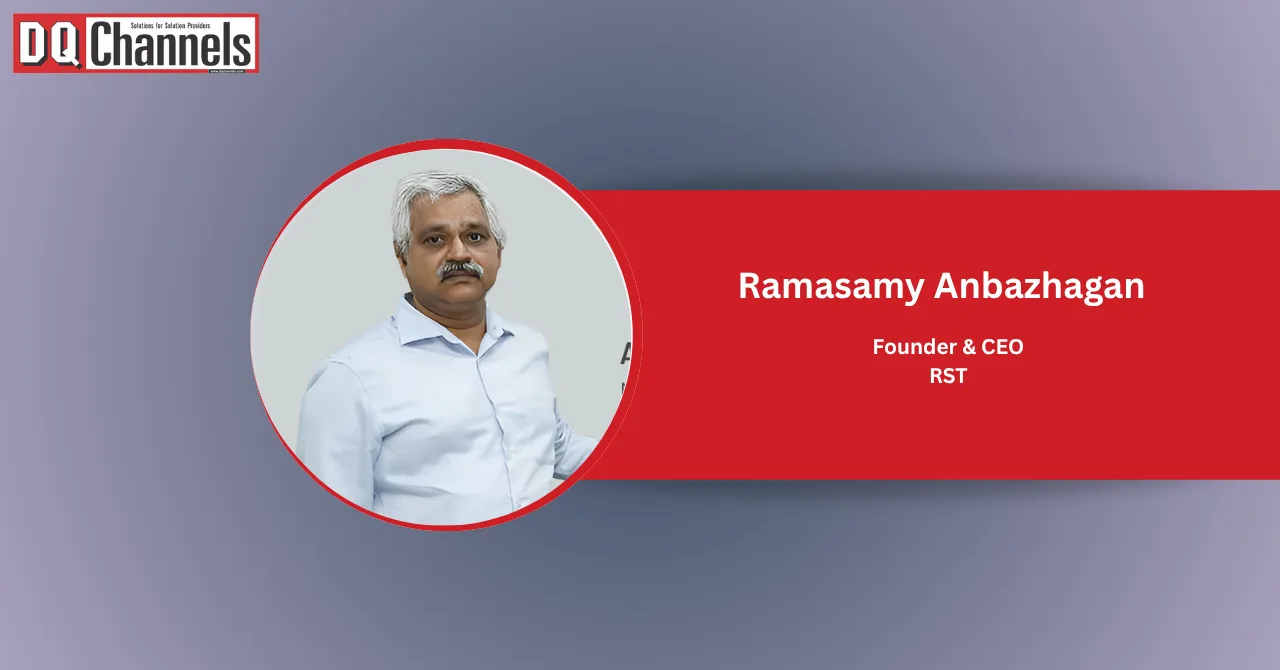
The AIDC industry is becoming increasingly important as businesses across retail, logistics, manufacturing and warehousing look for better ways to capture, track and manage data. Barcode printing remains a core requirement, but the market is also moving towards newer technologies such as RFID and advanced data capture. For channel partners, this is creating opportunities to grow beyond traditional hardware sales. Ramasamy Anbazhagan, Founder & CEO, Retail Solution and Technologies (RST), which partners with and distributes TSC Auto ID Technology, discusses RST's journey, changing customer demand and why he expects RFID to add a new growth opportunity over the next three to five years.
RST and TSC Auto ID have grown together
RST started its association with TSC around 2005–06. Anbazhagan describes the beginning as a small operation that expanded as TSC introduced new products and RST developed alongside the brand.
The journey has been shaped by a clear ambition. RST wants to become a leading player in India's retail solutions market, with TSC playing an important role in supporting that goal.
“We have started the TSC around 2005-06, that period around we have started in very small way, now from there we have bring many new, TSC has bring new product, we are also grown along with the TSC.”
For RST, the relationship is therefore not simply about distributing products. The company's growth has been closely linked to the expansion of TSC's product portfolio.
Barcode printing remains the core business
While RST has expanded into different areas of retail technology, barcode printers continue to account for the company's major business.
Anbazhagan points to reliability as an important reason for customer acceptance of TSC products. He also believes the brand's position in the Indian market has contributed to RST's own business performance.
“Today barcode printer is our major business, so TSC is a very reliable brand, so the customers are very accepting.”
This continued demand for barcode printing is taking place alongside broader changes in how businesses handle identification and data capture.
Track and trace is becoming more important
Customer requirements are changing across several industries. Retail, logistics, manufacturing and warehousing all require data capture, particularly where businesses need to track and trace products or processes.
Anbazhagan says logistics and retail are currently seeing strong growth. E-commerce is another factor supporting demand, while the expansion of foreign companies into manufacturing is creating activity in that segment as well.
“This data capturing every segment required retail, logistics, manufacturing or any industry that track and trace will be very important thing.”
The shift matters for channel partners because data capture is no longer restricted to one type of customer or application. As businesses become more focused on tracking products and operations, the requirement for identification technologies can extend across different stages of the supply chain.
RFID could give RST and TSC another growth avenue
The most significant opportunity Anbazhagan identifies for the next three to five years is RFID technology.
TSC has introduced new RFID products and printers, and RST expects adoption to accelerate. For the company, RFID could add a new layer to its existing barcode printing business rather than replacing its established market.
“3 to 5 years, we are hoping RFID will give extra mileage to us, so TSC launched many new products and printers, everything they have launched new product, we are hoping this will pick up very fast.”
That makes RFID an important technology to watch for RST and its channel ecosystem. The transcript does not specify particular RFID applications, customer numbers or adoption rates, so the opportunity should be viewed as Anbazhagan's expectation for the coming three to five years rather than a quantified market forecast.
For channel partners, the development is relevant because it could create opportunities to engage with customers that are already using barcode-based identification while introducing them to newer data capture technologies.
Supply chain constraints remain a challenge
Growth is not without challenges. RST is currently dealing with supply constraints linked to problems around chips and memory.
According to Anbazhagan, the disruption is affecting both product availability and pricing. The company is working with TSC to improve the situation and enable a better flow of material.
“Now recent days chips and memory problem is there, so supply chain is disrupted, so we are getting the material, not sufficient material we are getting.”
For distributors and channel partners, availability is a practical business issue. Even when customer demand is present, insufficient supply can affect sales planning and pricing.
Anbazhagan says RST is discussing the issue with TSC, with the aim of speeding up and enabling supplies.
North India remains a strong revenue region
RST's business focus is India, rather than overseas markets. While TSC has a global presence, Anbazhagan says RST remains focused on the Indian market.
Within India, he identifies the northern region as having greater potential compared with other regions.
“More or less north side will be more potential as compared to other.”
The observation points to the importance of regional channel development as demand for identification and data capture technologies grows. However, the conversation does not provide a detailed regional revenue split, so no further conclusion can be drawn about specific states or markets.
After-sales support remains central to partner growth
For Anbazhagan, technology and products are only part of the channel equation. Customer relationships and after-sales support are equally important.
His message to partners is to stay close to customers, understand their requirements and provide focused support after the sale. That, he believes, creates a cycle in which the customer continues to buy, the brand grows and the partner grows with it.
“Partners work with customer closely, we understand the after sales support very focused manner, so that customer can keep buying the product, so then only brand also grow, partners also grow, we can also grow.”
That approach is particularly relevant as the AIDC market expands beyond established barcode applications. New technologies such as RFID may create fresh opportunities, but long-term channel growth still depends on how effectively partners support customers.
For RST, the next phase therefore rests on two familiar foundations: a strong barcode printing business and a willingness to adopt new technology. If RFID adoption develops as Anbazhagan expects, it could give the company and its partners another route to expand their role in India's data capture market.
Read More:
What is changing for Sennheiser channel partners in India's AV market




 2 Min read