
Cybersecurity managed services are reshaping enterprise security models


There was a time when cybersecurity felt like a milestone. Organisations bought a solution, deployed it, checked the requirement box and moved on. For many businesses, that felt sufficient. At least for a while.
That comfort has disappeared. Cybersecurity now behaves more like an ongoing operational function than a one-time infrastructure project. It runs continuously in the background. It never fully stops and never truly finishes.
That shift is changing conversations inside boardrooms. Executives are no longer asking what has been installed. They want to know what is actively working under pressure, what risks are visible in real time and how quickly incidents can be handled when systems are exposed.
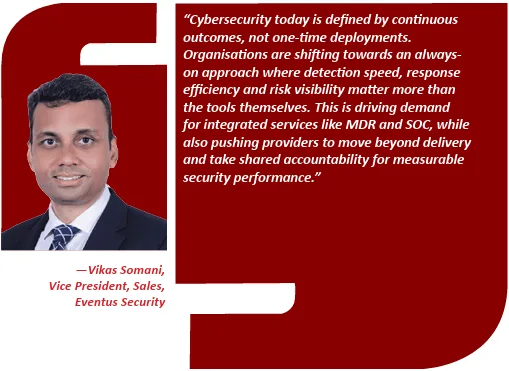
The transition may sound subtle. In reality, it is forcing organisations to rethink how cybersecurity is delivered, measured and funded.
When deployment stopped being the finish line
For years, success in cybersecurity was linked to deployment. A project completed on schedule. A correctly configured system. A signed compliance report. Those benchmarks once defined progress.
Today, they no longer guarantee security.
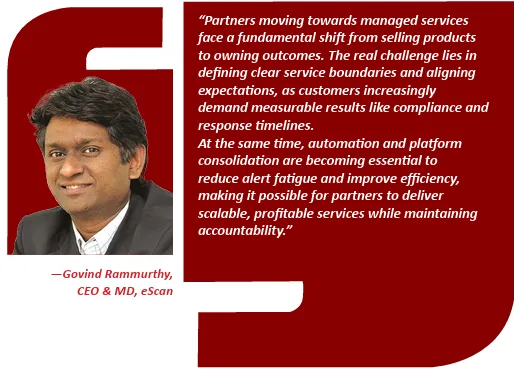
The focus has shifted to what happens after deployment. Detection speed now matters more. Response efficiency matters more. Visibility into operational risk matters more. These are not one-time deliverables. They are continuous expectations.
That is one reason the industry is steadily moving away from product-centric thinking. Products still matter, but products alone are no longer enough. A security tool that is poorly monitored or left idle delivers little practical value.
Continuity has become the central theme. And continuity demands a completely different operating model.
Customers are buying assurance, not just tools
Conversations with CIOs and business leaders have changed noticeably. Interest in technical features has taken a back seat. Concerns around exposure, accountability and resilience dominate discussions instead.
The question is no longer, “What does this solution do?” The question now is, “Will this keep operations secure tomorrow morning?”
That change has direct implications for partners and service providers.
Customers increasingly expect providers to remain involved after deployment. They want visibility into their environments, quicker responses when incidents occur, and clarity around accountability during disruptions.
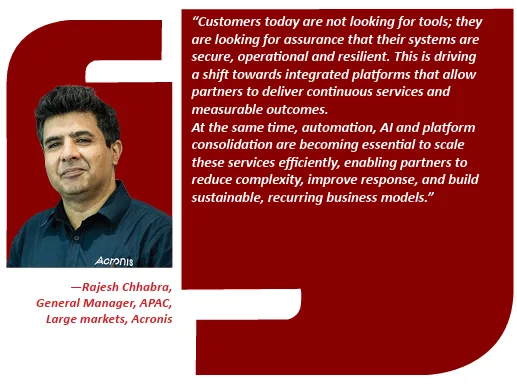
There is also growing discomfort around uncertainty. Regulatory pressure has intensified that concern. Compliance is no longer treated as an annual exercise. It has become continuous and far less forgiving.
For mid-sized organisations, this creates a difficult operational challenge. Many understand the need for round-the-clock security, but struggle to recruit and retain specialised teams capable of delivering it internally.
That gap is accelerating demand for managed security services. In many cases, businesses are adopting these models not out of preference but out of operational necessity.
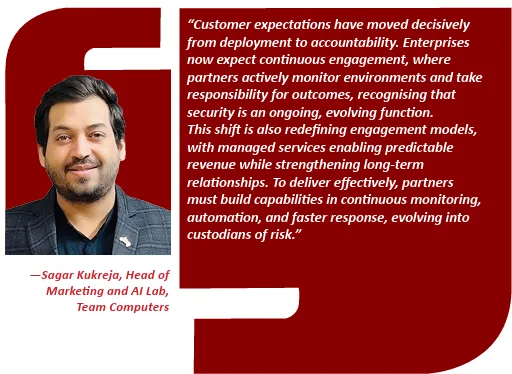
Managed services are filling a growing operational gap
The growth of managed security services is not simply vendor-driven momentum. It reflects a broader operational reality.
Organisations need continuous monitoring, but building internal capabilities at scale is expensive and difficult. They need faster incident response, but fragmented tools and overloaded teams often slow decision-making.
Managed services are stepping in to bridge that gap.
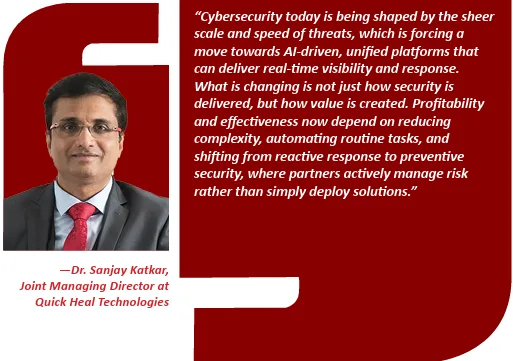
What is particularly interesting is how services such as MDR and SOC-as-a-service are beginning to merge into broader operational frameworks. Threat detection, response, intelligence and compliance are no longer isolated functions.
They are increasingly connected through continuous workflows.
That integration matters because cyber threats rarely arrive in neat, isolated categories. Threats move across systems, workloads and timelines simultaneously. Fragmented defences struggle to respond effectively under that kind of pressure.
Unified security models, while more difficult to build, tend to perform better when organisations face operational stress.
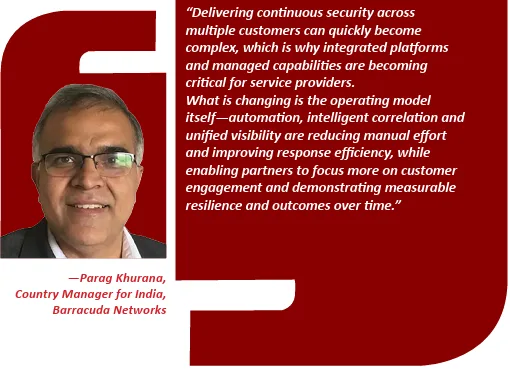
Contracts are becoming more demanding and more transparent
As cybersecurity shifts towards continuous service delivery, contracts are also evolving.
Earlier agreements focused heavily on activity metrics. Uptime percentages. Ticket closures. Support timelines. Those indicators still exist, but they no longer define customer expectations.
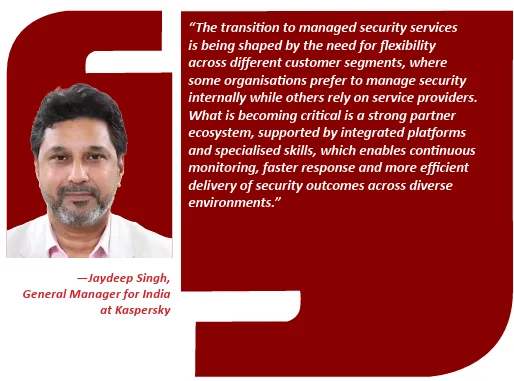
Customers increasingly want measurable outcomes instead.
They want faster detection times, defined response windows, clearer escalation processes and in some cases even measurable reductions in operational risk.
That creates new tensions. Outcomes are more difficult to guarantee than activities. Accountability also becomes more complicated when multiple stakeholders are involved.
If a threat is detected but not acted upon, who carries responsibility? If recommendations are ignored, where does liability sit?
The industry still does not have simple answers. What is emerging instead is a more formalised model of shared responsibility.
Technology providers maintain and update the platforms. Partners manage monitoring and response. Customers are expected to follow through on critical operational actions.
It is not a perfect arrangement. But it is far more realistic than assuming responsibility ends immediately after deployment.
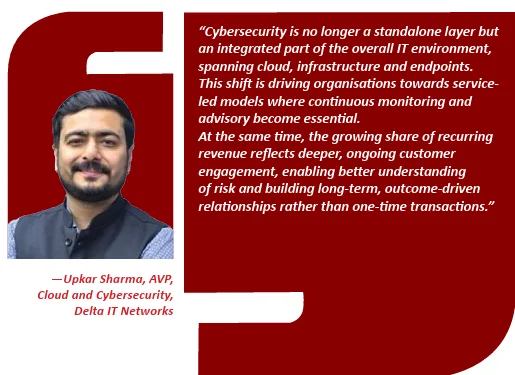
Platforms are quietly becoming operational foundations
Beneath these changes sits another major transformation. Security platforms themselves are evolving.
Modern platforms are no longer just collections of disconnected tools. They are becoming operational environments that combine endpoints, networks, cloud workloads and analytics into a single management layer.
That consolidation addresses a long-standing industry problem.
Security teams have struggled for years with tool sprawl, overwhelming alert volumes and poor operational visibility. False positives have consumed valuable analyst time, often allowing genuine threats to slip through unnoticed.
Newer platforms are attempting to reduce that noise through automation and stronger correlation capabilities.
The result is not perfection. But it is progress, fewer alerts, more relevant signals, and faster operational decisions.
For service providers, these efficiencies directly affect business sustainability. Margins improve when teams spend less time managing unnecessary operational workload.
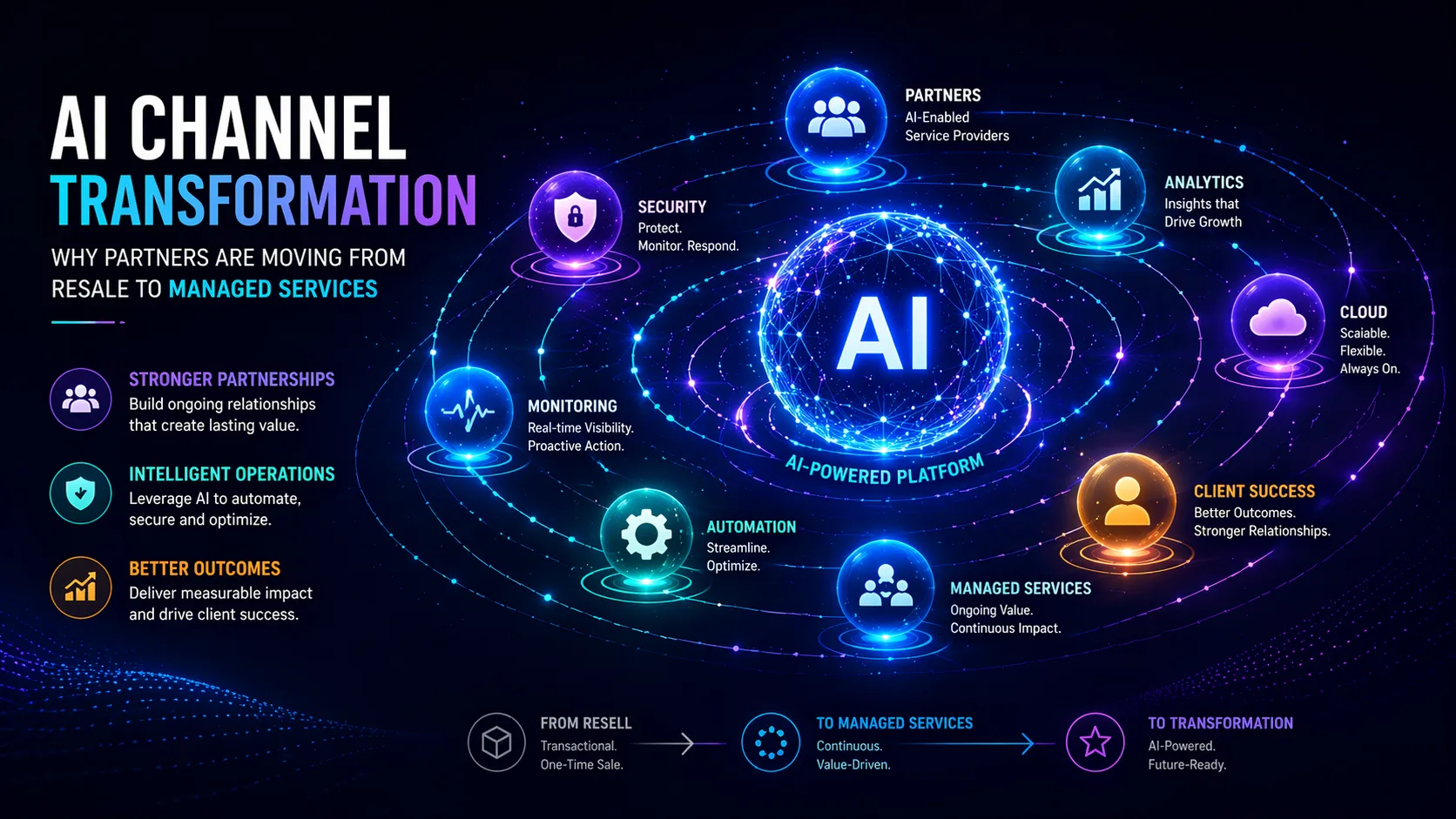
Automation is carrying much of the operational burden
There is often a tendency to exaggerate the role of AI in cybersecurity. But its operational impact is becoming difficult to ignore.
Automation is increasingly handling repetitive and time-intensive security tasks.
Basic alert triage, initial containment steps, and some remediation processes were once entirely dependent on constant human intervention.
By automating routine functions, organisations can redirect skilled professionals towards more complex security decisions where judgement and experience matter most.
This is not primarily about replacing people. It is about making limited expertise more effective.
Without automation, scaling managed security services across multiple customers would become economically difficult.
The business model is changing alongside the technology
From a financial perspective, managed services offer obvious advantages. Recurring revenue improves predictability. Customer engagement deepens over time. Long-term relationships become stronger and often more stable.
But the transition is not always comfortable.
Building managed service capabilities requires investment in people, infrastructure and operational processes. Revenue patterns also change significantly.
Instead of large one-time deals, revenue is distributed over longer periods. That can create short-term financial pressure even when long-term stability improves.
Over time, however, the model often becomes more sustainable. What many organisations underestimate is the cultural adjustment required during this shift.
Businesses accustomed to transactional sales models must learn how to operate around continuous engagement. Sales teams need to think beyond immediate deals. Delivery teams need to function continuously rather than around project timelines.
The biggest barrier is often mindset, not technology
Not every organisation adapts smoothly to this transition. The real challenge frequently comes down to mindset rather than technology.
Moving from a reseller or systems integrator role into a service provider role changes the nature of accountability. Organisations are no longer delivering a solution and stepping away.
They are remaining responsible over extended periods.
That shift changes how teams approach customer relationships, how operational success is measured internally and how businesses define long-term value.
Some organisations embrace the transition quickly, while others hesitate. That hesitation can become expensive at a time when customer expectations are already evolving rapidly.
The cybersecurity ecosystem is reorganising itself
This transformation is affecting every layer of the cybersecurity value chain. Technology providers are focusing more heavily on building platforms that enable broader services. Distributors are expanding beyond logistics into support and enablement roles.
Partners themselves are beginning to separate into two distinct groups.
Some continue operating within transactional models. Others are moving deeper into full-service accountability and long-term operational ownership.
Both models will continue to exist, but they are increasingly serving different customer requirements. There is also a visible shift towards specialisation.
Many partners are choosing to focus on specific industries because sector-specific understanding is becoming a competitive necessity. Regulatory expectations, operational realities and threat environments vary significantly across industries.
Generalist approaches are finding it harder to stand out.
What customers ultimately expect
Despite all the complexity, customer expectations remain surprisingly straightforward; the organisations want confidence.
They want assurance that systems are functioning properly, risks are being monitored continuously, and someone is actively watching when internal teams cannot.
Most importantly, they want clarity around what happens when something goes wrong. That is increasingly what customers are paying for.
Customers are no longer paying only for software, dashboards or periodic reports. They are investing in confidence, operational visibility and the assurance that someone is continuously monitoring risks before they become serious business disruptions.
Where cybersecurity delivery is heading next
The direction of the industry is becoming increasingly clear, even if adoption speeds differ between organisations.
Security operations will become more integrated and less fragmented. Automation will continue taking over repetitive operational work. Service agreements will move further towards measurable outcomes even when those expectations create discomfort.
The lines separating vendors, partners and managed service providers will continue to blur.
In the long run, competitive advantage will depend less on who sells a particular tool and more on who can consistently deliver operational outcomes.
Because cybersecurity is no longer a project organisations complete once and forget. It has become an ongoing responsibility that never completely disappears.






 2 Min read