
AI channel transformation: why partners are moving from resale to managed services

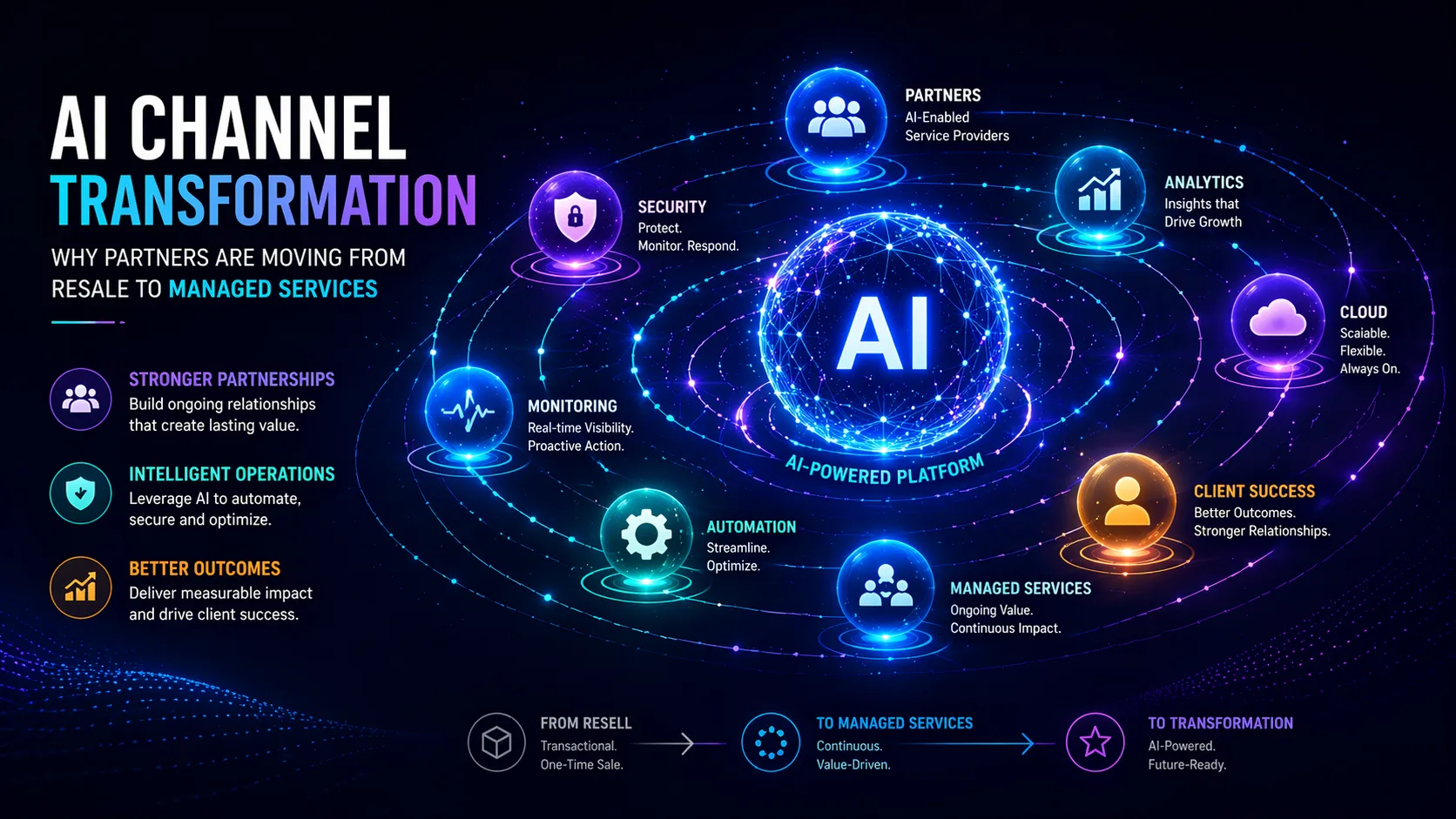
Something very fundamental is changing in the IT channel, but it is not happening loudly. There is no single announcement, no single launch moment, and no visible disruption event. Yet, the shift is deep and structural. The channel is moving from product movement to problem-solving. From supply efficiency to business impact. From transactions to outcomes.
For decades, the channel ecosystem worked on a predictable structure. Vendors supplied products. Distributors ensured availability. Partners enabled reach. Revenue depended on margins. Growth depended on volume. Relationships were built on pricing, fulfilment, and inventory efficiency. AI is quietly changing that equation.
Customer conversations are no longer centred on product specifications. They are now centred on outcomes. Customers are not asking which device to buy. They are asking what business problem can be solved. This change is redefining the role of the partner.
The partner is no longer just a seller. The partner is becoming a designer, integrator, operator, and advisor. This is not just a technology transition. It is a business model reset.
From selling products to delivering outcomes
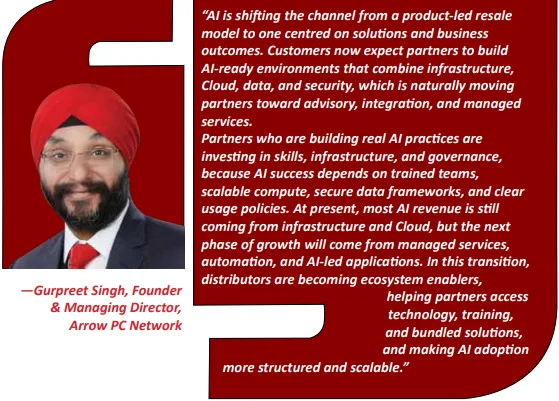
AI cannot be sold like a laptop or a server. AI requires infrastructure, Cloud, data architecture, security frameworks, governance structures, and integration capabilities. It requires continuous monitoring, optimisation, and alignment with business workflows.
Because of this, customers expect partners to build AI-ready environments rather than simply supply technology.
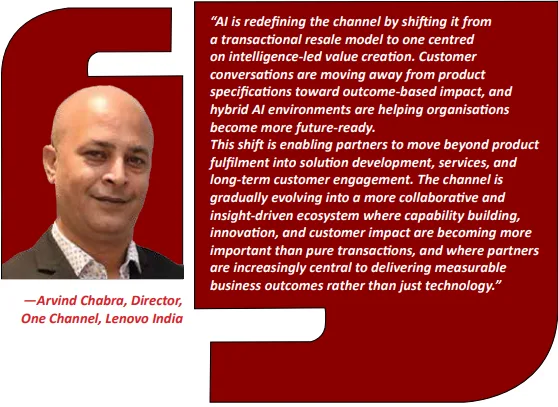
This transition is pushing partners towards advisory services, integration services, managed services, automation services, data services, and security services. The value is shifting upward in the technology stack. The closer a partner moves to the business problem, the greater the strategic relevance.
Building an AI practice is not about adding another product line. It requires trained teams, compute capability, data frameworks, and governance models. Partners investing across these layers are building long-term capability rather than short-term opportunity.
Many others are still evaluating the shift.
Recurring revenue is replacing transactional margins
AI is also reshaping the revenue structure of the channel. The traditional model depended on one-time product transactions. A product was sold, margin was earned, and the cycle ended.
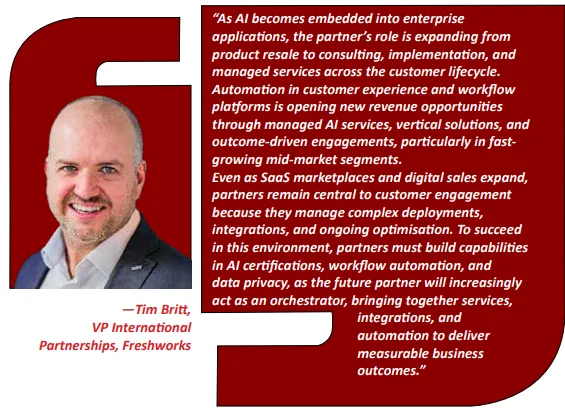
AI environments require continuous optimisation and lifecycle management. This creates opportunities for managed AI services, intelligent infrastructure management, automated security operations, cyber resilience frameworks, Cloud optimisation, and automation consulting.
These services create predictable revenue streams. They also deepen customer relationships over longer engagement cycles. This marks a structural move from low-margin resale to high-value services.
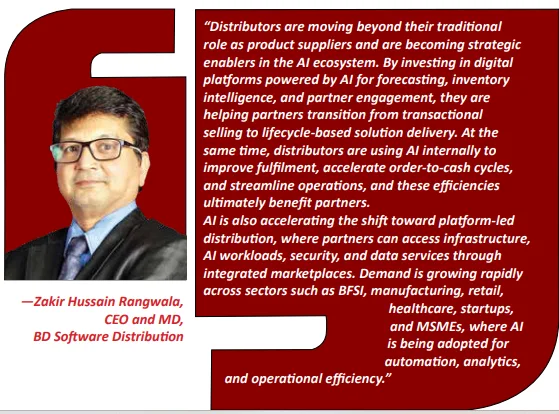
Currently, most AI-led revenue is emerging from infrastructure layers such as AI-enabled devices, high-performance compute environments, storage, cybersecurity, and Cloud. However, infrastructure is only the entry point.
The long-term value lies in managed services, automation capabilities, and AI-driven applications. Infrastructure creates adoption. Services create sustainability.
Distributors are evolving into ecosystem enablers
The distributor’s role is also being redefined. Distribution is no longer limited to logistics and inventory movement. Distributors are increasingly enabling partner capability through training support, bundled solutions, and access to AI technologies.
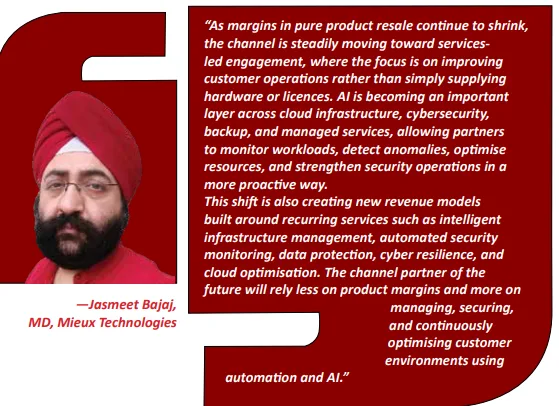
Many are building digital platforms that use AI for demand forecasting, inventory planning, and partner engagement. This enables partners to move from one-time selling towards lifecycle-driven engagement models.
Another visible shift is the rise of platform-based distribution. Partners increasingly prefer integrated marketplaces where AI workloads, GPUs, security solutions, and data services can be accessed through a unified interface. AI solutions depend on multiple technology layers working together, accelerating platform-led distribution models.
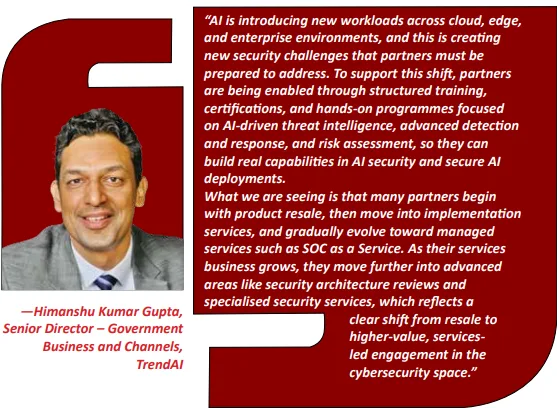
Distribution is becoming platform-led rather than product-led.
SaaS, automation, and workflow intelligence are reshaping partner roles
AI embedded within enterprise applications is expanding the role of the partner beyond software resale into consulting, implementation, and lifecycle services.
Automation platforms are creating opportunities across customer experience automation, employee experience automation, and workflow optimisation. Many mid-market organisations are adopting AI for billing automation, issue resolution, personalised engagement, and internal workflow simplification.
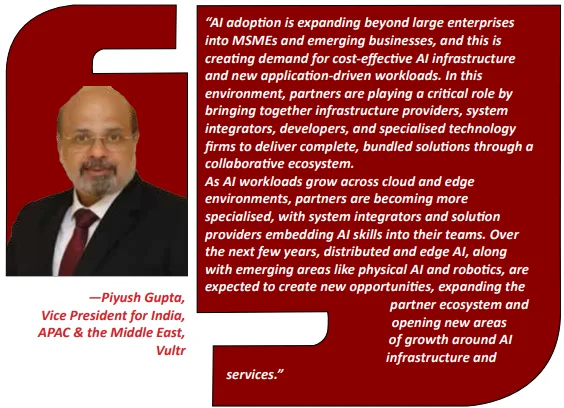
These solutions are gaining traction because they deliver measurable outcomes without requiring complex infrastructure investments. This trend is particularly relevant for MSMEs and mid-market organisations seeking cost-effective AI adoption.
Cybersecurity is shifting towards continuous services
AI is significantly influencing cybersecurity operations. The scale of security alerts has exceeded the capacity of manual monitoring processes. AI is increasingly used to filter signals, identify risk exposure, and detect anomalies.
Partners are expanding services across managed detection and response, SOC-as-a-service, risk advisory, and security architecture evaluation.
Cybersecurity conversations are also moving from technical discussions towards business risk conversations. Security exposure is increasingly linked to financial impact, operational downtime, and compliance obligations. This transition allows partners to engage with business leadership teams rather than only IT departments. Security is evolving into an advisory-led discipline.
Industry demand patterns are becoming clearer
AI adoption is not uniform across industries. Certain sectors are demonstrating faster adoption due to direct efficiency impact and measurable decision support benefits.
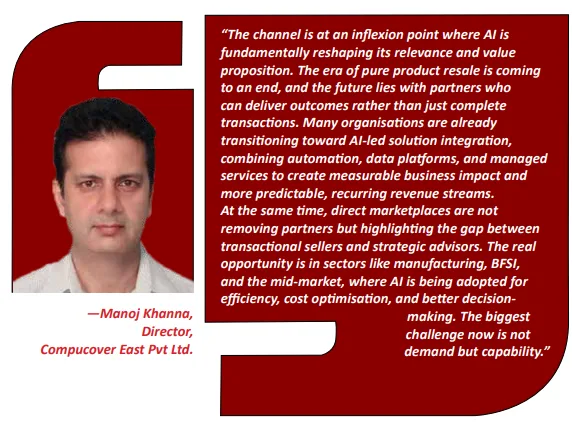
Strong adoption momentum is visible in BFSI for fraud analytics and compliance monitoring, manufacturing for predictive maintenance and quality control, retail for personalisation, healthcare for diagnostics and workflow optimisation, and MSMEs for cost optimisation through automation.
These sectors are emerging as early opportunity zones for channel partners building AI capability.
Infrastructure expansion and the rise of edge AI
AI adoption is generating new workload demand across Cloud and edge environments. This is increasing demand for compute resources, GPUs, and distributed infrastructure architectures.
Partners are playing a critical role in integrating infrastructure providers, developers, system integrators, and Cloud platforms into unified solution environments.
Edge AI and physical AI applications are expected to expand the ecosystem further. Robotics, intelligent devices, and AI-enabled physical systems may create new partner opportunity layers across infrastructure and services. The total addressable market for the channel is expanding.
Capability remains the biggest gap
Despite strong demand signals, many partners continue to operate within traditional volume-led business models focused on pricing efficiency and inventory movement.
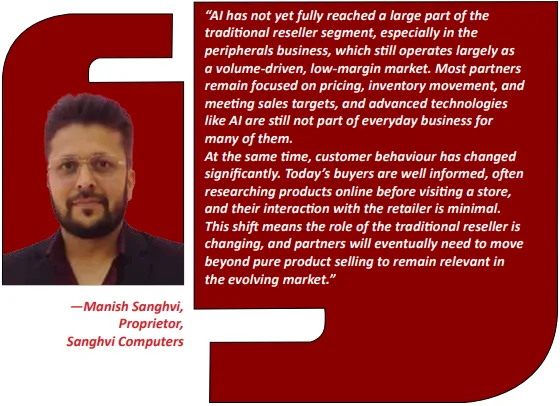
Customer behaviour has already changed. Buyers increasingly research technology independently before engaging partners. The transactional role of the reseller is gradually reducing. The primary constraint is not demand. It is capability.
Partners require stronger data engineering expertise, AI integration skills, automation capability, cybersecurity competence, and governance frameworks. Capability development requires investment and long-term commitment. Partners who invest early are likely to lead the next phase of the channel.
The channel is evolving, not disappearing
There is ongoing concern that direct marketplaces and hyperscalers may reduce the relevance of channel partners. However, customer environments continue to require implementation expertise, integration capability, security management, and continuous optimisation.
The partner role is becoming more specialised, not less relevant. The channel is moving from sellers to operators. From resellers to advisors. From transactions to outcomes.
Conclusion: the next channel leader will look very different
The channel has reached an inflexion point. The era of pure product resale is gradually declining. The future belongs to partners who can deliver measurable outcomes, manage environments, and continuously optimise customer systems. Success will not depend on the number of products sold. It will depend on the number of customer environments managed. AI is not just another technology cycle. It represents a structural reset of the channel business model.
Partners who recognise this transition early will shape the next decade of the IT channel.
Read More:
AI transforming channel partner business models toward solution-led growth
Apple at 50: ecosystem thinking reshapes India’s reseller experience
AI Infrastructure and hybrid cloud driving channel evolution in India: Lenovo insights
AI Cloud infrastructure growth: Vultr expands partner ecosystem across India APAC Middle East








 2 Min read