
AI is reshaping Indian IT channel through recurring revenue and trusted advisory


India's IT channel has successfully navigated several technology transitions over the past two decades, from hardware sales to software-led services, cloud adoption and subscription-based business models. Artificial intelligence represents the next phase of that evolution, but unlike previous technology cycles, this shift is changing not only the technologies partners deliver but also how they build and sustain customer relationships.
For years, implementation projects, infrastructure deployments and periodic technology refreshes formed the backbone of channel revenues. Once a project was completed, customer engagement largely revolved around support contracts and renewals. AI is gradually replacing that transactional model with one centred on continuous engagement, measurable outcomes and business value.
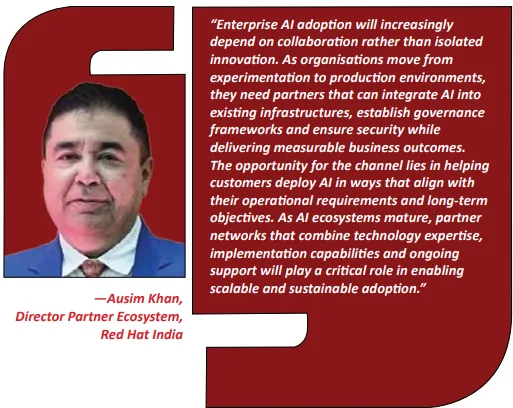
Customers are increasingly looking beyond technology deployment. They expect partners to help identify suitable AI use cases, establish governance frameworks, manage risks and ensure that AI investments contribute to productivity and long-term business growth. This shift is pushing channel partners beyond implementation and towards strategic consulting.
The move from implementation to advisory services
Technology deployment remains an essential capability, but enterprises now require guidance throughout the AI lifecycle. Successful AI adoption depends on organisational readiness, governance, compliance, user adoption and continuous optimisation rather than simply integrating new tools.
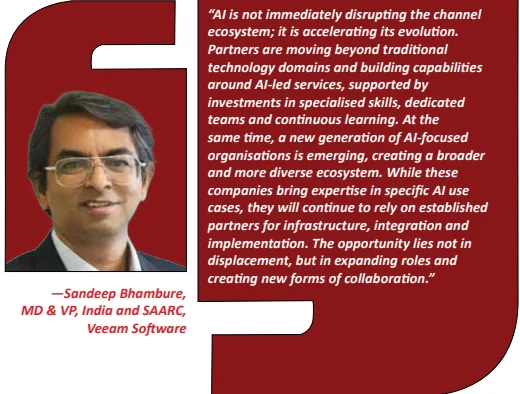
As AI deployments mature, organisations need support in developing implementation roadmaps, monitoring model performance, maintaining governance policies and adapting systems to changing business requirements. These ongoing needs create opportunities for channel partners to build deeper customer relationships through advisory-led engagements instead of one-time projects.
Unlike traditional deployments, AI systems demand continuous monitoring, refinement and operational oversight. This makes long-term consulting and managed services increasingly valuable for enterprises seeking reliable AI adoption.
Recurring revenue becomes a practical business model
The IT channel has discussed recurring revenue for years, but AI is creating conditions where that model is becoming increasingly achievable.
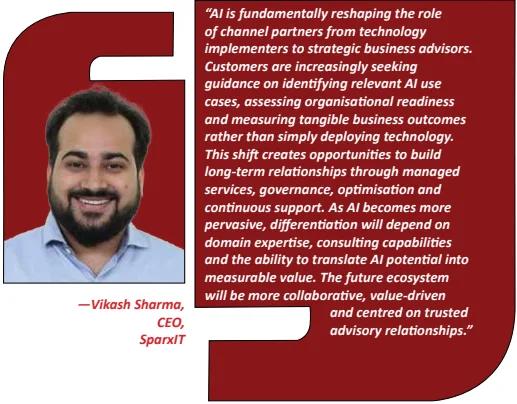
AI environments require continuous optimisation, data quality management, security updates, governance reviews and ongoing maintenance. Rather than treating projects as completed once systems go live, enterprises are investing in services that ensure AI continues to deliver measurable business outcomes over time.
This creates opportunities across managed AI services, intelligent automation, cloud optimisation, application modernisation, governance programmes and compliance management. Customers are increasingly willing to invest in operational continuity instead of periodic interventions, giving partners greater revenue predictability while strengthening long-term customer relationships.
Industry expertise is becoming the real differentiator
AI is accelerating software development through automation and intelligent coding tools, reducing the time required to build and deploy applications. However, speed alone is unlikely to remain a competitive advantage.
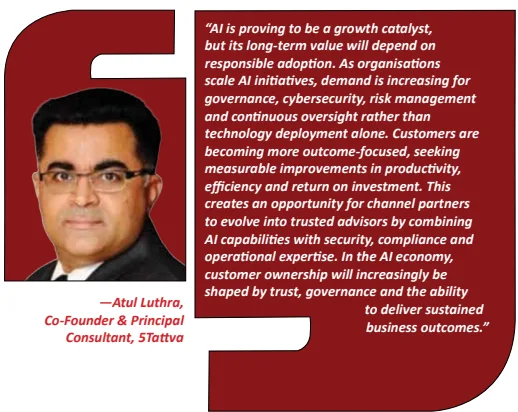
Enterprises increasingly prefer partners that understand their industries, regulatory environments and operational challenges. The requirements of financial services, healthcare, manufacturing and public sector organisations differ significantly, making sector-specific expertise far more valuable than rapid implementation alone.
Partners that combine technology skills with domain knowledge can develop reusable frameworks, repeatable methodologies and industry-focused solutions that continue to deliver value even as AI automates routine technical work.
Trust, governance and security move to the forefront
As enterprise AI adoption expands, organisations are paying greater attention to governance, cybersecurity and operational risk.
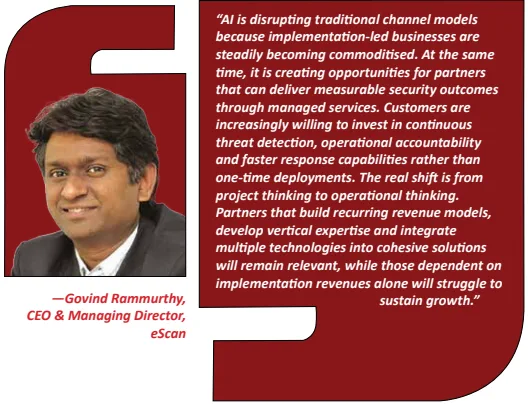
Businesses need confidence that AI systems operate within secure, compliant and transparent environments. Concerns around uncontrolled AI usage, sensitive data exposure and governance gaps have made security an integral part of AI strategy rather than a separate consideration.
This has expanded opportunities for partners specialising in cybersecurity, governance, compliance and risk management. AI security assessments, continuous monitoring and governance advisory are becoming essential services as enterprises seek trusted partners who can balance innovation with operational resilience.
Trust is increasingly emerging as one of the strongest differentiators in customer relationships.
Customer success is now measured by business outcomes
Many organisations have already completed pilot projects and proof-of-concept initiatives. The focus is now shifting towards measurable returns from AI investments.
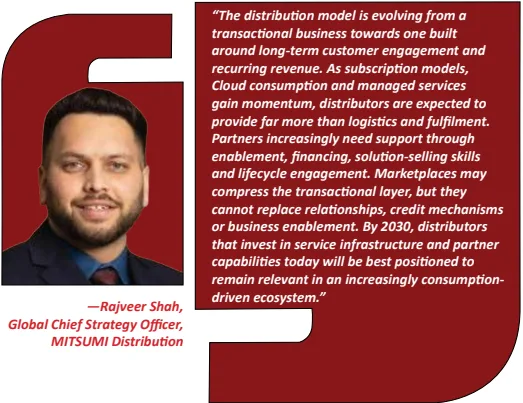
Customers want to understand whether AI improves productivity, accelerates decision-making and generates operational efficiencies. As a result, channel partners are placing greater emphasis on defining success metrics, aligning technology initiatives with business priorities and demonstrating measurable outcomes throughout the engagement lifecycle.
This outcome-driven approach is changing customer expectations. Organisations increasingly value partners that provide accountability, strategic direction and long-term support instead of simply delivering technology.
Building capabilities for the next phase of growth
AI adoption also requires continuous investment in people. Sustainable AI practices depend on multidisciplinary teams with expertise spanning cloud technologies, cybersecurity, automation, governance, data engineering and industry consulting. At the same time, organisations must support employees through change management to ensure AI becomes part of everyday business operations rather than remaining an isolated technology initiative.
The broader ecosystem is also becoming more collaborative. Technology vendors, cloud providers, software companies, distributors, consultants and channel partners each contribute specialised capabilities, making collaboration essential for successful AI transformation.
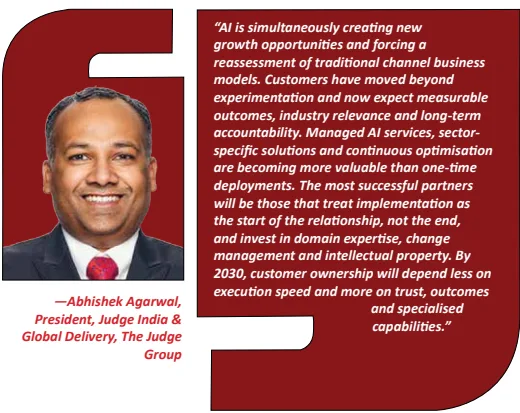
Distribution models are evolving alongside this shift. Beyond logistics and fulfilment, distributors are increasingly focusing on partner enablement, financing, training, subscription management and business support to help channel organisations transition towards recurring revenue models.
The road ahead
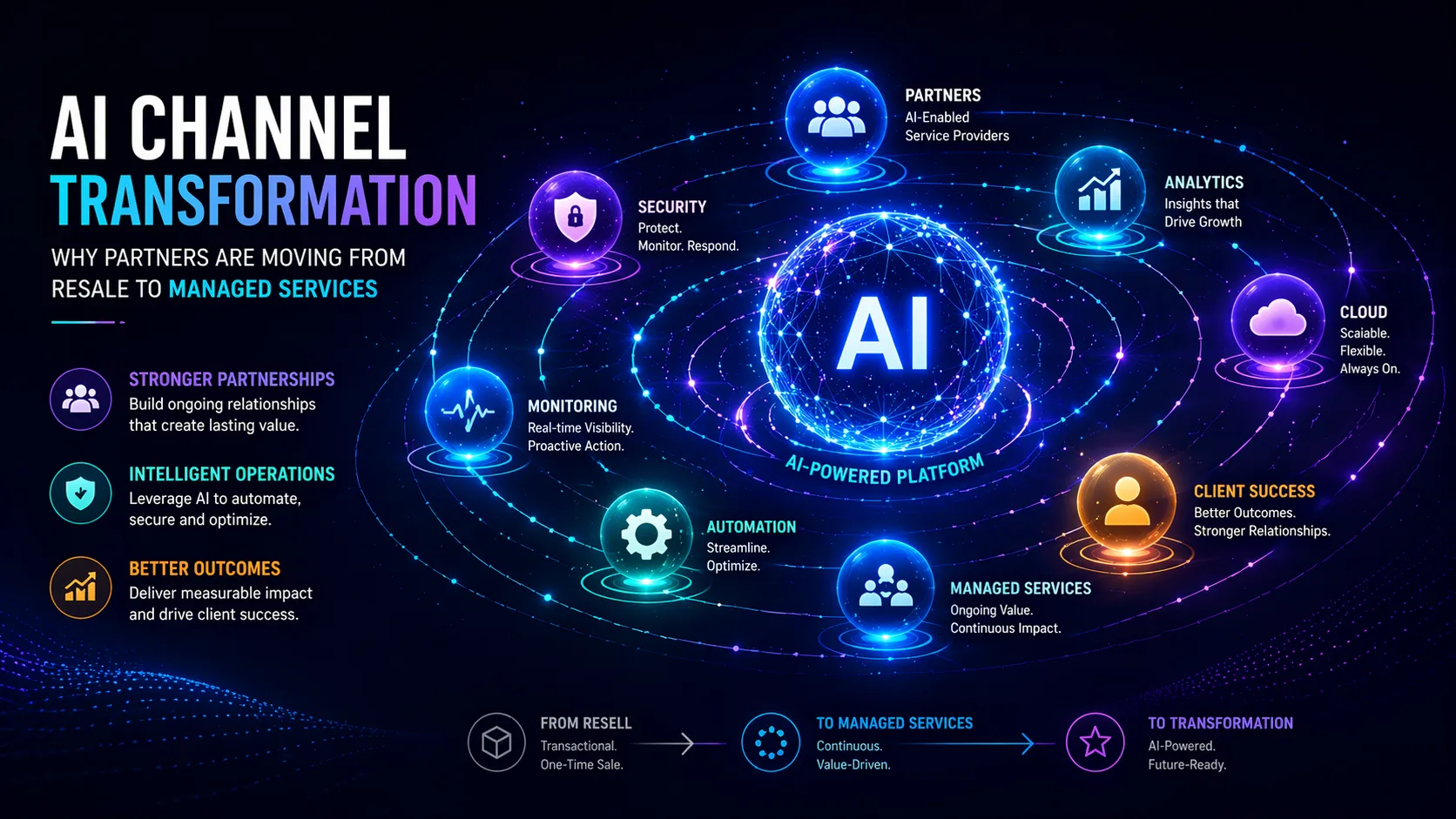
Artificial intelligence is reshaping how value is created across India's IT channel. The emphasis is moving away from one-time implementations towards continuous engagement, advisory services and long-term customer success. Recurring revenue, governance, security and business outcomes are becoming central to channel growth.
As AI adoption accelerates, customer ownership will increasingly belong to partners that combine technical expertise with industry knowledge, trusted advice and ongoing operational support. Those that invest in specialised capabilities, managed services and long-term customer relationships will be better positioned to shape the next phase of India's channel ecosystem.
Read More:
AI Appreciation Day: Beyond the AI hype, where the real enterprise opportunities are emerging
HP showcases AI PCs and enterprise AI strategy with Delta IT Network







 2 Min read