
Why managed security services are reshaping the cybersecurity channel in India

The cybersecurity market in India is undergoing a structural shift. Customers are no longer looking only for security products or isolated deployments. They increasingly expect measurable outcomes, continuous monitoring, faster response times, and long-term resilience. For channel partners, this is changing the business model itself.
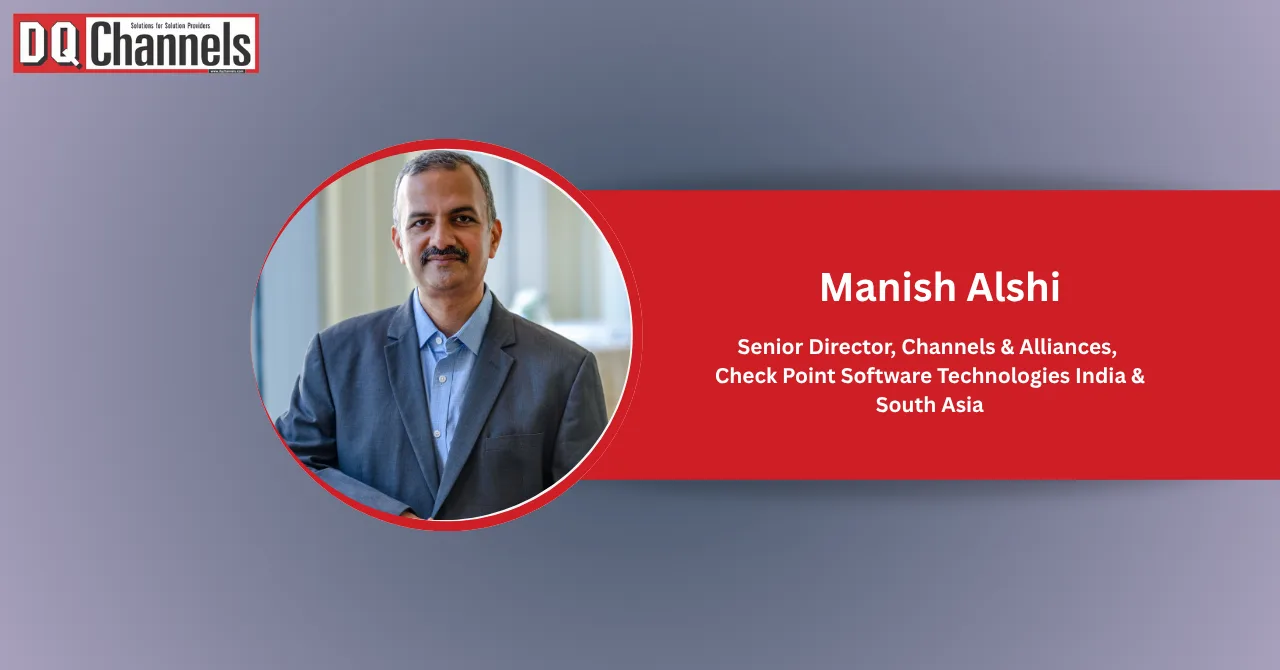
According to Manish Alshi, Senior Director, Channels & Alliances, Check Point Software Technologies India & South Asia, the evolution is moving partners beyond resale-led engagement toward managed security services and lifecycle-driven customer relationships.
Alshi explained that customers today want confidence and continuity rather than disconnected tools. He noted that the role of partners is steadily expanding from deployment and integration into consulting, optimisation, managed security operations, and recurring-revenue services.
“Customers increasingly want outcomes, not just tools,” said Alshi. “Our role is to help partners become long-term security advisors with the ability to deliver continuous protection, measurable risk reduction, and predictable business value rather than one-time product transactions.”
Check Point MSSP strategy focuses on recurring security services
Check Point Software is aligning its channel strategy around MSSP growth, prevention-first security, and managed cybersecurity delivery. The company says this transition starts with partner enablement and specialised training around AI security, exposure management, Zero Trust architectures, hybrid cloud security, and managed services.
The broader objective is to help partners develop service-led practices that create recurring revenue streams instead of relying only on transactional product margins. According to Alshi, flexible subscription licensing, cloud-delivered security, and multi-tenant platforms are central to this shift.
The company also believes the market itself is pushing partners toward this direction. As cybersecurity spending grows across India, customers increasingly want providers who can own long-term operational outcomes instead of only supplying technology.
Alshi noted that modern partner programmes can no longer revolve around discounts and registrations alone. He said they are evolving into profitability frameworks designed to support managed services, cloud security operations, and customer retention models.
Unified security platforms are becoming the backbone of MDR services
The evolution of OEM platforms is also changing how partners deliver managed detection and response services. According to Check Point, security platforms are no longer operating as standalone management consoles. They are increasingly becoming service-delivery environments that integrate visibility, automation, API extensibility, and multi-layered security management into a unified framework.
Alshi explained that partners now require centralised visibility across network, cloud, endpoint, email, and identity environments without relying on fragmented security tools.
“In practical terms, this allows partners to build co-managed SOC, MDR and continuous monitoring services without carrying the full operational burden of fragmented tooling,” he said. “The platform itself becomes the operating model for service delivery, not just the technology stack underneath it.”
The company’s MSP programme is structured around unified management, flexible billing, and centralised onboarding to make managed services commercially viable for partners. The focus is to simplify operations while improving scalability and profitability for MSSPs.
AI and automation are reshaping partner profitability
Check Point also sees AI, automation, and platform consolidation as critical pillars for the next phase of cyber security service delivery. According to the company, automation reduces operational overhead, improves incident prioritisation, and enables partners to scale security operations more efficiently.
Alshi highlighted that platform sprawl directly impacts partner margins because multiple disconnected tools increase management complexity, training overhead, and operational inefficiency. The company’s strategy is therefore centred around unified and prevention-first architectures.
“Automation and AI help partners deliver more with less, including fewer manual tasks, faster triage, better prioritisation and more scalable service delivery,” said Alshi.
He added that technologies such as ThreatCloud AI and Infinity AI Copilot are designed to automate complex security workflows, accelerate management operations, and improve threat prevention outcomes for customers.
For partners, this creates an opportunity to build learner service operations while improving recurring profitability through managed offerings rather than labour-intensive support models.
Cybersecurity accountability is becoming shared across the ecosystem
One of the strongest themes emerging from Check Point’s channel strategy is the idea of shared accountability between OEMs and partners. As customers increasingly demand measurable outcomes, the company believes responsibility can no longer remain fragmented.
According to Alshi, OEMs must focus on delivering automation, threat intelligence, product innovation, and prevention-first architectures, while partners operationalise these technologies through managed services, customer engagement, and day-to-day execution.
“As a 100% partner-led organisation, Check Point sees partners as strategic extensions of our organisation, especially in a market like India where local context, vertical expertise and response speed matter,” he said.
The company expects the relationship between OEMs, distributors, and partners to become more interconnected over the next few years. OEMs will increasingly provide AI-led security frameworks and integrated platforms, distributors will expand their enablement role, and partners will become the primary layer responsible for delivering cyber resilience outcomes to customers.
Alshi believes the future of the cybersecurity ecosystem will depend less on individual transactions and more on how effectively the ecosystem collaborates to deliver resilience, continuity, and measurable risk reduction for enterprises.
Read More:
Synology 2026 India strategy: Introduces updated PAS Series and ActiveProtect in India
CAIT to host Global investors meet in Moscow to connect Indian MSMEs with Russian buyers




 2 Min read