Convergence India Expo 2026 signals the real shift in AI, smart cities and deep tech adoption

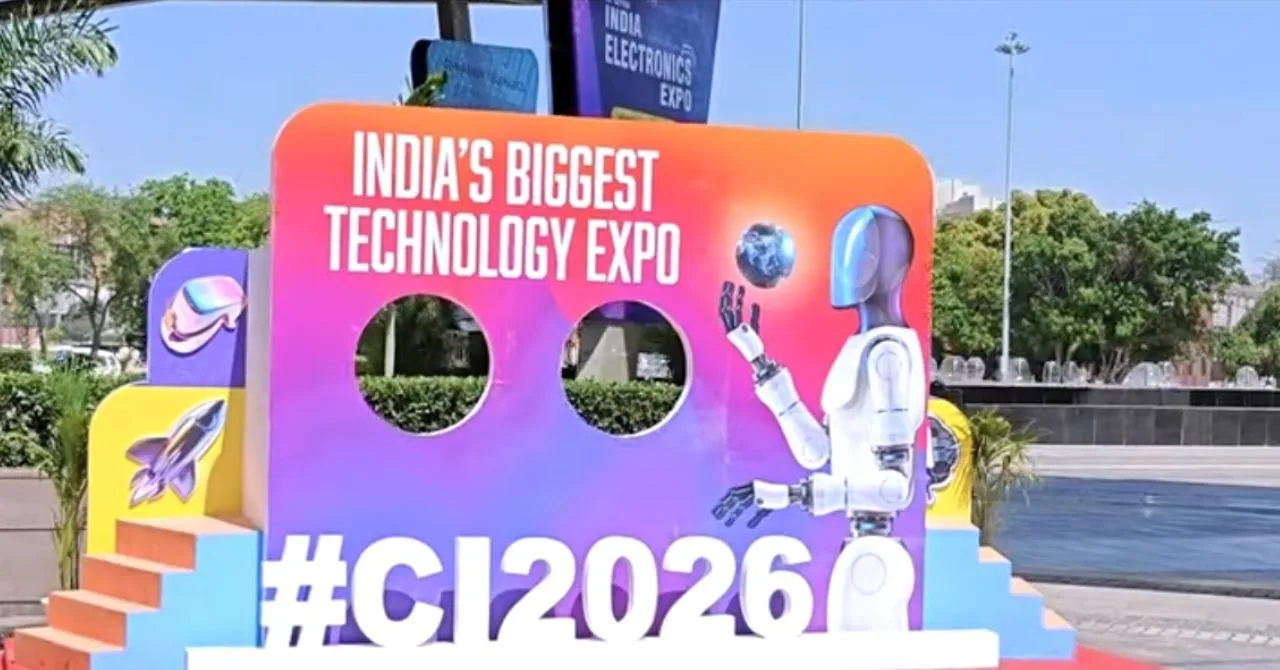
For more than three decades, Convergence India has quietly tracked the evolution of India’s technology story. From telecom infrastructure days to AI-led digital transformation, the platform has mirrored the industry’s changing priorities. The 2026 edition of Convergence India and Smart Future Cities India reflects a clear shift. Technology is no longer experimental. It is now operational, scalable and deeply embedded in enterprise strategy.
Government leaders, global innovators and emerging startups shared a common narrative. AI, 6G, IoT, SaaS, cybersecurity and smart infrastructure are moving from pilot mode to real deployment. The discussions at the expo showed a growing maturity in how India is thinking about technology adoption across industries.
Watch Full Coverage Here -
AI, 6G and digital transformation define the future technology roadmap
The expo highlighted how ICT continues to act as the backbone of modern innovation. From Cloud platforms to blockchain networks, the emphasis was clearly on building scalable digital ecosystems. Government representatives, including Abhishek Singh, Additional Secretary, Ministry of Electronics and IT and CEO, India AI Mission, reinforced the growing national push towards AI-led economic development.
The presence of policymakers, startup founders and enterprise technology leaders created a collaborative environment where policy met implementation. The conversation around 6G, AI and smart city frameworks revealed a shared focus on interoperability, sustainability and long-term infrastructure readiness.
A key observation from the event was the shift in enterprise mindset. Organisations are no longer asking whether they should adopt AI. They are asking how fast they can integrate automation into existing workflows.
Personal thermal architecture introduces a new category in climate control technology
One of the most intriguing innovations came from Kulpreet Sahni, Founder and CEO, Chiltier, who introduced the concept of personal thermal architecture. The idea is deceptively simple. Instead of cooling an entire room, cool the human body directly.
Sahni explained that the human body generates significant heat during activity. Traditional air conditioning systems attempt to cool large spaces, which consumes high energy. Personal thermal regulation technology focuses on extracting heat from the body’s core, thereby improving comfort with significantly lower power consumption.
The system uses conductive tubing and solid-state cooling to regulate body temperature. The approach may reduce energy consumption significantly when compared with conventional air conditioning systems. Sahni also pointed out potential use cases in healthcare, defence and hospitality sectors where heat stress impacts performance and productivity.
This approach also reflects a broader industry trend. Innovation is moving towards efficiency-driven design rather than incremental product upgrades.
AI-powered cameras redefine content creation workflows
Rakesh Tiwari from Obsbot demonstrated how embedded AI is transforming video production and live streaming workflows. AI-powered cameras now integrate gesture recognition, subject tracking and automated framing directly into the device.
The technology removes the need for complex multi-person production teams. A single operator can manage live streaming, video conferencing or sports event capture using AI-assisted automation.
The ability to track human movement, objects and gestures directly through embedded AI reduces dependence on external software systems. This shift signals how edge AI is enabling faster deployment and simpler workflows for content creators and enterprises alike.
Such tools are becoming essential as organisations increase investments in digital media, hybrid collaboration and online training platforms.
Smart surveillance innovation strengthens Made in India security infrastructure
Sparsh CCTV showcased its Green DVR solution, designed to simplify video surveillance infrastructure while reducing dependency on external storage hardware. The system integrates in-built storage, eliminating the need for separate hard disks and additional power adapters, making installation more efficient for residential and enterprise environments. A key innovation highlighted was cascading architecture, which enables a master NVR to connect with multiple NVR units, allowing monitoring of up to 256 camera channels through a single interface without requiring expensive server-based VMS systems. The company also demonstrated explosion-proof camera variants suitable for high-risk environments such as petroleum facilities, mining sites, tunnels and coastal regions where corrosion or fire hazards are a concern. With a strong focus on Made in India manufacturing, Sparsh aims to deliver cost-effective, scalable and durable surveillance technology tailored for critical infrastructure and distributed enterprise security deployments.
AI automation drives enterprise productivity transformation
Sambhav Parekh, Chief Strategy Officer, Tech Staunch Software Solutions, highlighted a key challenge faced by enterprises today. AI adoption often remains fragmented across departments. Many organisations experiment with AI tools but struggle to integrate them into structured business workflows.
Tech Staunch focuses on building automation pipelines that connect multiple enterprise systems into unified digital workflows. The approach focuses on analysing operational gaps and implementing customised AI-driven process automation.
Parekh emphasised that AI implementation requires domain understanding, not just technology deployment. Businesses require tailored solutions aligned with industry-specific processes across sectors such as healthcare, logistics, manufacturing and retail.
This insight reflects a growing enterprise realisation. AI transformation is less about tools and more about integration.
Smart cities and deep tech innovation attract global attention
The presence of global delegates, including Sergey Cheremin, Head of the Department for External Economic and International Relations of Moscow, highlighted the growing international relevance of India’s digital infrastructure initiatives.
Smart mobility solutions, urban analytics platforms and sustainable infrastructure technologies were widely discussed across sessions. The participation of leaders from Meta, EaseMyTrip, C-DoT, COAI and National Quantum Mission demonstrated the increasing convergence between policy frameworks and enterprise innovation.
Smart city initiatives are now expanding beyond surveillance and connectivity. The focus has moved towards predictive analytics, energy optimisation and citizen-centric digital services.
Convergence India Expo reflects the maturity of India’s innovation ecosystem
What stood out most at the event was the confidence of Indian technology startups. Many solutions showcased were designed in India but targeted for global deployment.
Energy-efficient climate technology, AI-powered cameras and workflow automation platforms represent a new wave of deep tech innovation emerging from the region.
After covering technology events, one pattern is clear. Real industry change happens when innovation moves from the concept stage to practical deployment. Convergence India Expo 2026 demonstrates that transition clearly.
India’s technology ecosystem is no longer following global trends. It is beginning to define them.
Read More:
AI Cloud infrastructure growth: Vultr expands partner ecosystem across India APAC Middle East







 2 Min read