/dqc/media/agency_attachments/2026/08/21/2026-08-21t061716244z-dq-channels-logojpg-2026-08-21-11-47-17.jpeg)

/dqc/media/media_files/2026/09/10/dq-channels-whatsapp-2026-09-10-17-07-48.png)

 Follow Us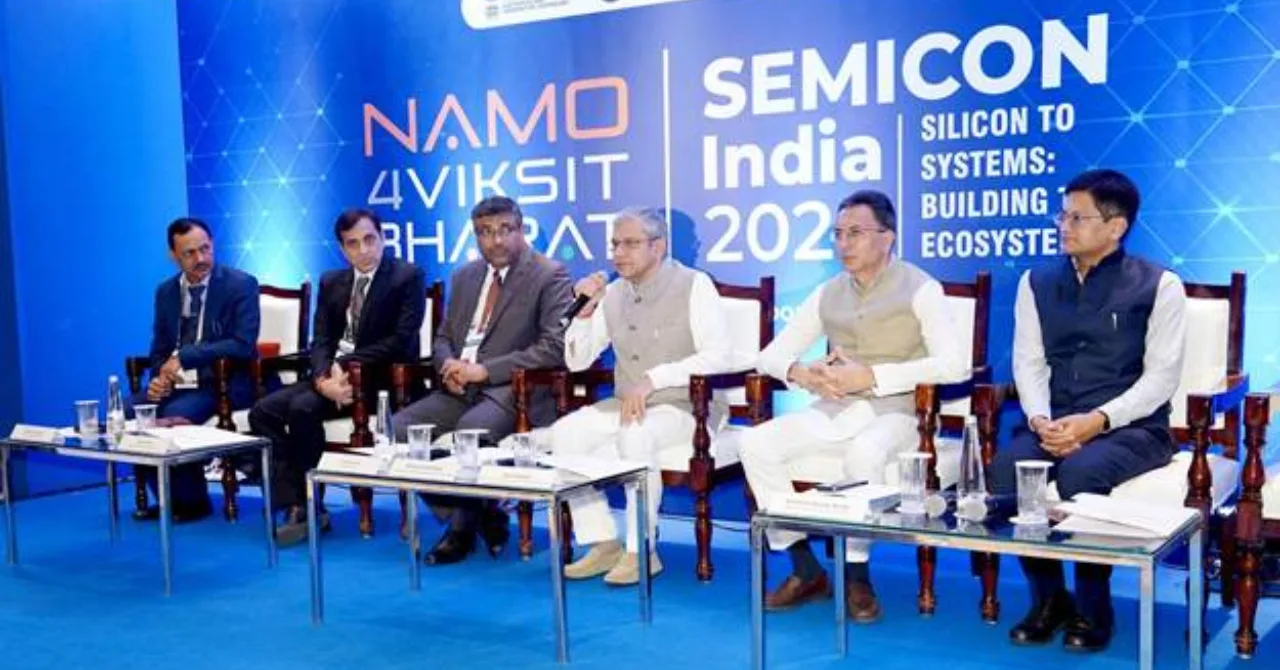
SEMICON India 2026 at Yashobhoomi brought together 25 memoranda of understanding and announcements covering the semiconductor value chain, from raw materials and fabrication to power electronics, advanced packaging, logistics, design and skills development.
According to the Ministry of Electronics and Information Technology, the agreements brought Indian and international partners together around priorities that include domestic manufacturing of critical materials, indigenous silicon carbide power technology, wider access to design tools, deep-tech investment, specialised semiconductor logistics and a larger talent pool.
The event brought together policymakers, global semiconductor companies, Indian manufacturers, researchers, startups, academics and students. Discussions covered supply chain resilience, R&D, cross-border partnerships, chip design, packaging and workforce readiness, under the government’s broader “Silicon to Systems” vision.
From semiconductor ambition to execution
Speaking during a fireside session, Union Minister for Electronics and Information Technology, Railways, and Information and Broadcasting Ashwini Vaishnaw said the India Semiconductor Mission had moved beyond signalling ambition and was now delivering at scale.
He outlined six pillars for ISM 2.0: chip design, machines and materials, additional fabrication plants, a stronger ATMP/OSAT segment, R&D and talent.
Vaishnaw said ISM 1.0, originally planned as a six-year programme, had met its goals in four years. He also expressed the expectation that the second phase could move ahead of schedule, citing continued investor interest.
Design was highlighted as a key part of the next phase. Vaishnaw projected that at least 200 chip design companies would emerge under ISM 2.0, which he described as a potential shift towards creating Indian-owned semiconductor intellectual property.
The ministry said more than 105 design startups now have access to advanced Electronic Design Automation tools, while 20 have raised venture funding. Around 70,000 chip design engineers have been trained over four years against a target of 85,000.
Vaishnaw also stressed the importance of competing on both quality and cost. Five of the 12 projects cleared under ISM 1.0 have started commercial output, according to the ministry.
The minister pointed to India’s position as a trusted partner and its track record in protecting intellectual property. He also described strong business-to-business participation at SEMICON India 2026, with companies from major semiconductor economies taking part.
The Country Roundtables, he said, indicated that global companies are looking to deepen their presence in India.
The focus is also moving beyond semiconductor design services. Vaishnaw described an ambition to develop India into a “Product Nation”, with chips designed in the country increasingly being used in finished products.
The wider ecosystem will also require semiconductor equipment and materials, specialised logistics, sustainability measures, water recycling and industry-ready graduates.
Partnerships remain central to the semiconductor ecosystem
Foreign Secretary Vikram Misri said durable semiconductor supply chains depend on partnerships based on trust.
He identified reliability, credibility, incentives and value creation as the foundations of such cooperation. He also called for a measured approach to self-reliance, combining India’s domestic strengths with capabilities sourced from international partners.
The announcements at SEMICON India 2026 therefore covered more than chip manufacturing alone. The agreements extended across the supporting layers needed to build a semiconductor ecosystem, including materials, equipment, design, packaging, logistics, capital and skills.
For the B2B technology ecosystem, the focus on these interconnected areas is significant. Semiconductor manufacturing requires a network of specialised capabilities rather than a single manufacturing facility. The agreements announced at the event point to efforts across that broader chain.
The emphasis from the government and industry participants is now increasingly on execution — turning investments, partnerships, design capabilities and skills into an ecosystem that can support semiconductor production and downstream applications in India.
Read More:
Beyond the AI hype: How enterprises can build real business value from generative AI
When green dashboards hide red flags: Building outcome-ready IT operations
AI-powered managed services: Where the next channel opportunity lies