
STMicroelectronics IIS3DWB10IS sensor takes aim at a major industry problem

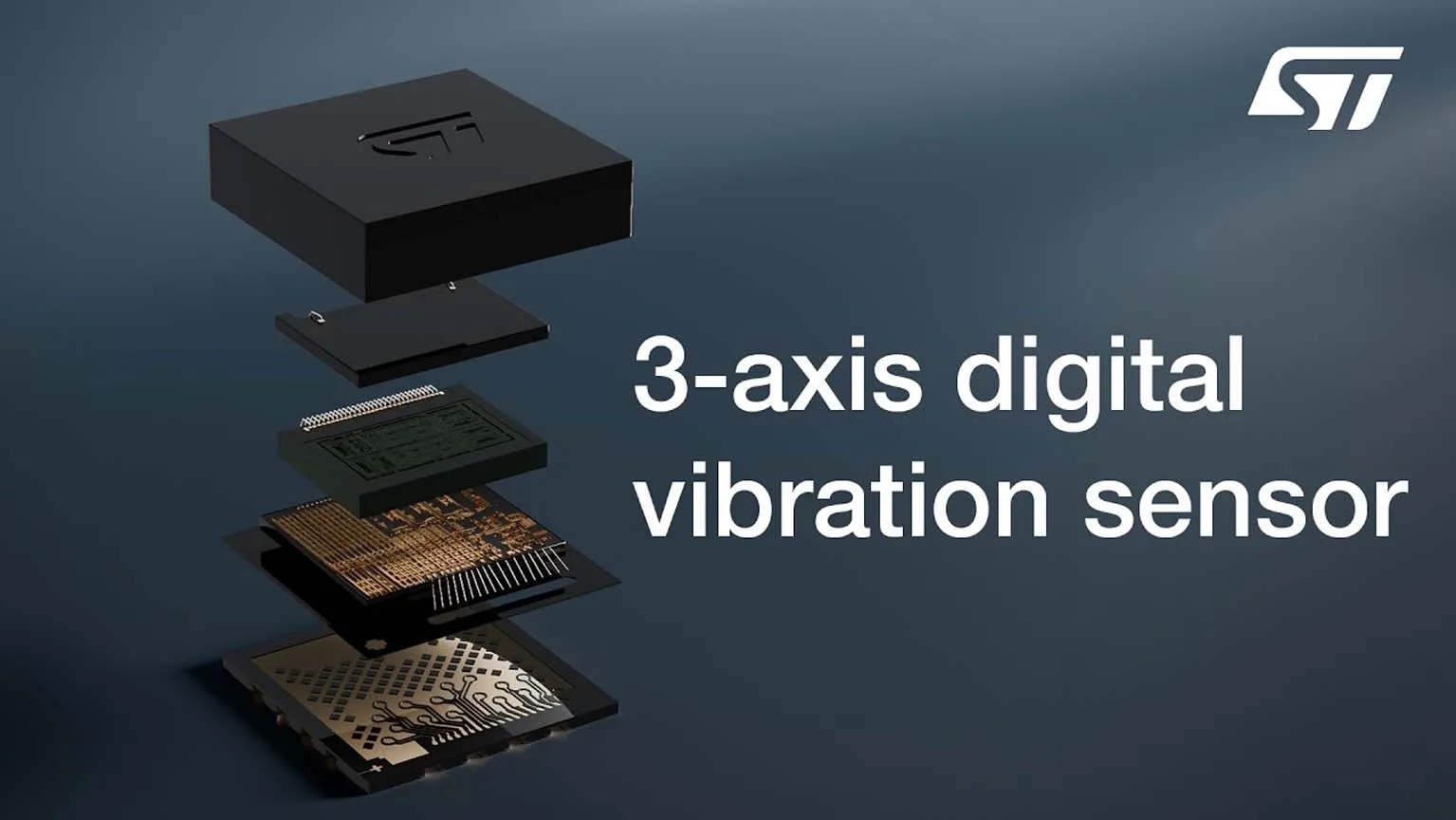
Industrial automation is entering a new phase. For years, condition monitoring depended on collecting data, sending it elsewhere for analysis, and then deciding what action to take. The challenge was always speed. The longer it took to process information, the greater the risk of unexpected equipment failures.
The launch of the STMicroelectronics IIS3DWB10IS sensor reflects a growing shift toward edge intelligence, where processing happens closer to the source of data. Built on ST's MEMS technology, the vibration sensor combines high-accuracy sensing with embedded signal processing and AI capabilities, allowing industrial systems to react faster while reducing power consumption.
Why vibration monitoring matters more than ever
Vibration analysis remains one of the most widely used methods for monitoring industrial equipment. Rotating and oscillating machines are at the heart of manufacturing, automotive production, material handling, cooling systems, and countless other industrial processes.
The ability to detect wear and performance issues before a machine fails can significantly improve uptime and operating efficiency. Early detection of potential bearing failures, abnormal vibrations, and mechanical degradation helps companies avoid costly interruptions while supporting predictive maintenance strategies.
The IIS3DWB10IS is designed specifically for these environments. It can measure vibrations above 10 kHz with a dynamic range of up to 200g while operating in temperatures as high as 125°C. These capabilities position it for demanding industrial applications where reliability is critical.
AI moves closer to the sensing element
Perhaps the most important development is the integration of the ISPU 2.0 architecture. Instead of sending large amounts of raw data to external processors, the sensor can perform signal processing and AI inference directly at the edge.
This approach reduces latency while improving energy efficiency. ST says the new ISPU 2.0 introduces dedicated hardware accelerators for real-time processing and delivers up to four times the performance of the previous generation. The architecture also supports faster communication between the MEMS circuitry and the processing unit, helping systems react more quickly to changing equipment conditions.
The supporting software ecosystem includes tools for vibration monitoring algorithms such as FFT analysis, filtering, envelope detection, velocity severity measurements, and anomaly detection. These capabilities make it easier to deploy advanced condition monitoring without requiring additional processing hardware.
Challenging traditional sensor approaches
One notable aspect of the announcement is ST's positioning of the IIS3DWB10IS as a digital alternative to traditional piezoelectric sensors. While piezoelectric technology has long been used in industrial vibration monitoring, the new sensor combines comparable accuracy and sensitivity with benefits such as lower power consumption, smaller size, and simplified system design.
The sensor's rugged construction, embedded intelligence, and support for operation in harsh environments suggest a broader trend toward more compact and intelligent industrial sensing solutions. As companies seek to improve efficiency and reduce maintenance costs, in-sensor AI vibration monitoring is becoming increasingly attractive.
The bigger picture
The launch of the STMicroelectronics IIS3DWB10IS sensor highlights how industrial monitoring is evolving beyond simple data collection. The focus is shifting toward faster decision-making, edge intelligence, and predictive maintenance systems that can identify problems before they affect production.
Read More:
Partner Pulse: Shivaami Cloud Services| Cloud Partner (India)
Hitachi Energy Factory Investment Signals India’s Grid Expansion Push
EXL Expands Chennai Delivery Centre to Scale AI-Led Healthcare Solutions
New Relic State of AI Coding report 2026 reveals hidden AI risks





 2 Min read