
International Women in Engineering Day 2026: Women Driving India's Tech Ecosystem

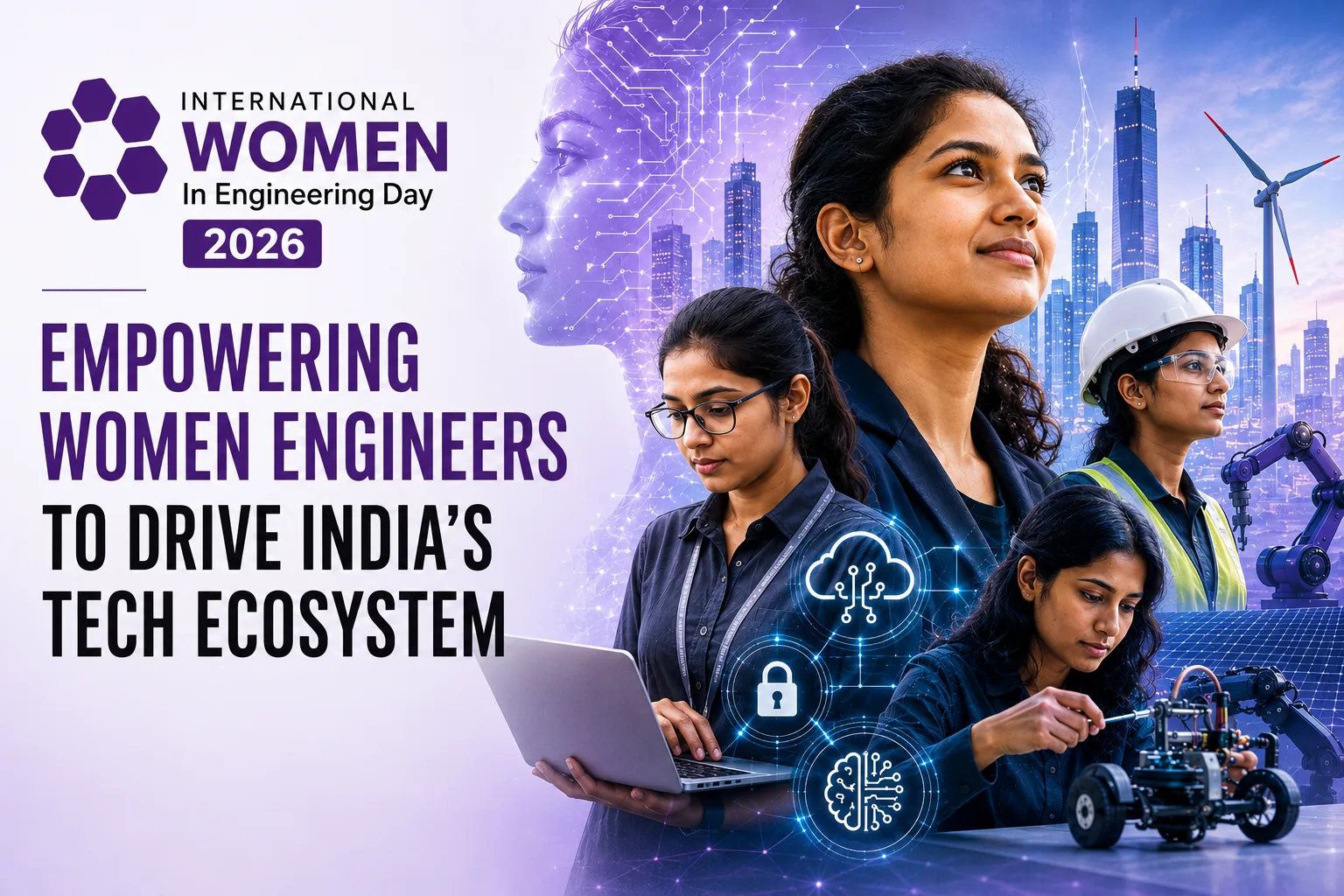
As India accelerates its ambitions in artificial intelligence, cloud computing, cybersecurity, digital infrastructure, and connected technologies, engineering talent is becoming the backbone of the country’s digital future. At the centre of this transformation are women engineers who are increasingly contributing to the design, development, and governance of technologies that power businesses, governments, and society.
International Women in Engineering Day 2026 provides an opportunity to recognise these contributions while also highlighting the need for stronger representation, mentorship, leadership opportunities, and inclusive workplaces. Industry leaders across technology, cybersecurity, AI, cloud, and digital infrastructure agree that empowering women engineers is not just a diversity goal, it is essential for innovation, resilience, and the long-term growth of India’s technology ecosystem.
Architecting the AI and Cloud Era While Engineering Trust
As organisations embrace AI, cloud-native architectures, and connected digital ecosystems, trust has emerged as a critical engineering challenge.
According to Subhalakshmi Ganapathy, Chief IT Security Evangelist, ManageEngine, Zoho Corp., the responsibility of building secure and resilient digital environments increasingly rests with diverse engineering teams.
"As digital ecosystems become increasingly AI-driven and interconnected, trust has become a fundamental engineering challenge rather than just a cybersecurity objective. Organisations are shifting toward resilience, identity-centric security, and security-by-design to navigate an evolving threat landscape. At the same time, fostering greater representation of women in engineering is essential to strengthening the industry's ability to address these complex challenges."
She further noted that diverse teams bring varied perspectives that drive innovation, improve problem-solving, and help create more secure and inclusive digital experiences.
"Engineering trust requires not only robust technologies but also a culture that values accountability, collaboration, and diversity. As cybersecurity continues to evolve, empowering more women to shape the future of engineering will be key to creating resilient systems that businesses and users can confidently rely on."
Women Engineers Powering Intelligent and Connected Technologies
Women engineers are increasingly shaping next-generation technologies across AI, cloud, cybersecurity, industrial automation, and connected ecosystems.
Soundari Arunachalam, Director of Software Engineering, Honeywell Technology and Connected Solutions, highlighted the growing influence of women in engineering-led innovation.
"Women engineers are playing a defining role in shaping next-generation technologies—from AI, cloud and cybersecurity to connected industrial and building solutions, and are at the forefront of building intelligent, resilient and sustainable systems."
She emphasised that India's role as a global engineering and innovation hub continues to grow as engineers contribute to both product development and scalable digital platforms.
"Diverse engineering teams bring richer perspectives, enabling stronger problem-solving, faster innovation cycles, and better business outcomes, especially in complex environments where digital, physical, and industrial systems intersect."
Highlighting the importance of nurturing future talent, she added:
"Sustaining this progress requires intentional focus on inclusion, mentorship, and continuous capability development to strengthen the STEM talent pipeline. On International Women in Engineering Day, we encourage young women to pursue engineering with confidence, curiosity, and a passion for lifelong learning, because their ideas will define the future of connected, intelligent technologies."
Diversity as a Critical Requirement for Responsible AI
As AI adoption accelerates globally, representation within technical teams has become increasingly important to ensuring fairness and reducing bias in technology systems.
Heather Dawe, Chief Data Scientist and Head of Responsible AI, UST, pointed out that women remain underrepresented in technology and AI-related roles.
"Women currently represent around 28% of the technology workforce globally, although this does vary by the nature of the role. For example, only around 20% of software engineers are women. The same is true of technical AI roles, although the wider AI workforce is approximately 30% women."
She stressed that diversity is particularly important because those building AI systems inevitably influence how those systems function.
"Given that developing AI models can introduce bias into these systems in terms of their own world-view, this makes another case for such diversity. Showing girls the merits of careers in technology from an early age, ensuring all have access to strong role-models and mentorship are key to ensuring the workforce of the future is increasingly equitable."
Dawe also described technology as one of the most exciting industries for future generations.
"I don’t think there’s ever been a more interesting time to work in the technology industry. It is important to showcase this industry for what it can be as well as what it is today, and to show pathways into it for any young woman with curiosity and desire to continuously learn."
Building India’s AI and Cybersecurity Future
India’s ambition to become a global technology leader depends on leveraging the full potential of its engineering talent.
Srividhya Srinivasan, CTO & Co-Founder, Amagi, believes women engineers will play a defining role in shaping the next phase of India's digital growth.
"India stands at an extraordinary inflexion point, and the engineers who will define its next chapter are increasingly women, building large language models, designing zero-trust security architectures, and orchestrating the cloud-native systems that underpin our digital economy."
She highlighted how diverse teams improve technology outcomes beyond workplace culture.
"When teams reflect the full spectrum of human experience, the technology they produce is sharper, more equitable, and more resilient. Diverse engineering perspectives don't simply improve culture, they catch the blind spots that homogeneous teams structurally cannot see, whether in algorithmic bias, threat modelling, or system design."
Calling for structural support mechanisms, she added:
"Realising this potential requires deliberate structural commitment, mentorship that transfers tacit knowledge, sponsorship that opens doors rather than just offering advice, and hiring practices that evaluate capability rather than conformity to historical norms."
Her message to aspiring engineers was equally direct:
"India's ambition to lead globally in AI and cybersecurity will not be achieved by optimising half its talent; it will be achieved when women don't just enter the ecosystem, but architect it."
Women Engineers Strengthening Digital Trust and Cyber Resilience
With AI, cloud adoption, and cybersecurity becoming boardroom priorities, women engineers are playing a crucial role in creating secure and trustworthy digital environments.
Sharda Tickoo, Country Manager for India and SAARC at TrendAI, said that India’s digital future depends on the people who build and secure technology systems.
"India stands at a defining moment in its digital journey. As AI reshapes industries, cloud becomes the foundation of modern enterprises, and cyber risk emerges as a boardroom priority, the need for trusted engineering has never been greater. The future will not be built by technology alone; it will be built by the people who design, secure, and govern it."
She underscored the growing contribution of women engineers in cybersecurity and AI.
"Whether it is securing AI systems, protecting cloud-native environments, or helping organisations navigate increasingly complex cyber threats, women engineers are at the forefront of architecting the resilience and trust that India's digital economy depends on."
Highlighting the broader opportunity ahead, Tickoo noted:
"The opportunity before us is not merely to increase participation, but to create pathways for women to lead innovation, influence technology strategy, and shape the future of cybersecurity."
Creating Equal Opportunities Through Skills and Inclusion
Expanding access to skills, mentorship, and leadership opportunities remains critical to increasing women's participation in engineering and technology.
Shweta Agarwal, Managing Trustee, STL Foundation, stressed the importance of building an inclusive ecosystem that supports women throughout their careers.
"Technology is reshaping every aspect of our lives, and engineers are at the forefront of this transformation. On International Women in Engineering Day, we celebrate the growing community of women driving innovation across AI, digital technologies, connectivity, datacentres, and sustainable infrastructure."
She noted that while progress has been made, more work remains to ensure equitable access to opportunities.
"There is still a need to create greater access to opportunities, mentorship, and leadership pathways for women in engineering and technology."
Highlighting the role of skills development in closing gender gaps, Agarwal added:
"The most transformative solutions emerge when diverse perspectives come together to solve complex challenges. Encouraging more women to enter, lead, and excel in engineering is not only a diversity imperative, but also a business, innovation, and societal imperative that will shape a more inclusive future."
Conclusion
The future of India’s technology ecosystem will be shaped by advancements in AI, cloud computing, cybersecurity, connectivity, and digital infrastructure. However, the insights shared by industry leaders make one message clear: technology alone cannot drive progress. People, and particularly diverse engineering talent, will determine how effectively these innovations create value, trust, and resilience.
As India strengthens its position as a global technology and innovation hub, empowering more women engineers through education, mentorship, leadership opportunities, and inclusive workplaces will be essential. International Women in Engineering Day 2026 is not only a celebration of achievements already made but also a call to action to ensure that women are not merely participants in India's digital transformation; they are among its leading architects.
Read More:
Why Data Readiness for AI Is Becoming the Biggest Opportunity for Channel Partners
The missing layer in enterprise AI: Why data trust is becoming the new priority





 2 Min read