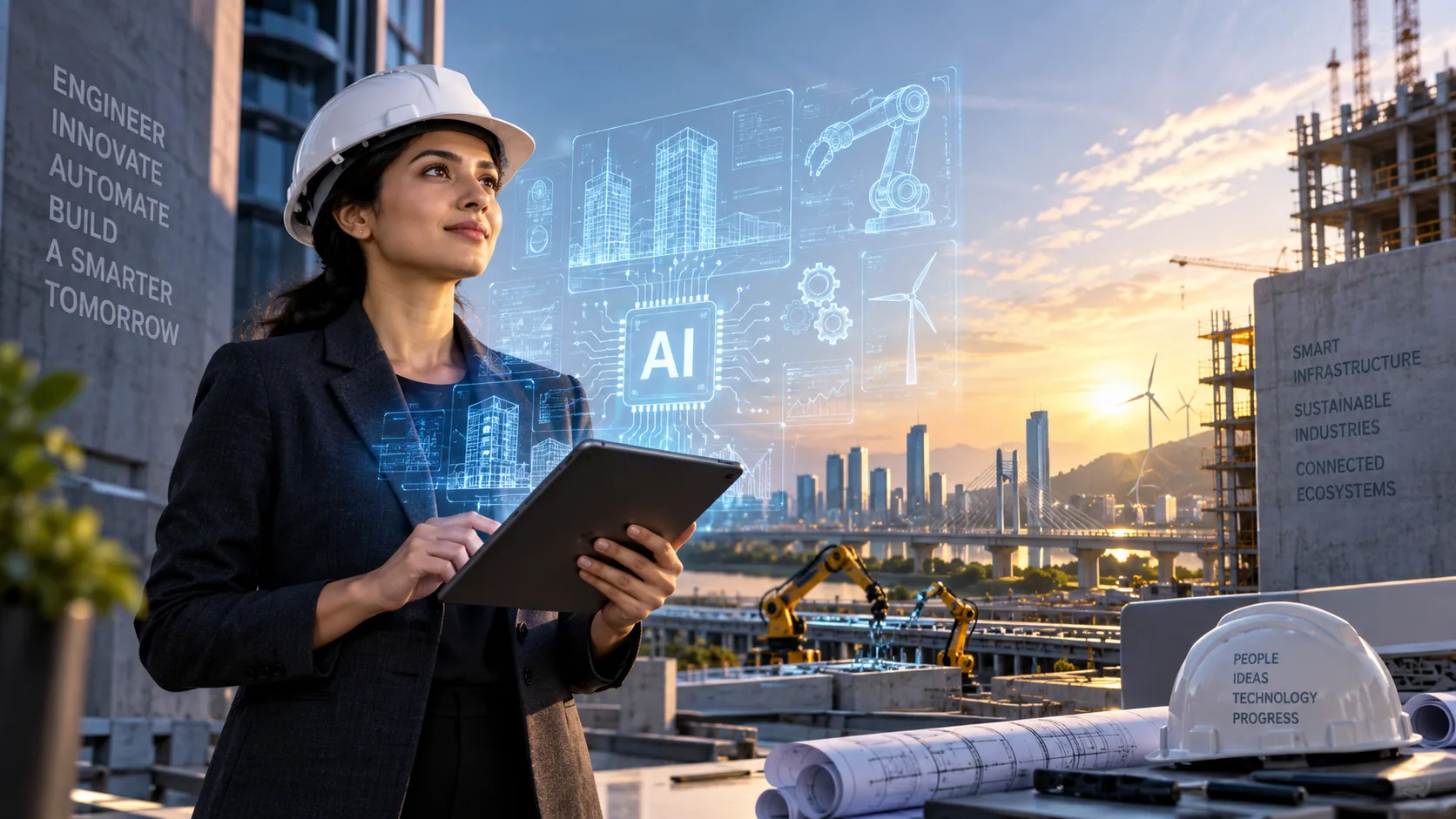
How machine vision is redefining digitalisation on India’s factory floors

Manufacturing remains one of India’s economic cornerstones, contributing nearly 17% to GDP and targeting to add more than Rs. 43,43,500 crore annually to the global economy by 2030. As the sector expands across automotive, electronics, and industrial production, expectations around quality, efficiency, and global competitiveness are rising in parallel. This is further reinforced by policy, with the Union Budget 2026–27 increasing the outlay for the Electronics Components Manufacturing Scheme (ECMS) to Rs. 40,000 crore to strengthen domestic production ecosystems.
Manufacturing operations heavily rely on statistical process control (SPC) to optimise production processes, but face limitations from sampling data. Sampling-based data collection paints an incomplete and potentially inaccurate picture of actual production processes. It can also impede real-time feedback controls used to optimise operations.
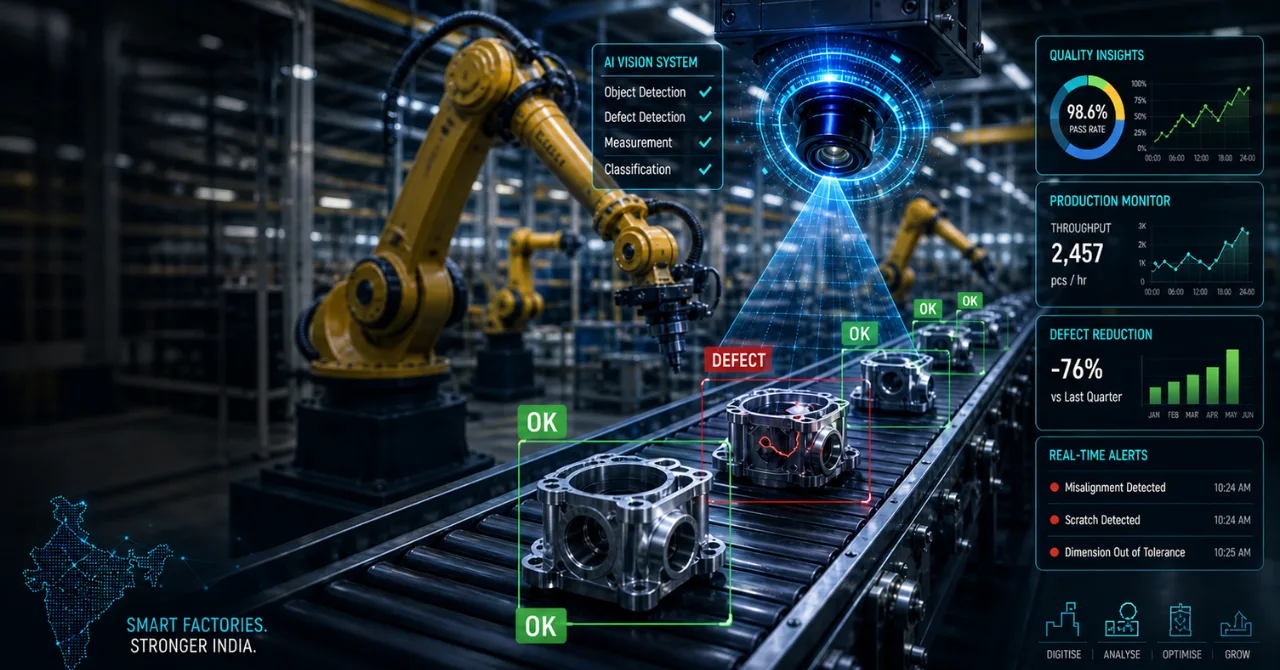
Today’s digitalisation demands highly comprehensive data, which is largely being generated on the frontline. Machine vision fulfils this need precisely. With the Indian machine vision market projected to grow at a 13.9% CAGR, these systems are rapidly becoming integral, particularly in high-growth sectors such as electronics and advanced manufacturing. Capturing real-world data about physical products and processes, it provides detailed geometric measurements with subpixel accuracy, surface quality assessments, positional data, colour and contrast variations, and other characteristics.
Over time, vision systems can uncover patterns throughout production cycles. When paired with advanced analytics, they enable manufacturers to uncover correlations between process parameters and quality results that traditional statistical methods might otherwise overlook. Therefore, to realise this potential, manufacturers must build digitalisation capabilities to capture, store, and analyse vision data, which will accelerate as digitalisation advances in pace with AI, the Industrial Internet of Things (IIoT), and cloud-based technologies.
What digitalisation means for Indian factories
Digitalisation involves using technologies such as 3D sensors, smart cameras, and machine vision software powered by deep learning to revamp traditional business models, workflows, services, and products.
In India, the environment is conducive to digital advancement. Spurred by government initiatives like Make in India and Production Linked Incentive (PLI), digital and automation technologies now account for around 40% of total manufacturing technology spend - nearly double the share of just a few years ago. This illustrates how rapidly firms are prioritising intelligent automation and data-driven production environments.
At its core, digital transformation is not about technology alone. Digitalisation acts as a pathway to enhance operations and daily experiences for businesses, their teams, and the customers they serve. There is increasing focus on frontline activities – where data is generated, captured, digitised and processed in real time, to support smarter, automated visual inspection.
Overcoming data challenges
This transition to data-driven manufacturing is not without its challenges. Data, which is the lifeblood of digitalisation, is often fragmented across multiple owners, silos, formats, and legacy systems. Additionally, as the volume of data grows, so do the storage and computation demands.
Operations and IT leaders grapple with merging data from diverse sources using outdated manufacturing execution and ERP systems. Without data diversity that mirrors actual use cases and conditions, deep learning AI models suffer from inadequate training and validation datasets.
Some of the most valuable data in manufacturing lies in its irregularities. These include defects and anomalies in raw materials, components, finished goods, packaging integrity, label accuracy, barcodes, characters, and returned products, all of which modern machine vision technologies are uniquely equipped to capture and convert into actionable insight.
Building a data-driven manufacturing environment
As manufacturing grows more interconnected, automated, and data-centric, harnessing full process data for optimisation emerges as a critical competitive edge. By adopting digital technologies such as machine vision, 3D imaging, and AI, businesses can overcome persistent challenges and eliminate inefficiencies. These advancements can drive productivity boosts of 20-25% and build a foundation for future success.
Investments in machine vision, deep learning, and 3D sensing can also deliver 30-50% improvements in defect rates, enabling faster intervention and more consistent output quality. When supported by standardised data and cloud-based platforms, these solutions can be scaled across plants, regions, and supply networks, creating a unified and collaborative digital manufacturing strategy.
Ultimately, digitalisation is not an option but a strategic necessity for the future of Indian manufacturing. When captured, integrated, and analysed effectively through intelligent vision systems, AI, and cloud-native platforms, data becomes a powerful source of competitive advantage. Manufacturers that embrace these capabilities, standardise data across operations, and scale advanced analytics will optimise quality and productivity today and also lay the foundation for agile, resilient, and competitive operations in the years to come.
Written By - Subramaniam Thiruppathi, Country Lead, ISC, Zebra Technologies
Read More:
Backup as a service: Synology shifts towards outcome-led cyber resilience
AI data centre infrastructure India: Why storage is now critical for scaling AI
FAIITA Patrika 2025-26 released covering IT association activities across India
Cloud Security India: How Upwind is building a partner-first runtime security model








 2 Min read