
Backup as a service: Synology shifts towards outcome-led cyber resilience

For years, storage decisions were driven by capacity, performance, and pricing. That worked when infrastructure was the primary concern, and risks were manageable.
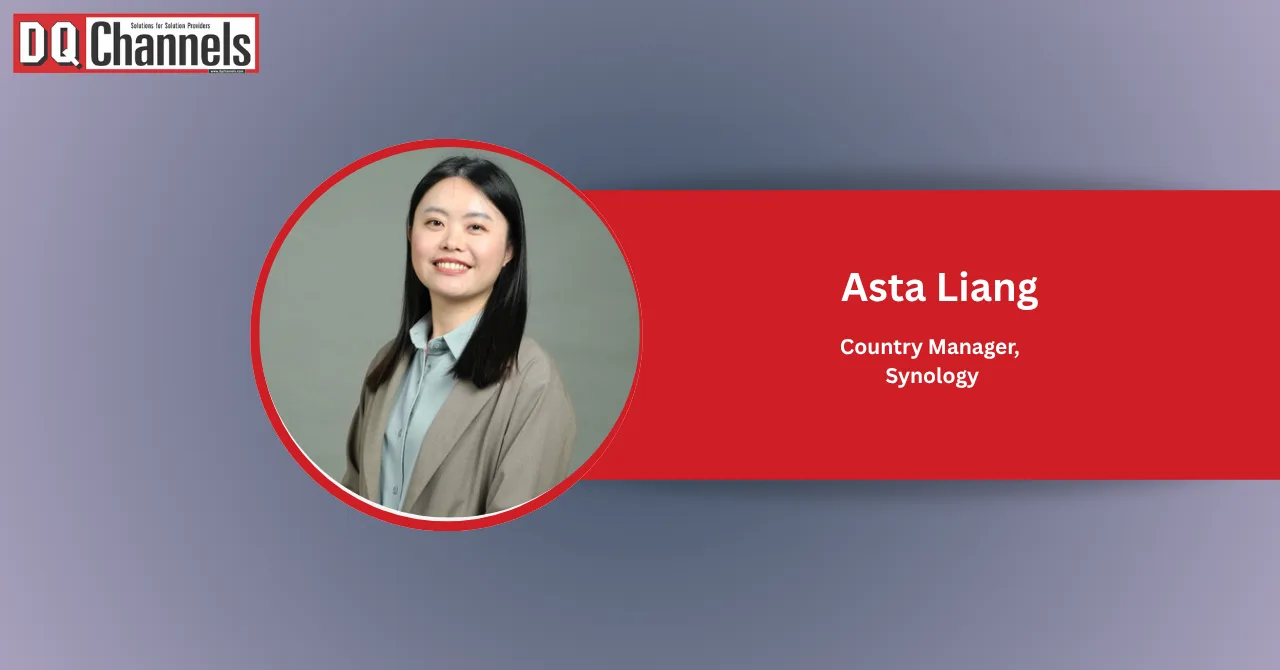
That model is no longer enough. In a recent interaction, Asta Liang, Country Manager at Synology, highlighted how the conversation is shifting from storage to resilience and business continuity.
Why backup as a service is becoming the new enterprise priority
Enterprise customers are no longer evaluating storage as a standalone investment. They are focused on outcomes that directly impact business continuity and risk mitigation.
As Liang explained, “Customers are not interested in storage architecture or features. They only care about how quickly their business can recover and how much data they will lose.”
This shift is pushing the market toward backup as a service and outcome-led conversations, where recovery becomes the core value proposition.
From storage products to ransomware protection solutions
This change is especially visible in how partners are expected to position solutions. The traditional approach of selling hardware or storage capacity is losing relevance.
Partners now need to anchor conversations around ransomware protection and recovery assurance. Instead of explaining features, they must define outcomes such as recovery timelines and data protection guarantees.
Liang put it clearly, “The positioning has to change, from providing storage to ensuring business recovery within a defined timeframe with minimal or zero data loss.”
Managed backup services are driving recurring revenue models
While deployment and migration services still deliver upfront margins, they are no longer the primary growth driver for partners.
The real shift is toward managed backup services and ongoing protection models. These include monitoring, ransomware readiness, periodic recovery testing, and SLA-based data protection.
“The real transformation is happening in managed services, where annual revenue becomes real and sustainable,” Liang noted.
This is where partners begin to build predictable revenue streams and long-term customer engagement.
Hybrid cloud storage is expanding partner opportunities
Hybrid cloud has often been seen as a threat to partner margins and customer ownership. But the approach here reframes it as an opportunity.
Instead of replacing on-premise infrastructure, hybrid cloud extends it. Core data environments remain local, while cloud capabilities are used for backup, synchronisation, and disaster recovery.
Liang emphasised this distinction, “Cloud is not replacing the partner or the on-premise solution. It is extending their solution portfolio.”
This ensures partners retain control while expanding their service offerings.
Scaling enterprise storage solutions beyond metro markets
India’s growth is no longer limited to metro cities. Tier 2 and tier 3 markets are becoming increasingly important, driven by digital adoption and rising enterprise needs.
To address this, Synology is focusing on structured partner enablement. This includes technical training, certification programs, and pre-sales support to build solution expertise.
“We are building solution bundles so partners can sell outcomes without building everything from scratch,” Liang said. This simplifies go-to-market strategies and accelerates adoption across diverse regions.
Subscription IT services are redefining partner economics
A key part of this transition is the move toward subscription-based models. These models enable partners to shift from one-time transactions to continuous service delivery.
By bundling backup, monitoring, and recovery assurance into a single offering, partners can create stable and predictable revenue streams.
“This is where partners begin to build predictable annual revenue,” Liang highlighted. It also aligns better with how enterprises prefer to consume IT services today.
Final takeaway: Cyber resilience is now the real product
The shift underway is structural. Storage is no longer the end goal. It is part of a broader strategy centred on resilience, recovery, and business continuity.
Partners must evolve from resellers to advisors who deliver measurable outcomes. Those who make this transition will build stronger, more sustainable businesses.
Those who continue to focus only on products may find it increasingly difficult to stay relevant in a rapidly changing market.
Read More:
Qualys TRU remediation report: Risk operations centre to scale autonomous security
Cloud Security India: How Upwind is building a partner-first runtime security model
AI data centre infrastructure India: Why storage is now critical for scaling AI



 2 Min read