
Middle East conflict raises supply chain alarm for India’s IT hardware exports

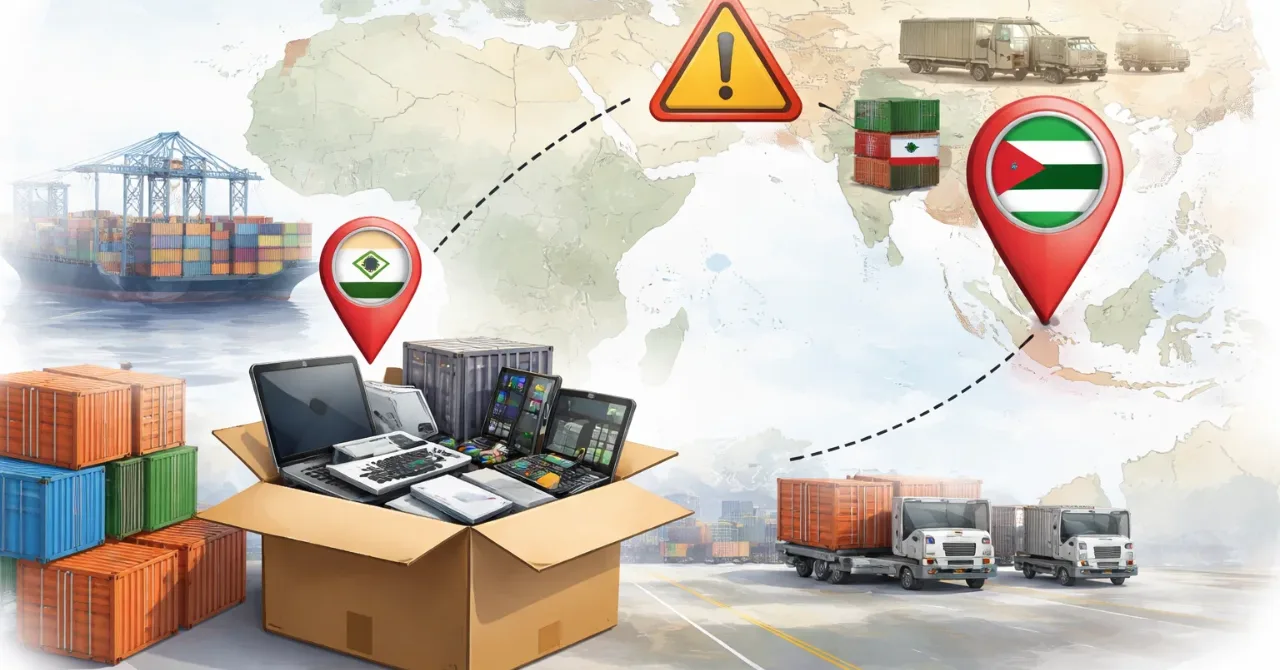
The escalating tension between the US–Israel coalition and Iran has moved beyond diplomatic circles, casting a shadow over global trade. For India’s burgeoning technology sector, the stakes are high. The conflict threatens the stability of electronics exports and IT hardware supply chains, specifically impacting the logistics corridors that connect Indian manufacturing hubs to critical Gulf markets.
The "Pax Silica" strategy vs. geopolitical headwinds
In late February 2026, IT Minister Ashwini Vaishnaw collaborated with US and partner officials to launch the “Pax Silica” framework. This US-led initiative is designed to fortify semiconductor and advanced manufacturing supply networks, aligning seamlessly with India’s Make in India and Atmanirbhar Bharat visions.
However, the West Asian crisis presents a formidable barrier to these ambitions. Analysts warn that India’s USD 4.5 billion annual electronics exports to the Gulf are vulnerable to maritime and airspace disruptions.
Industry Perspectives: Expert Insights & Economic Impact
The industry remains in a state of "watchful caution," balancing current stability against rising input costs and currency fluctuations.
On Logistics and Market Monitoring
Manoj Khanna, Secretary, CMDA:
“As of now, we are not seeing any major disruptions in shipments or supply chains. However, the industry is closely watching the situation, as prolonged tensions in the Middle East could lead to higher freight costs, war-risk surcharges and possible transit delays. If the situation escalates, it may impact logistics planning and inventory cycles for hardware trade with Gulf markets. Government support in monitoring freight costs and ensuring smooth trade logistics would be helpful.”
On Raw Materials and Economic Viability
The volatility is not just affecting routes, but the very components that drive the ICT industry. Puneet Singhal highlights a shift toward a more conservative transactional model due to rising commodity prices.
Puneet Singhal, Delhi State General Secretary, CAIT, Delhi:
“Geo-Political Situation has been in Turmoil ever since the conflicts of Ukraine-Russia (Feb-2022) as well as the Isreal – Gaza (Oct-2023) started, which has now worsened beyond the Recent US/Israel-led conflict with Iran. Such Conflicts always hit Stock Markets/Businesses Adversely and benefit the Precious Metals with the same Recording an unprecedented recent increase in Price. As Silver is an essential ingredient for the Electronic Component Industry, we have seen a Systematic Rise in the Prices of RAMS and many other Components which are silver-dependent. Also, there is an over all Increase in all Services Costs, and the Critical US Dollar Price is again disturbing the Import of Components etc., in our ICT industry’s case. The Worse is now the Energy Crisis being faced, which will push up all the Input Costs, thereby making Business Unviable and operate only on a back-to-back basis Transactionally which should see a Big Drop in Numbers. Hence over all the Scenario is not at all favourable for any Industry Notwithstanding our ICT Products.”
On historical uncertainty and memory pricing
The cumulative effect of years of global unrest is weighing heavily on industry leaders' expectations for the coming quarter.
Devesh Rastogi, President, AISIE:
“IT imports depends from supplies from East, not west so any direct impact on logistics is not visible. The main issue is that demography is written and rewritten very fast, causing uncertainties. Starting from Covid, then Ukrain War, followed by changing duty structures, followed by Israel Philistine war and now the US vs Iran. World has not slept a night with peace. Industry is yet to recover from prices in memory and storage, and very soon a new jump is expected in April.”
Escalating logistics pressures
As of March 2026, exporters are already grappling with tangible increases in operational costs and shipping hurdles:
War-Risk Surcharges: Up to USD 4,000 per 40-foot container.
Freight Rates: Increased by 15–20%.
Transit Delays: Potential 15–20 day increase if rerouted via the Cape of Good Hope.
Logistics Bottlenecks: Emerging container shortages and port call cancellations are disrupting "Just-in-Time" inventory models.
Structural resilience: The "Make in India" buffer
Industry analysts suggest that this volatility proves the necessity of India’s domestic electronics manufacturing push. Data indicate a significant scaling of the ecosystem:
Production Growth: From Rs. 1.9 lakh crore (2014) to Rs 11.3 lakh crore (FY2024–25).
Component Manufacturing: The new scheme launched in April 2025 has attracted proposals exceeding Rs. 1 lakh crore to localise the production of PCBs and other critical components.
Outlook: Adapting to shifting supply chains
India’s IT hardware industry is preparing for a period of forced adaptation. Exporters are urgently seeking support through higherRoDTEP subsidies, waived penalties, and expanded credit facilities to meet commitments despite delays.
While the fundamentals of the Indian market remain strong, the combination of an energy crisis, silver-dependent component price hikes, and logistics surcharges suggests that the ICT sector must prioritise flexibility and domestic backward integration to remain a reliable global supplier in 2026.
Information sourced from Press Information Bureau(PIB), ANI, Reuters, PTI, Bloomberg, Sunday Guardian
Read More:
AI Impact Summit 2026: Can India become a global AI superpower?
Lenovo AI channel strategy: How Lenovo 360 is transforming partner growth in the AI era




 2 Min read