LED display manufacturing in India: LEDX founder on global supply chain shift & innovation

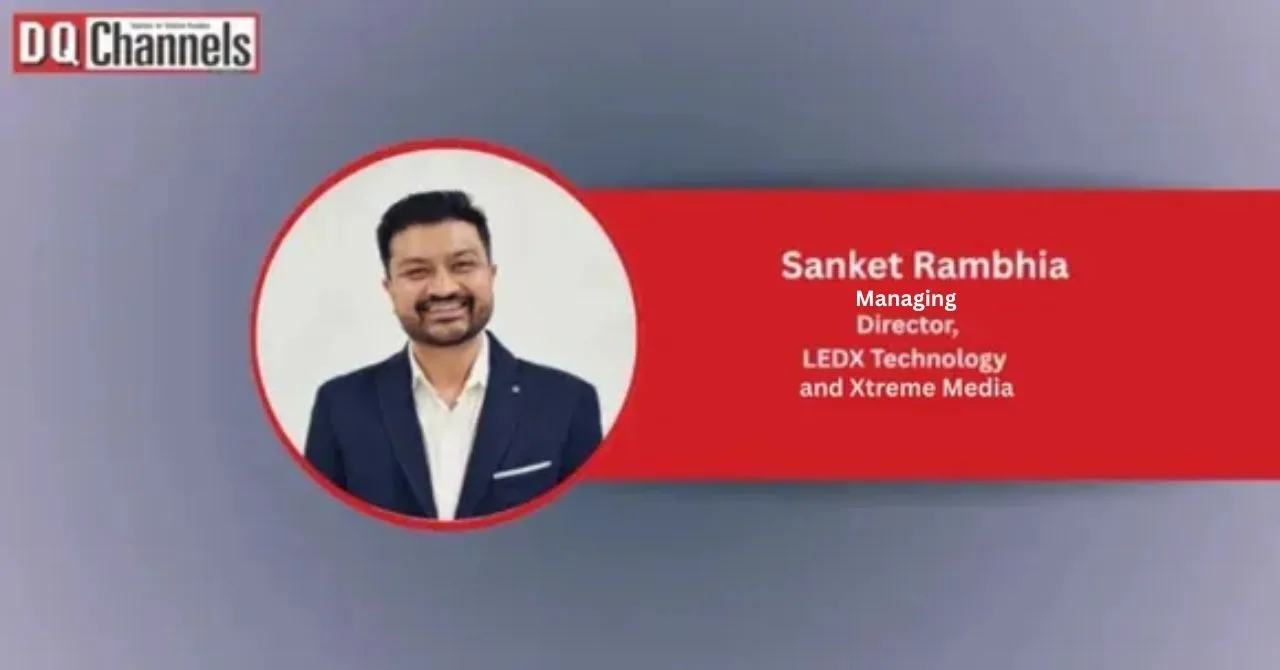
As global supply chains undergo structural shifts and India strengthens its position as a manufacturing alternative, emerging technology-led companies are stepping up to redefine industry benchmarks. LEDX Technology is one such player aiming to transform India into a global hub for LED display manufacturing and innovation.
In a conversation with Sanket Rambhia, Managing Director of LEDX Technology and Xtreme Media, a clear vision emerges, one that combines engineering-led innovation, supply chain transformation, and global ambition rooted in India.
India's LED display manufacturing growth: From import dependency to global opportunity
India’s LED display industry has traditionally relied heavily on imports, particularly from China. Rambhia explains how the ecosystem has evolved.
“In India’s traditional sector, India has never been the manufacturer; we were designing, we were packaging, and we were getting job manufacturing done in China.”
The primary barriers were capital intensity and lack of a mature supply chain.
“This is a capital-intensive manufacturing process; the market size in India was not big enough, and the supply chain also didn’t exist.”
However, over the past few years, structural shifts have changed the landscape significantly.
“The Indian market size has systematically increased, the government has given a lot of support for Make in India, and geopolitical scenarios have also changed in India’s favour.”
These factors have created a strong foundation for domestic manufacturing to scale.
Global supply chain diversification is driving active LED display manufacturing in India
Global uncertainties and geopolitical tensions are forcing companies to rethink their supply chains. Rambhia believes this shift is working in India’s favour.
“Every company is looking to de-risk their supply chain by having multiple alternatives from different geographies.”
LEDX Technology has already begun manufacturing in India, leveraging Xtreme Media’s 16+ years of legacy of R&D and product design.
“We started with design changes required for Indian and global manufacturing, and we recreated the supplier ecosystem to make it viable.”
However, Rambhia is clear that the goal is not to replace China but to compete alongside it.
“We don’t want to replace China, we want to be a credible alternative on an equal footing.”
Vision: Making India a global LED display manufacturing hub
LEDX Technology's ambition extends beyond individual company growth to building an entire ecosystem.
“My vision is to make India the global hub of LED display manufacturing and innovation.”
Rambhia emphasises that one company alone cannot meet global demand.
“One company cannot do justice to global supply, but many LEDX-like companies can.”
He advocates for a collaborative industry approach to scale India’s global competitiveness.
“We want more companies like LEDX to emerge, so that as an industry we can cater to global demand.”
Automation and AI in Active LED display manufacturing: Driving scale, speed and quality
Automation is at the core of LEDX’s manufacturing strategy, significantly improving productivity and quality.
“Automation is a game changer, machines don’t fall sick. You have continuity of output.”
The impact on production efficiency is substantial.
“The production capacity that automation can bring is not even 10x; in some cases, it is 1000x.”
Automation also reduces costs and improves consistency.
“Your cost of production goes down, quality rejection is reduced, and machines are extremely precise.”
LEDX has invested in advanced manufacturing technologies, including Japanese and Korean machinery, to ensure precision and scalability.
“Our entire line is automated; there is minimal human intervention from start to finish.”
Co-innovation in custom LED display solutions: Balancing scale with Market-specific needs
LEDX is addressing diverse global requirements through a hybrid approach to product customisation.
Rambhia compares this approach to ready-made versus tailored solutions.
“Customised solutions are like tailored clothing; ready-made solutions are cheaper but may not fit perfectly.”
LEDX creates modular “Lego-like” solutions that allow customisation without sacrificing scale.
“We create ready-made products and then customise them; customers can make it their own.”
This approach enables LEDX to cater to varied market needs across geographies, including price-sensitive markets like India and premium markets like the US.
“You cannot have one product for the world; every geography has different requirements.”
Sustainable LED display manufacturing and ESG compliance as a competitive advantage
Sustainability is becoming a critical factor, especially in global markets.
“It is becoming a very big part of our sales, especially for Western markets.”
LEDX is integrating sustainability across both manufacturing and product design.
“We are working on sustainable manufacturing, and also designing products to reduce energy consumption.”
The company’s technology innovations contribute to energy efficiency.
“Our products can deliver power savings of up to 40 to 50% over standard products.”
Such capabilities also help customers meet their own ESG and carbon reduction goals.
Smart Infrastructure and Digital Displays: The Future of Urban Landscapes
LED displays are rapidly becoming integral to smart infrastructure and urban environments.
Rambhia draws inspiration from global examples like Times Square.
“There is something about Times Square, its energy, its storytelling, technology uplifting the urban landscape.”
He believes India is in the early stages of this transformation.
“You cannot travel 10 minutes without seeing a display; this will only increase.”
The future lies in integrating displays seamlessly into urban environments rather than treating them as standalone advertising units.
“The display merges with the urban environment, creating immersive content experiences.”
This evolution will be driven by a combination of hardware, software, and content innovation.
“You need the right hardware, the right software, and great content to capture attention.”
Conclusion: India’s Manufacturing Moment Requires Innovation and Global Ambition
Sanket Rambhia’s vision reflects a broader shift in India’s manufacturing narrative, from dependency to global competitiveness.
He emphasises that the next phase of growth will depend on:
Stronger focus on R&D and innovation
Improved product quality and perception
Global ambition among Indian entrepreneurs
“Have a global ambition, don’t restrict yourself to a small landscape.”
With infrastructure, talent, and market scale aligning, Rambhia believes India is entering a defining phase.
“The next 10 to 15 years belong to companies like LEDX, who can compete globally.”
Read More:
Association with SI focusing on AV, Dr. Ramya Chatterjee, SOLITAIRE
Middle East conflict raises supply chain alarm for India’s IT hardware exports
Why rising DDR RAM prices and chip shortages may push PC costs up


 2 Min read