
AMD EPYC 8005 pushes Edge Servers further

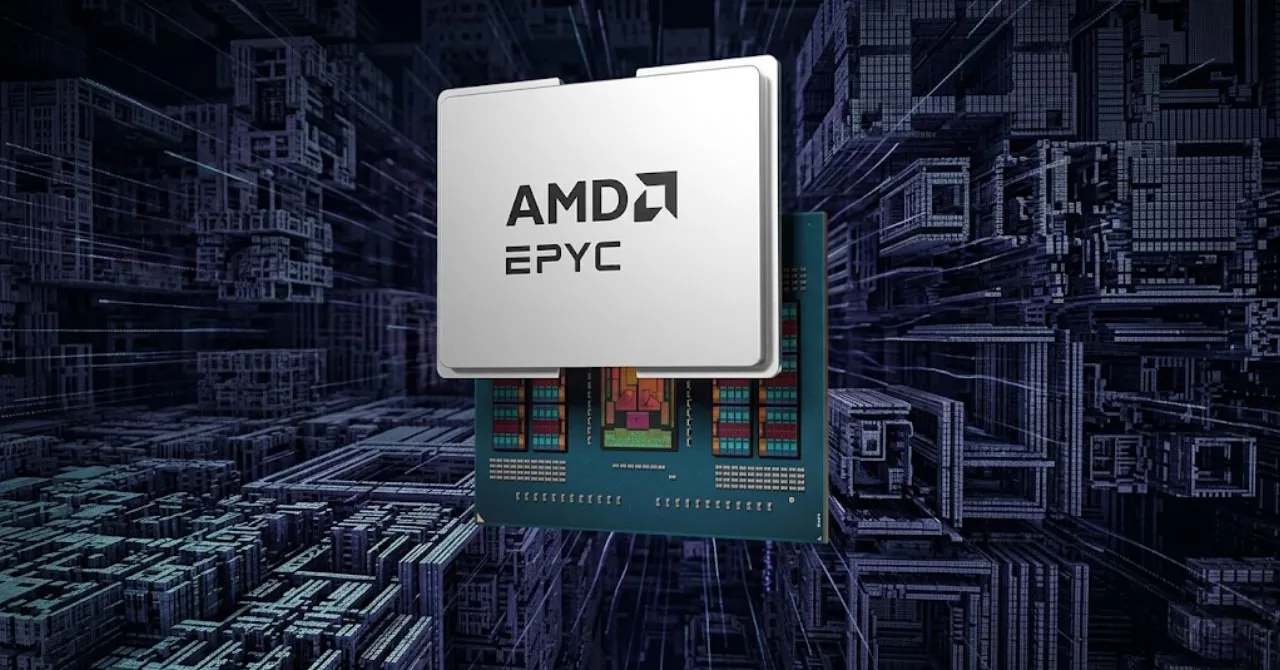
As AI workloads move closer to where data is created, the edge infrastructure market is entering a new phase. Enterprises now need systems that can process heavier workloads without increasing power use, cooling demands, or hardware complexity. AMD is positioning its new AMD EPYC 8005 Server CPUs directly at that challenge.
The new processor lineup is designed around a simple idea: deliver strong performance, lower power consumption, and compact deployment flexibility in a single-socket platform. That balance is becoming increasingly important for telecom operators, cloud storage providers, retail edge deployments, and organisations building AI-enabled infrastructure outside traditional data centres.
Compact servers, bigger workloads
The AMD EPYC 8005 series scales from eight to 84 “Zen 5” cores while operating within a 70W to 225W TDP range. AMD says the flagship 84-core EPYC 8635P delivers 40% higher integer performance compared to its earlier-generation counterpart while also improving performance per watt.
The company is clearly targeting environments where space and energy efficiency matter as much as raw compute power. That includes dense storage nodes, edge AI systems, and virtualised telecom infrastructure where operators want fewer servers handling more workloads.
Support for DDR5 memory, PCIe Gen 5, Wi-Fi-ready networking ecosystems, and AVX-512 compatibility also signal AMD’s push toward future-ready deployments that do not require major software redesigns. The single-socket server CPU for the edge approach reduces infrastructure complexity while helping enterprises scale AI processing closer to users and devices.
Telco and retail Edge become key battlegrounds
One of the strongest themes in the announcement is edge intelligence. AMD highlighted how Samsung tested multi-cell vRAN deployments using the 84-core EPYC 8635P processor, showing how telecom workloads are shifting toward software-driven, AI-ready networks.
Retail is another emerging use case. WobotAI demonstrated how AI agents running on AMD EPYC 8005 systems can process in-store analytics directly at the edge without depending heavily on cloud infrastructure or GPUs. This reflects a wider industry shift toward localised AI processing for faster response times and lower operating costs.
Why AMD’s strategy matters
The AMD EPYC 8005 launch shows how the server market is evolving beyond large centralised data centres. Enterprises increasingly want smaller, efficient systems that can run AI, storage, and networking workloads closer to operations without compromising enterprise-grade reliability.
With support for six-channel DDR5 memory, PCIe Gen 5 expansion, and high core density, AMD is positioning the platform as a practical option for organisations modernising edge infrastructure while maintaining x86 continuity across cloud and on-premises environments.
For enterprises exploring AI at scale, the message is becoming clearer: the future of computing may not only depend on bigger servers, but smarter and more efficient ones placed exactly where workloads happen.
Read More:
Thales and Google Cloud unveil landmark sovereign cloud offering for Germany
Srikanth Kamaraju joins Bounteous leadership team





 2 Min read