
AMD Instinct MI350P PCIe specs could change AI infrastructure

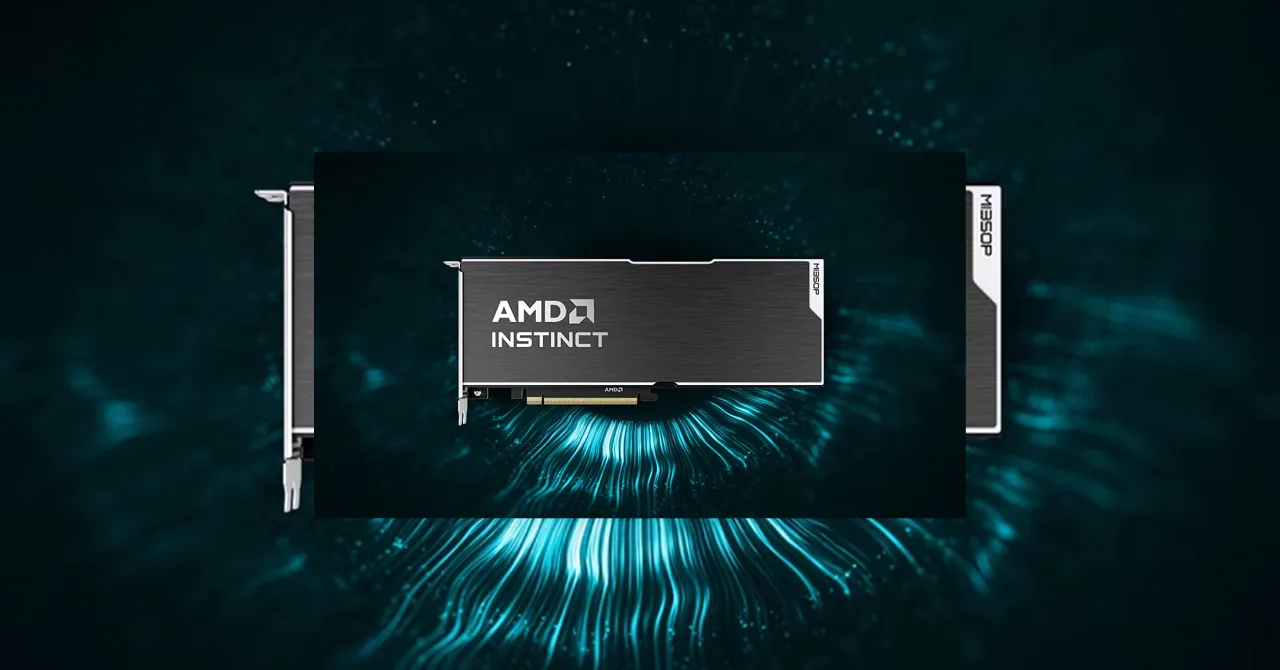
As enterprises move deeper into AI adoption, many are discovering that scaling infrastructure is becoming far more complicated than expected. Cloud deployments can introduce concerns around unpredictable costs and data privacy, while upgrading on-premises environments often requires major redesigns in power delivery and cooling systems. AMD appears to be targeting this exact pressure point with its latest announcement around the AMD Instinct MI350P PCIe specs, positioning the cards as an alternative for enterprises that want stronger AI performance without rebuilding their datacentres from scratch.
The new cards are designed as dual-slot PCIe accelerators that fit into existing air-cooled server infrastructure. That detail matters because many enterprises are still operating traditional rack environments that were never originally built for large GPU accelerator clusters. By focusing on Air-cooled AI server GPUs, AMD is attempting to reduce one of the biggest barriers slowing enterprise AI deployment — infrastructure readiness. The company says the cards are built for inference workloads and retrieval-augmented generation pipelines while remaining compatible with current rack, power and cooling environments.
A focus on deployment efficiency over infrastructure overhaul
The broader message behind the AMD Instinct MI350P PCIe specs is less about raw hardware alone and more about deployment practicality. Enterprises often face a difficult decision between remaining CPU-bound or making expensive investments into dedicated GPU platforms. AMD is positioning these PCIe cards somewhere in the middle, giving organisations a way to increase AI compute capacity inside standard server environments.
The cards support lower-precision MXFP6 and MXFP4 formats for higher throughput alongside support for INT8 and BF16 through sparsity acceleration. AMD estimates performance figures reaching 2,299 TFLOPS with peaks of up to 4,600 TFLOPS at MXFP4 precision levels. The cards also include 144GB of HBM3E memory with bandwidth reaching up to 4TB/s. Combined with support for FP8 and MXFP8 workloads, AMD says the platform is designed to maximise throughput while reducing memory usage and lowering power and cooling demands inside enterprise environments.
AMD ROCm enterprise AI stack pushes open ecosystem strategy
Another important part of the announcement is AMD’s continued emphasis on open AI ecosystems. The AMD ROCm enterprise AI stack is positioned as a foundation layer that integrates with existing AI frameworks and cloud-native tools, including Kubernetes GPU Operator support and native compatibility with frameworks such as PyTorch. AMD says the goal is to help enterprises migrate inference workloads with minimal code changes rather than forcing complete software rewrites.
The company is also offering its open-source enterprise AI reference stack to partners without licensing costs. That approach may appeal to enterprises trying to balance AI expansion with operational spending. While AMD MI350P price details were not disclosed, the messaging throughout the announcement strongly focuses on reducing deployment complexity and avoiding ongoing operational costs tied to AI scaling.
A quieter but important enterprise AI trend
The larger takeaway from the announcement is that enterprise AI conversations are shifting from experimentation to infrastructure practicality. Organisations want AI performance, but many are not ready to redesign entire datacentres around liquid cooling or specialised GPU environments. AMD’s latest strategy appears designed around that reality. Instead of pushing enterprises towards complete infrastructure transformation, the company is focusing on AI hardware that fits more naturally into what enterprises already have today.
Read More:
Why USEReady believes AI orchestration will define the next decade of enterprise transformation
Genpact and Google Cloud partnership targets CFO chaos
Elcom Digital Synergy 2026: Aligning the vendor ecosystem for future growth







 2 Min read