
AMD Ryzen AI Gemma 4 changes deployment game with recent annoucement

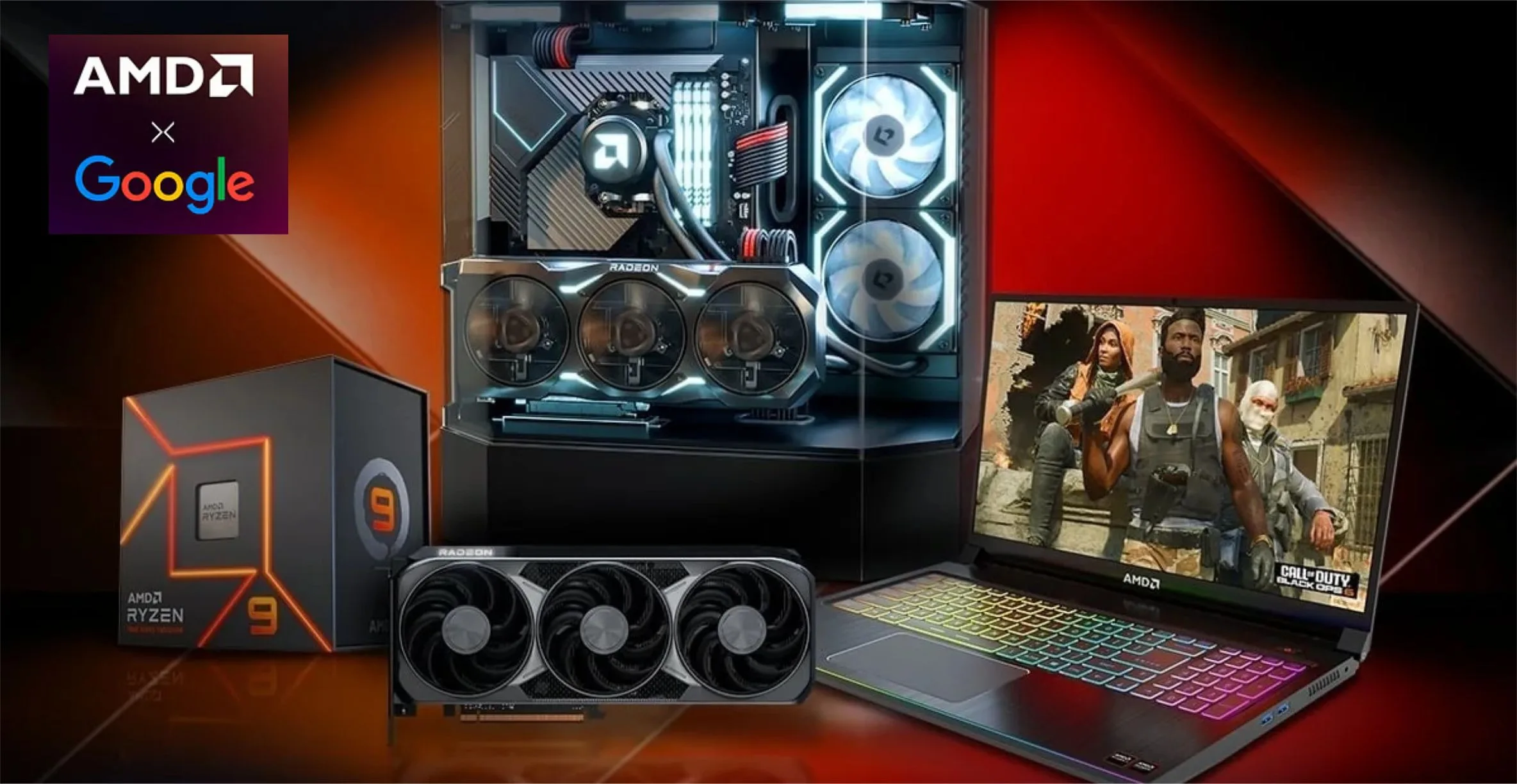
The release of the Gemma 4 model family marks an interesting shift in how AI is being built and deployed. With models ranging from compact 2B parameters to larger 31B variants, the focus is clearly on flexibility. These models are not just about scale—they are designed to work across text, vision, and even audio inputs, making them adaptable for a wide range of real-world use cases.
What stands out is how the AMD Ryzen AI Gemma 4 ecosystem is positioning itself. Instead of limiting deployment to cloud-heavy setups, it opens the door for running advanced AI models across local and enterprise hardware. This includes everything from high-end data center GPUs to everyday AI PCs.
A shift toward practical, multimodal AI
Gemma 4 builds on earlier architecture but improves efficiency and long-context performance. With support for up to 256K tokens and understanding of up to 140 languages, the models are clearly tuned for complex, real-world applications. Tasks like coding, OCR, object recognition, and speech processing are no longer siloed—they are part of a unified workflow.
This matters because it aligns with the growing need for agentic AI systems. Instead of single-task models, organizations are looking for systems that can think, process, and act across multiple inputs. Gemma 4 seems built with that direction in mind.
Full-stack support across AMD hardware
One of the more practical developments is Day Zero support across AMD’s entire AI hardware stack. From Instinct GPUs in data centers to Radeon GPUs in workstations and Ryzen AI processors in PCs, the support is broad and immediate.
This kind of coverage simplifies deployment decisions. Developers can choose where to run workloads—cloud, edge, or local—without needing to rethink the entire stack. Integration with tools like LM Studio and open-source frameworks such as vLLM, SGLang, llama.cpp, and Ollama further reduces friction.
Deployment flexibility becomes the real differentiator
The real story here is not just model capability but deployment flexibility. With vLLM, organizations can handle multiple concurrent requests efficiently. SGLang adds high-performance serving for large GPU setups, while LM Studio and Lemonade Server make local deployments more accessible.
Even NPUs are entering the picture. With upcoming support on Ryzen AI processors using XDNA 2 architecture, developers will soon be able to run select Gemma 4 models directly on-device. That’s a significant step toward decentralizing AI workloads.
What this means going forward
The AMD Ryzen AI Gemma 4 combination signals a broader shift. AI is no longer confined to large cloud environments. It is becoming more distributed, more accessible, and closer to where data is generated.
For enterprises and developers, the takeaway is clear. The future of AI will not be just about bigger models. It will be about where and how efficiently those models can run. And in that equation, flexible hardware support may matter more than ever.
Read More:
Akamai reveals API security challenges in APAC surge
Lexar Udaan 2.0: Elite Indian partners head to Thailand for a landmark summit
Seqrite Cyber Espionage Report reveals hidden attack pattern, exposing silent data theft






 2 Min read