
Cabinet approves Mobile Phone Manufacturing Scheme with Rs 62,500 crore outlay

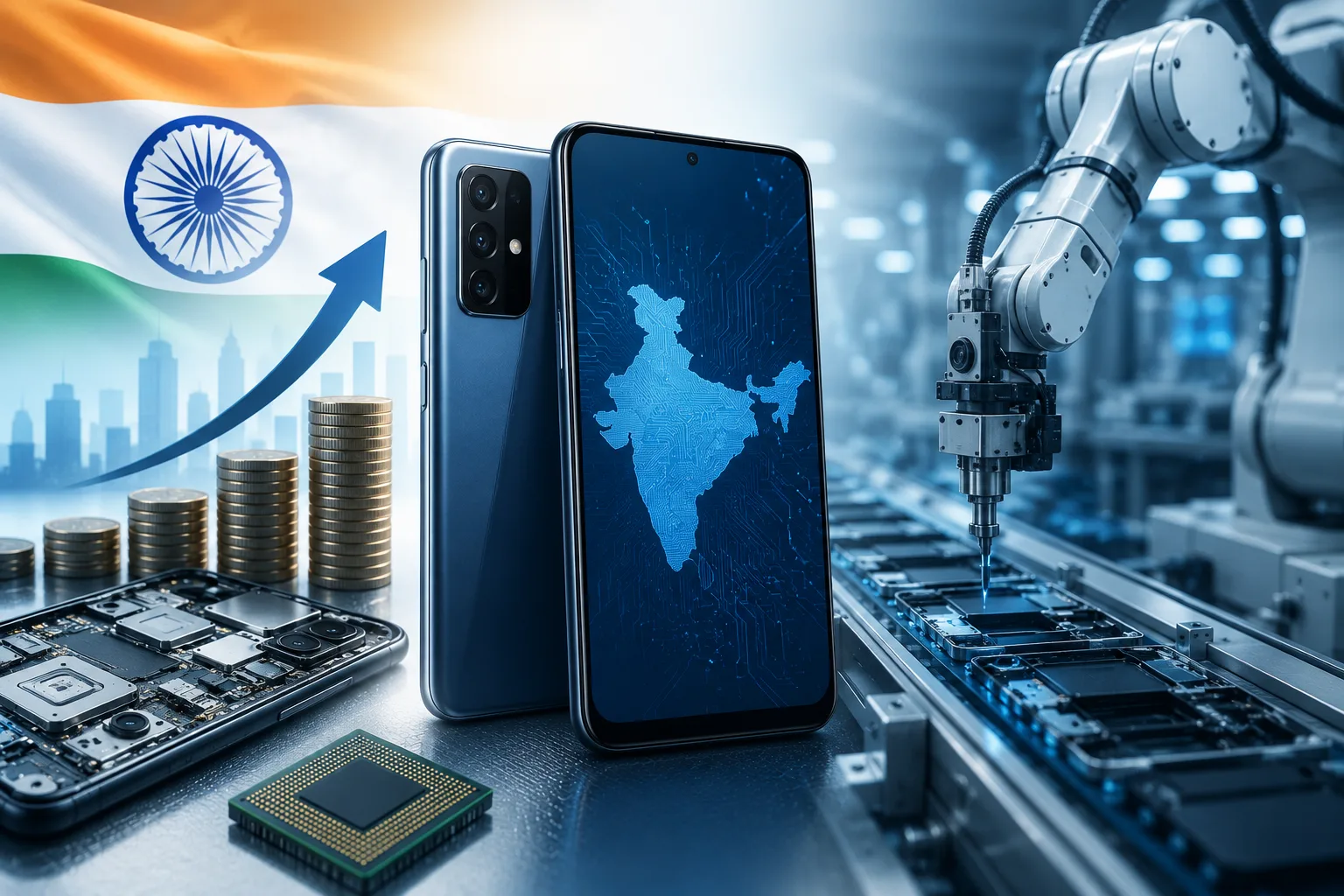
The Union Cabinet, chaired by Prime Minister Narendra Modi, has approved the Mobile Phone Manufacturing Scheme (MPMS) with a budgetary outlay of Rs 62,500 crore. The five-year scheme, which will run from FY 2026-27 to FY 2030-31, aims to scale up mobile phone manufacturing, increase domestic value addition, strengthen supply chain resilience and improve India's competitiveness in global electronics manufacturing.
Under the scheme, manufacturers will receive incentive support on eligible sales of mobile phones at rates ranging from 2.25% to 5%. An additional incentive of up to 1.5% will be available for domestic sourcing of key components and sub-assemblies, while Indian brands investing in product design and research and development (R&D) will receive an additional 3% incentive on eligible sales.
The government expects cumulative mobile phone production to reach approximately Rs 39,00,000 crore during the scheme period. MPMS is also projected to create around 60,000 direct jobs, while supporting exports and strengthening India's position as a global electronics manufacturing hub.
Mobile Phone Manufacturing Scheme focuses on value addition and Indian brands
The government said the scheme is designed to deepen domestic manufacturing capabilities beyond assembly by encouraging local sourcing, component manufacturing and product design. It also aims to help Indian brands develop indigenous technologies, create intellectual property and strengthen the country's electronics supply chain.
The announcement follows the conclusion of the Production Linked Incentive Scheme for Large Scale Electronics Manufacturing (PLI-LSEM), which ended on 31 March 2026. According to the government, the earlier scheme played a significant role in making India the world's second-largest mobile phone manufacturer by volume, with 99.2% of mobile phones used in India now manufactured domestically. Smartphones also emerged as India's largest exported product category in 2025.
ICEA welcomes the Mobile Phone Manufacturing Scheme
Welcoming the Cabinet decision, Pankaj Mohindroo, Chairman, India Cellular and Electronics Association (ICEA), said the scheme provides continuity for India's manufacturing ambitions.
"Today's announcement of the Mobile Phone Manufacturing Scheme (MPMS) of INR 62,500 Crore marks an important step in sustaining India's momentum in mobile phone manufacturing and providing the predictability required for the next phase of growth. The earlier PLI LSEM helped India achieve scale, attract global companies, expand exports, and emerge as the world's second-largest mobile phone manufacturer. MPMS now builds on this foundation by enabling large-scale mobile phone production with deepening of the domestic value chain and a stronger component ecosystem."
He added that the industry's long-term vision is for India to account for 35-40% of global mobile phone production, with the scale created by the scheme strengthening India's position in global value chains while building engineering capabilities, supplier networks and advanced manufacturing expertise across the broader electronics sector.
Industry sees long-term opportunities for electronics manufacturing
Commenting on the government's broader manufacturing strategy, Mohindroo also welcomed the continued focus on semiconductor development.
"We congratulate the Government of India, MeitY and ISM on this forward-looking policy continuity. ISM 2.0 builds on a strong foundation with significant emphasis on design, R&D, capital goods, supply chain and skill development. India has a unique opportunity to emerge as the skill capital for the global semiconductor industry."
He added that stronger manufacturing capabilities, innovation, skilled talent and supply chain development would help position India as a globally competitive electronics and semiconductor manufacturing destination.
Read More:
How cloud transformation is becoming a business strategy conversation
Why Dell believes AI PCs need consultative selling, not hardware transactions







 2 Min read