HP Imagine 2026 announcements bring NearSense into everyday workflows

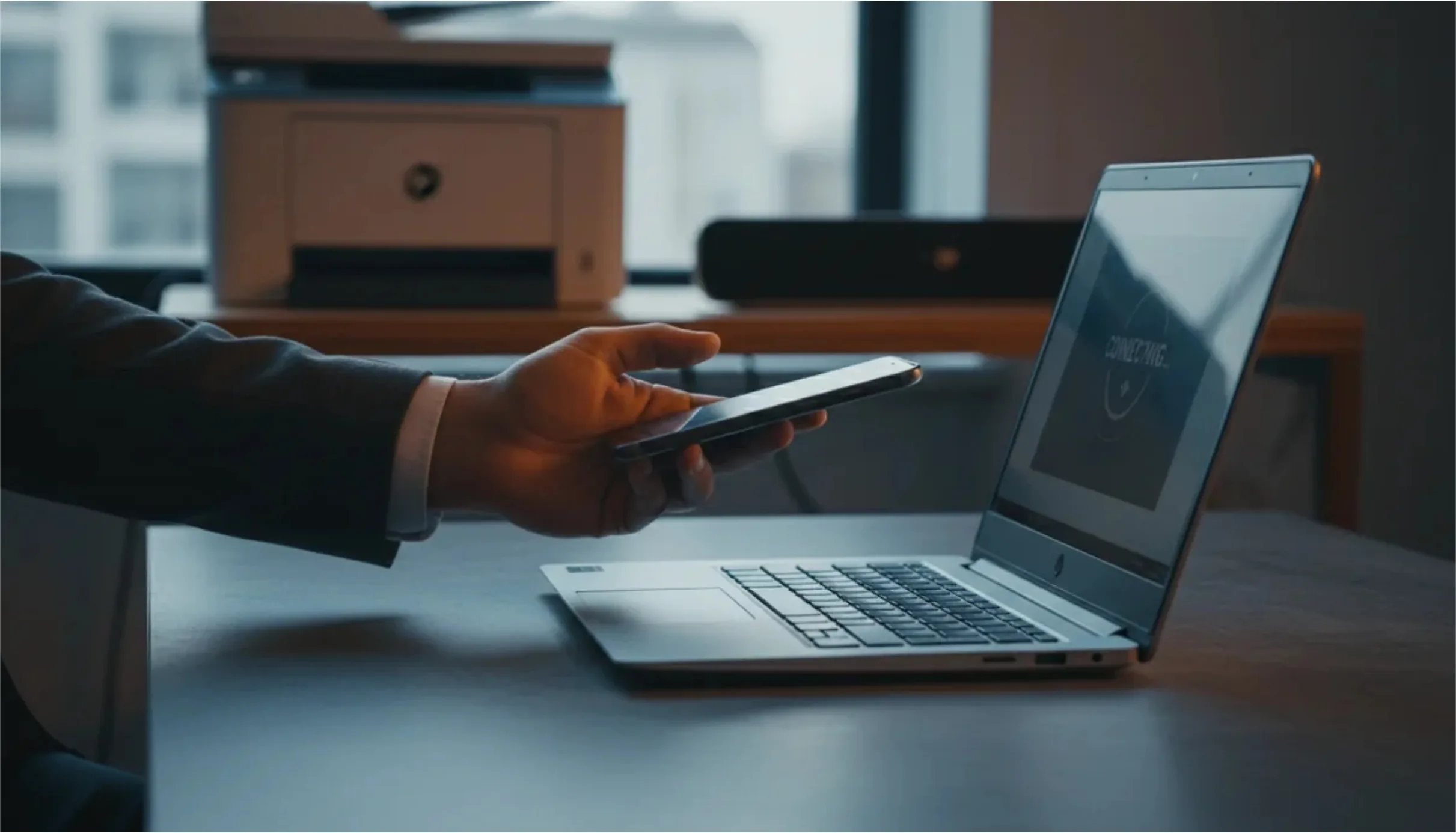
The HP Imagine 2026 announcements centre around a simple but important idea—work should not slow down when people switch devices. With the introduction of HP NearSense, HP is trying to reduce the everyday friction that comes from moving between different systems, screens, and tools during the workday.
In many workplaces today, employees shift constantly between a Windows PC, an Android phone, and shared meeting room devices, and this movement often breaks the flow of work. HP NearSense is designed to make these transitions smoother by allowing devices to discover each other, connect quickly, and share tasks without interruptions, making work feel more continuous rather than fragmented.
A deeper push for cross-device interoperability
At the core of this announcement is a collaboration with Google to extend Device-to-Device Infrastructure (D2DI), a technology that enables devices to communicate across platforms. By building HP NearSense on this foundation, HP is aiming to create a more consistent and secure way for devices across different operating systems and brands to work together.
This matters because mixed-device environments are now the norm, not the exception. The ability for supported devices to reliably find each other and share context without manual setup can reduce delays and improve collaboration, especially in fast-moving work environments where time and continuity are critical.
Real-world experiences, not just concepts
HP NearSense is not positioned as a future concept but as a set of practical features that will begin rolling out across select devices. On systems like the HP EliteBook X G2 NearSense, users will be able to join meetings with a single click, share files directly between PCs without relying on email or cloud uploads, and move content between devices using simple drag-and-drop actions.
The experience extends further with Android interoperability, where users can share files between Android devices and HP PCs without installing additional software or depending on cloud services. This bi-directional sharing marks an early step toward deeper integration, with more advanced features expected over time.
Expanding beyond laptops into workspaces
HP’s approach does not stop at PCs. The plan is to extend NearSense capabilities across a wider ecosystem that includes video conferencing systems, print devices, desktops, and peripherals, enabling a more connected workplace environment where proximity-based interactions become common.
In practical terms, this means devices in shared spaces like conference rooms can be discovered faster, headsets and peripherals can pair automatically, screens can be used for casting without manual setup, and printing or scanning can happen without installing drivers. These small changes, when combined, aim to reduce the everyday interruptions that slow down work.
AI quietly powers the experience
Another important layer in the HP Imagine 2026 announcements is the role of AI through HP IQ, the company’s on-device AI layer. HP NearSense will use this intelligence to understand context and proximity, helping devices connect more efficiently and making transitions between tasks smoother.
Instead of users manually managing connections and workflows, the system is designed to anticipate what is needed and reduce the number of steps required, allowing people to focus more on their work and less on managing technology.
What this means going forward
The HP Imagine 2026 announcements reflect a broader shift in how workplace technology is evolving, where the focus is moving from individual devices to connected experiences that span across systems and environments. As work becomes more distributed and device ecosystems become more complex, the need for seamless interoperability is becoming more important.
For organisations, the takeaway is straightforward, reducing friction in everyday workflows can have a direct impact on productivity, collaboration, and user experience. Instead of adding more tools, the focus is shifting towards making existing tools work better together, and this is where the next phase of workplace innovation is likely to take shape.
Read More:
Datadog Bengaluru office expansion taps India’s AI surge
Oracle Autonomous AI Vector Database and the shift changing enterprise workflows
Trend Micro TrendAI rebrand signals shift from protection to control


 2 Min read