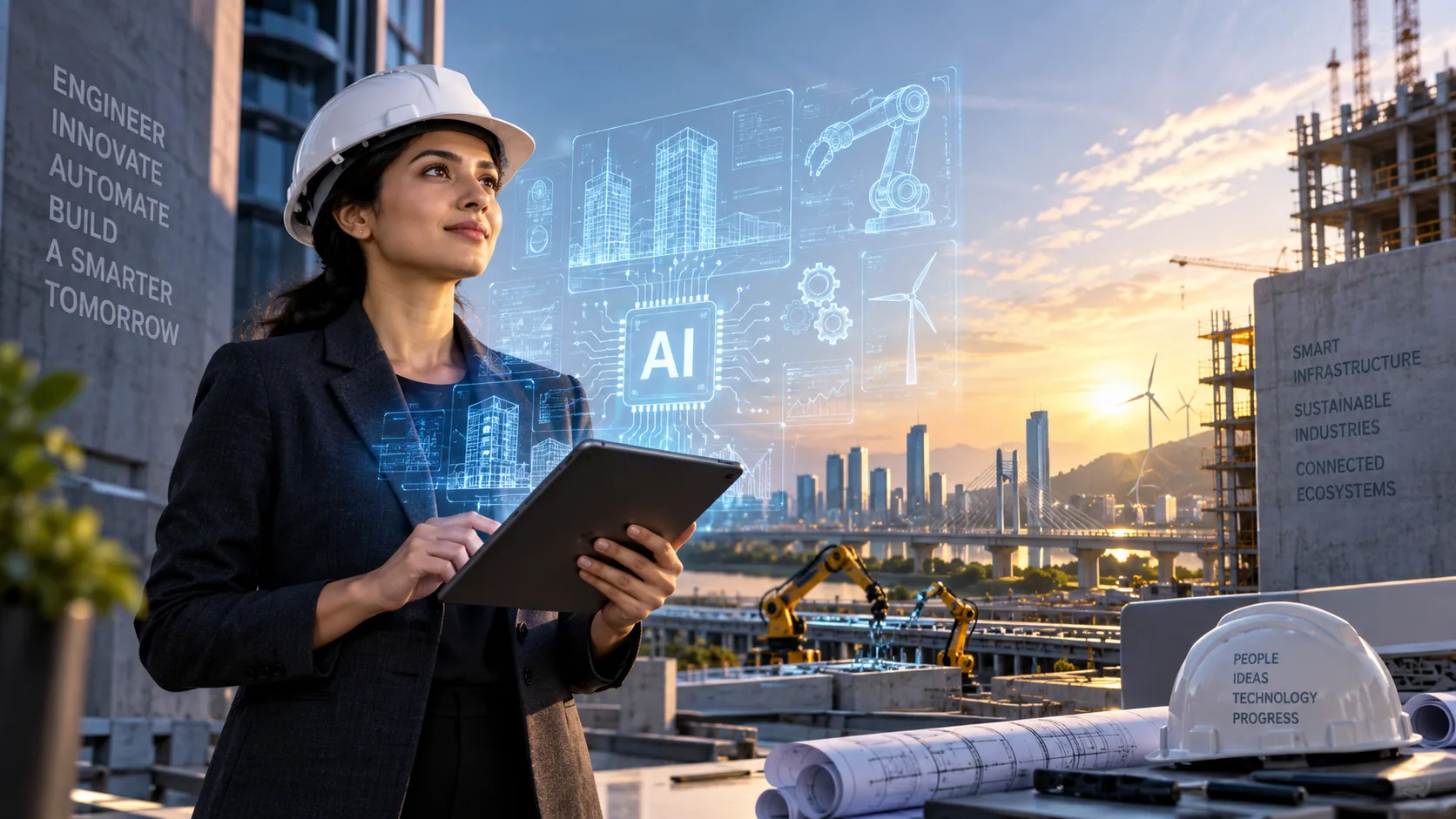
Infinite Uptime PlantOS 2.0 launch signals big shift, and here's why it matters


The Infinite Uptime PlantOS 2.0 launch at Hannover Messe 2026 is not just another product update. It signals a deeper shift in how industrial AI is evolving across factory environments. For years, most systems focused on predicting failures, offering alerts, and leaving the final decision to human operators. That model worked, but it also slowed down action when speed mattered the most.
Now, the conversation is changing. With PlantOS 2.0, the focus moves from simply identifying problems to actually helping resolve them. This is where Industrial Agentic AI comes in, introducing systems that don’t just suggest but also support execution within real operational boundaries. It’s a small conceptual shift on paper, but in practice, it could reshape how factories respond to challenges every day.
From prediction to execution
Modern manufacturing environments already run on complex networks of data, tools, and systems. Yet, one problem keeps showing up—there is data, there are insights, but action often lags behind. This gap between knowing and doing has limited the true value of AI in industrial settings.
PlantOS 2.0 tries to close that gap by building a structured loop of decision-making. The platform operates on what customers describe as a 99% Trust Loop, where AI recommendations are validated and then executed within defined guardrails. This ensures that automation does not feel risky or unpredictable, but instead remains controlled and aligned with real operational needs. In industries where downtime is costly and errors are critical, that level of trust becomes essential.
Built for real-world adoption
One of the more practical aspects of the Infinite Uptime PlantOS 2.0 launch is its approach to integration. Many AI platforms demand large-scale system changes, which slows adoption and increases costs. PlantOS 2.0 takes a different route by working with existing infrastructure rather than replacing it.
The platform connects with sensors through SenseLink and integrates with systems like SCADA, MES, PLC, DCS, ERP, and CMMS. This allows companies to adopt AI without disrupting ongoing operations. For enterprises already running complex environments, this “no rip-and-replace” approach removes a major barrier and makes implementation far more realistic.
Making AI accountable on the shop floor
Trust in AI is not just about accuracy. It is also about transparency. PlantOS 2.0 introduces governance mechanisms where every AI-driven decision operates within clear policies and defined contexts. Nothing is hidden, and nothing functions as a black box.
This becomes especially important in industrial environments where decisions directly impact production, cost, and safety. Alongside this, the platform adds features like multi-site benchmarking, a prescription engine for targeted improvements, and execution tracking through AI Worx. Together, these elements push AI beyond monitoring and into measurable, accountable performance improvement.
Industry signals are getting clearer
The discussions around the launch highlighted a broader industry concern. Many organizations are still stuck at predictive maintenance, unable to move toward more advanced AI-driven workflows. The challenge is not data availability, but the ability to trust and operationalize that data effectively.
By addressing both execution and trust, the Infinite Uptime PlantOS 2.0 launch reflects where the industry is heading next. AI is no longer just a support tool sitting on dashboards. It is slowly becoming part of the decision-making and execution layer itself, embedded into everyday workflows.
What this means going forward
The bigger takeaway is simple but important. Industrial AI is shifting from insights to outcomes. The focus is no longer on how much data a system can process, but on how effectively it can drive action without increasing risk.
For enterprises, this means rethinking how AI fits into operations. It is not about adding more tools, but about enabling systems that can act with context, clarity, and control. The Infinite Uptime PlantOS 2.0 launch shows that this transition is already underway, and the next phase of industrial AI will be defined by how well organizations can turn intelligence into execution.
Read More:
Lapcare Almaty 2026 reveals a deeper partner strategy, reshaping partner engagement
Alappuzha blasters clinch glory at AKITDA cricket tournament in Thrissur
80% of CEOs pivot to AI agents: Why operational foundations are being rebuilt
The rise of distributed manufacturing: How localised production is reshaping global supply chains






 2 Min read