Inside the Panasonic Smart Factory’s skill-less operations push

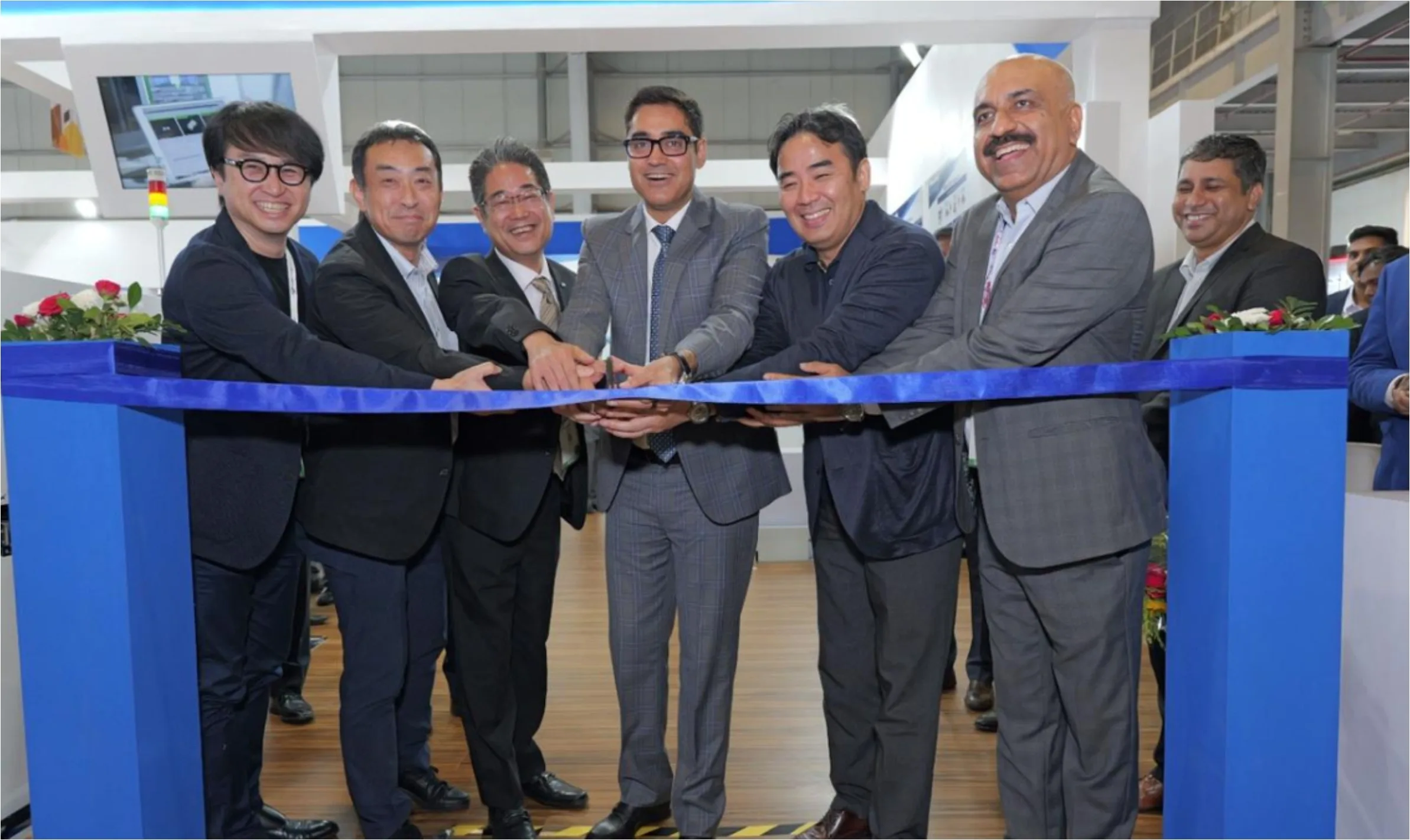
At Productronica India 2026, Panasonic Smart Factory Solutions India presented more than just machines; it revealed how manufacturing is quietly moving toward autonomous, software-driven environments. The idea of “Autonomous Factory – Skill-less Operations” stood out because it challenges a long-held belief that skilled manpower is the backbone of production, suggesting instead that intelligence is shifting into the system itself.
Moving from machines to connected ecosystems
The Panasonic Smart Factory approach is not built around standalone equipment but around an integrated ecosystem where every component communicates and contributes to a unified workflow. The showcase included SMT platforms like NPM-GP/L, NPM-GH, and NPM-TT2, alongside inspection systems, reflow ovens, and cleaning solutions, all working together as a single production line. This reflects a clear shift in AI in electronic manufacturing services, where value is no longer in individual machines but in how seamlessly they connect and operate as one.
Speed and precision now work together
What stands out is how Panasonic is balancing speed with accuracy without forcing trade-offs, something manufacturers constantly struggle with. The SMT machine cycle time improvements, such as the 12-second cycle in the NPM-GP/L and the high placement speeds of the NPM-GH, indicate a focus on throughput, while precision levels remain tightly controlled. This combination signals that production efficiency is no longer just about doing things faster, but about doing them consistently right at scale.
Software begins to run the shopfloor
A major shift comes from the integration of platforms like PanaCIM and IoT-enabled systems such as MirAIe ProFactory, which turn the shopfloor into a data-driven environment. Instead of relying heavily on manual oversight, the system enables real-time traceability, predictive decision-making, and automated changeovers. This is where the concept of Autonomous Factory Skill-less Operations becomes practical, reducing dependency on specialised skills while improving consistency and operational flow.
India’s role in the global manufacturing shift
Panasonic’s positioning also reflects a broader trend, where India is increasingly seen as a key manufacturing hub. By bringing global expertise into locally relevant solutions, the company is aligning with the growing demand for scalable and cost-efficient production. The emphasis is not just on meeting domestic needs, but on supporting regional and global supply chains through smarter, connected manufacturing environments.
What this means for manufacturers
The Panasonic Smart Factory narrative points to a deeper change in how factories will operate in the coming years, where the focus shifts from labour-intensive processes to intelligence-driven systems. For manufacturers, the takeaway is clear: success will depend less on workforce scale and more on how effectively technology, data, and automation are integrated into daily operations.
Final thoughts
Panasonic Smart Factory does not present a sudden disruption but a steady evolution, where machines, software, and data begin to work as a single unit. The move toward skill-less operations may sound ambitious, but it highlights a direction the industry is already moving toward, simpler on the surface, yet far more sophisticated underneath.
Read More:
Check Point March 2026 report reveals a quieter yet riskier cyber threat shift
HP Latex FS70 W signals a shift in high-speed print workflows
Freshworks names Kuntal Vahalia as SVP global channels to lead upmarket surge
How Statustronics evolves from box-moving to value-addition to partner eco-system







 2 Min read