
Quick Heal Advisory: How Digital Arrest Scams Evolved into Advanced Cyber Extortion

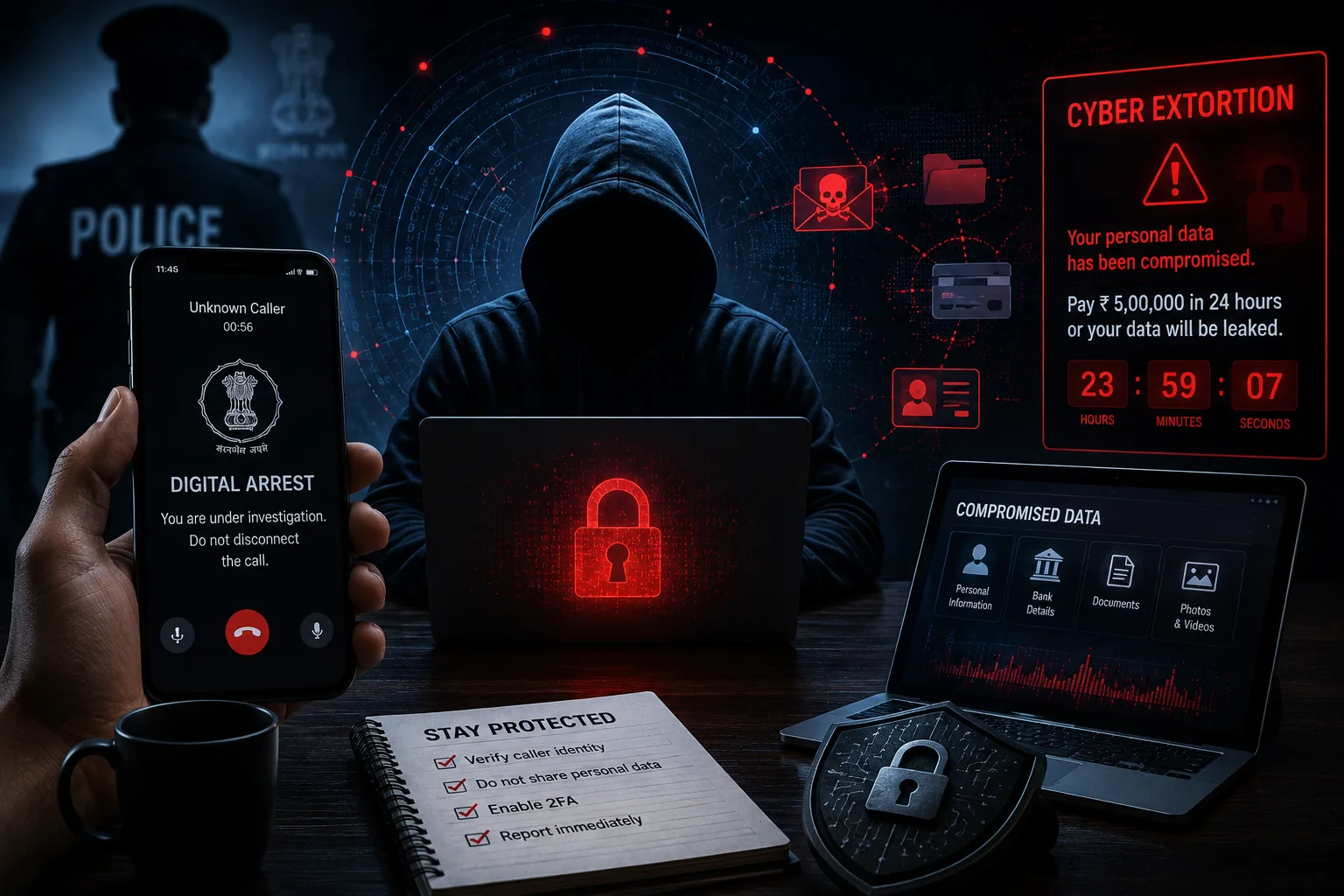
Quick Heal Technologies, a global provider of cybersecurity and fraud prevention solutions, has issued a detailed advisory warning users that "digital arrest" scams have escalated into highly organised cyber extortion models. Fraudsters are combining psychological manipulation, spoofed caller identities, doctored video feeds, forged official legal paperwork, and screen-sharing tools to coerce victims into making immediate financial payments.
The advisory stresses a fundamental legal reality: there is no legal provision or process called "digital arrest" under Indian law. Legitimate law enforcement, judicial, or regulatory bodies will never detain individuals over a video call, demand instant security deposits, or restrict personal movement online.
Deconstructing the Mechanics: Psychological Pressure Meets Technical Exploitation
The latest threat telemetry indicates that cybercriminals have moved beyond simple, unscripted phone calls. Scammers now apply structured operational workflows, leveraging data harvested from public records, leaks, and prior breaches to build credibility:
Staged Chain of Authority: A common entry point begins with an automated call claiming a courier parcel containing illegal contraband or an unauthorised SIM card is linked to the target's identity credentials. The victim is then seamlessly transferred to a fake "CBI," "Enforcement Directorate (ED)," "Customs," or "Cyber Police" operator wearing counterfeit uniforms against studio-arranged station backdrops.
Fabricated Legal Documents: Scammers send doctored First Information Reports (FIRs), fake arrest warrants, and counterfeit court orders featuring forged seals and official letterheads over WhatsApp or Telegram to trigger panic.
Forced Isolation: Victims are instructed to keep video calls active continuously, often for hours, under the guise of "custodial surveillance". This prevents targets from consulting family members, contacting local police, or verifying claims independently.
Screen-Sharing and App Exploitation: Under the pretence of "verifying financial records," scammers direct targets to download remote-access apps. Once access is granted, criminals view bank balances, intercept One-Time Passwords (OTPs), and monitor private messaging apps in real time.
Red Flags and Zero-Trust Verification Rules
To help citizens protect themselves against evolving impersonation models, Quick Heal outlines clear behavioral red flags:
| Threat Vector / Scenario | Scammer Action / Red Flag | Legitimate Agency Protocol |
| Video Call Enforcement | Demands continuous video monitoring under threat of immediate arrest. | No Law Enforcement Over Video: Police issue physical summons or conduct in-person inquiries. |
| Financial Demands | Demands "clearance fees," "verification deposits," or account transfers. | Zero Financial Demands: No government agency demands funds over phone calls. |
| Software Downloads | Instructs victim to install remote-access software or APK files. | No Application Inquiries: Official agencies never require third-party remote control tools. |
| Secrecy Directives | Commands victim not to disconnect or speak to family members. | Right to Legal Counsel: Citizens are free to contact family, lawyers, or local authorities. |
Proactive Defence with AI-Powered Fraud Prevention
As social engineering tactics become hyper-realistic, relying on manual awareness alone can be difficult during high-stress situations. Quick Heal recommends integrating dedicated early-warning solutions such as Quick Heal AntiFraud.AI.
The AI-driven security engine provides proactive defences:
Real-Time Scam Call & Link Blocking: Identifies spoofed incoming communication patterns, phishing URLs, and fraudulent domain redirects before interactions escalate.
Remote App & Screen-Sharing Monitoring: Detects unauthorised attempts by third-party applications to access screen feeds or banking interfaces.
Cooperative Family Protection: Features tools like Fraud Protect Buddy, which alert family members if an elderly parent or child receives suspicious calls or attempts to share OTPs while on an active call.
Immediate Action Steps If Targeted
If an individual receives a call claiming an imminent "digital arrest":
Disconnect Immediately: Do not argue, negotiate, or follow instructions to keep the call open.
Do Not Share Details: Never provide identity details, banking credentials, or OTPs.
Verify Independently: Contact the local police station or official government customer support numbers directly.
Preserve Evidence: Retain call logs, transaction receipts, messages, and phone numbers.
Report Cybercrime: File a report on the National Cyber Crime Reporting Portal (cybercrime.gov.in) or call the toll-free helpline 1930 immediately.
Read More:
How AI and managed services are transforming BFSI operations
Garmin expands retail network as premium wearable demand grows
Nutanix explains how hybrid multi-cloud services will define channel growth
From ERP to ERX: How AI Is Turning Planning into Intelligent Execution







 2 Min read