
Tata Electronics and ASML sign MoU for India’s fab future

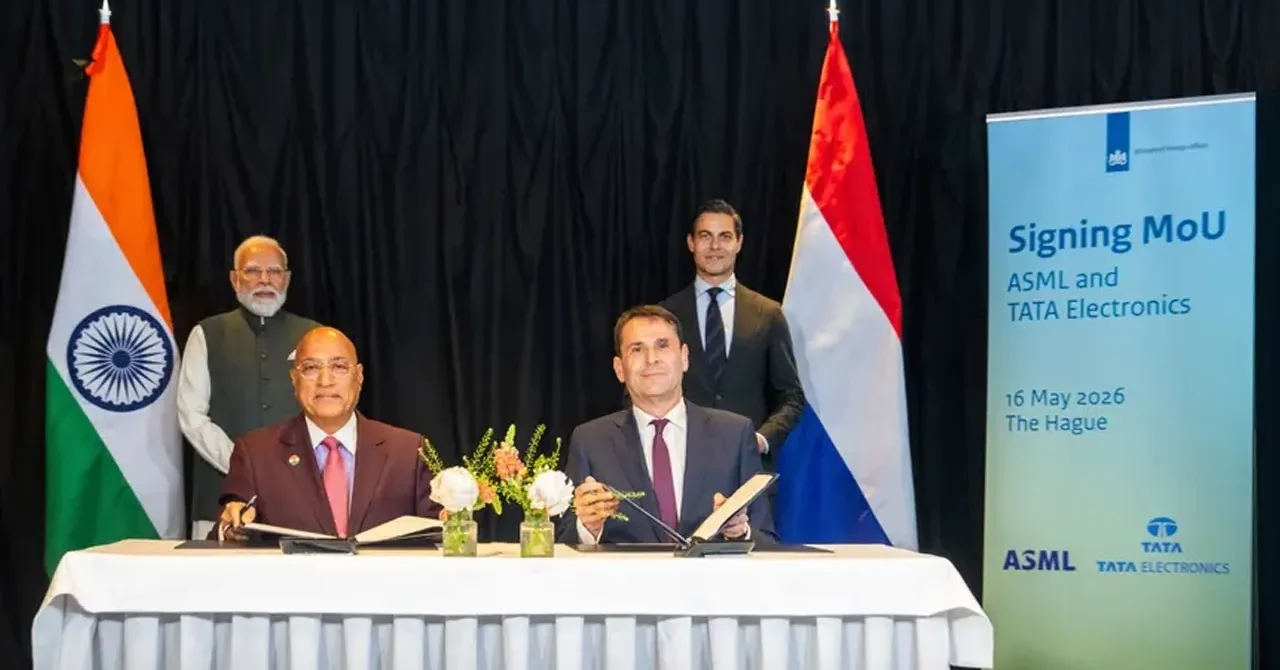
Tata Electronics and ASML have signed a Memorandum of Understanding that could become a defining moment in India’s semiconductor ambitions. The agreement focuses on supporting Tata Electronics’ upcoming 300 mm semiconductor fab in Dholera, Gujarat, while also strengthening India’s larger semiconductor ecosystem.
The move comes at a time when countries across the world are trying to secure critical technology supply chains. For India, the partnership represents more than just another industrial agreement. It reflects a growing effort to build local manufacturing capabilities in a sector long dominated by a few global regions.
A strategic push for India’s First 300 mm fab
The collaboration will bring ASML lithography tools India needs for advanced chip manufacturing into Tata Electronics’ Dholera facility. ASML’s lithography systems are considered central to semiconductor production, making this partnership critical for the planned ramp-up of India’s first 300mm semiconductor fab.
The Dholera facility, backed by a planned investment of US$11 billion, is expected to manufacture chips for automotive, mobile devices, AI applications, and other industries. Tata Electronics said the partnership with ASML will help ensure quality, yield, and manufacturing efficiency while also supporting long-term supply chain resilience.
Dr. Randhir Thakur, CEO and MD of Tata Electronics, described the partnership as foundational for building a strong semiconductor ecosystem in India. He also highlighted the importance of local talent development and trusted supply chains for global customers.
Why this partnership matters beyond manufacturing
The announcement also reflects a broader shift in India semiconductor supply chain 2026 discussions. Semiconductor manufacturing is no longer just about factories. It now includes talent pipelines, research partnerships, equipment ecosystems, and long-term geopolitical alignment.
ASML President and CEO Christophe Fouquet said India’s semiconductor sector offers strong long-term opportunities. He noted that the company sees Tata Electronics as well-positioned to expand semiconductor capabilities in the region.
The agreement extends beyond machinery deployment. Both companies will collaborate on research initiatives, domestic supply chain growth, and workforce development — areas that remain critical if India wants to compete globally in semiconductor manufacturing.
Building an ecosystem, not just a factory
Tata Electronics has already partnered with Powerchip Semiconductor Manufacturing Corporation (PSMC), gaining access to multiple semiconductor technology nodes ranging from 28nm to 110nm. Construction at the Dholera plant is reportedly progressing rapidly.
What stands out in this announcement is the ecosystem-first approach. The company is not only focusing on manufacturing capacity but also on creating a local network of skilled engineers, suppliers, and technology partners.
Conclusion
As Tata Electronics and ASML sign an MoU, the partnership signals India’s intent to move deeper into the global semiconductor value chain. The Dholera fab may still be under construction, but the larger message is already clear: India is trying to build long-term semiconductor independence through global collaboration, local talent, and strategic technology partnerships.
Read More:
HPE ProLiant compute EL2000 pushes AI beyond datacenters
Veeam Intelligent ResOps changes AI recovery thinking
International AI accountability forum changes AI governance debate
HARMAN appoints Shekhar Datta to lead consumer audio growth in India







 2 Min read