/dqc/media/agency_attachments/2026/08/21/2026-08-21t061716244z-dq-channels-logojpg-2026-08-21-11-47-17.jpeg)

/dqc/media/media_files/2026/09/10/dq-channels-whatsapp-2026-09-10-17-07-48.png)

 Follow Us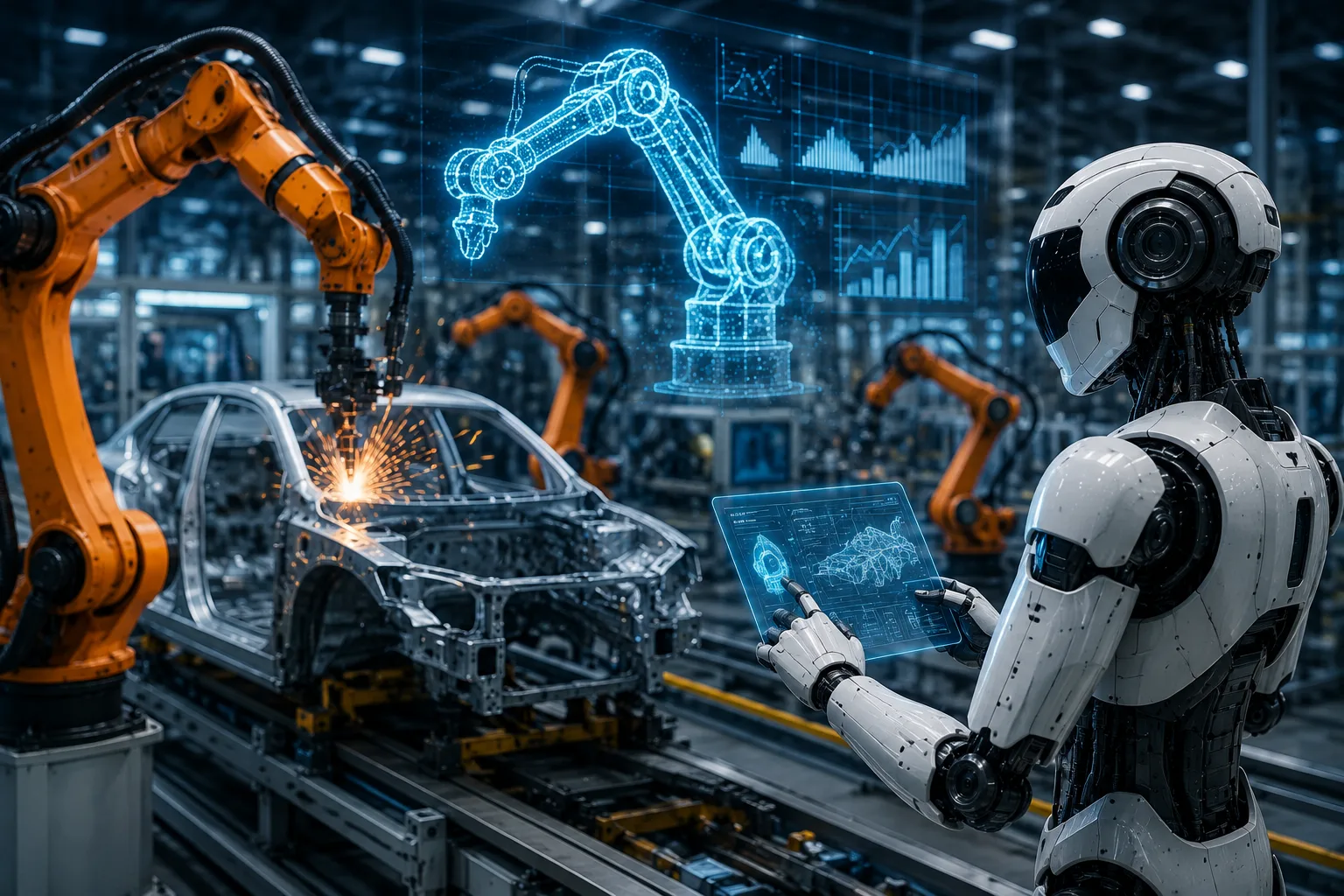
Tata Consultancy Services, consulting and business solutions, has announced the findings of its global study: Future-Ready Manufacturing: TCS Physical AI Readiness Report 2026.
The benchmark report indicates a fundamental shift in how global manufacturers approach artificial intelligence. Enterprise focus is rapidly transitioning away from isolated digital automation projects toward integrated Physical AI ecosystems that combine sensing, edge reasoning, and real-world autonomous action across plant floors, warehouses, and logistics networks.
The study, which surveyed 300 CXOs and Vice Presidents across North America and Europe across automotive, electronics, aerospace, process, and heavy machinery industries, reframes the narrative surrounding industrial automation.
Rather than viewing robotics and physical AI as tools for workforce reduction, manufacturers view physical AI as a human-first transformation. Under a Human + AI Operating Model, intelligent systems are deployed to protect employees in hazardous environments, absorb repetitive physical tasks, and augment worker productivity.
Core Data Insights: Investment, Impact, and Deployment Readiness
The study exposes a sharp contrast between long-term strategic commitment and near-term operational readiness:
Long-Term Capital Commitment: 0% of surveyed organisations plan to reduce Physical AI investments, while 26% intend to actively increase spending, signalling that enterprises are preparing for multi-year value-realisation cycles over short-term pilots.
Targeted Operational Domains: Industrial leaders expect the highest immediate impact in warehouse operations (77%), followed closely by assembly and manufacturing lines (75%), and logistics and material movement (72%).
Workforce Safety & Augmentation: 42% of manufacturers expect significant workforce augmentation, using autonomous systems to support human operators in hazardous or complex operational settings.
The Scaling Gap: 68% of manufacturers remain in non-deployment or experimental phases, citing legacy system integration, ununified operational technology (OT) data, and workforce skill gaps as primary friction points.
The Governance Deficit: 44% report unclear or missing accountability structures for Physical AI system failures, and 40% admit to being unprepared for emerging AI safety regulations.
| Physical AI Performance Parameter | Industry Baseline Finding | Strategic TCS Blueprint Objective |
| Capital Allocation Trend | 26% increasing budgets; 0% cutting spend. | Transitioning short-term pilots into scalable, multi-site programs. |
| Deployment Maturity | 68% trapped in experimental or pilot stages. | Unifying edge computing and legacy OT systems via cloud orchestration. |
| Governance & Safety | 44% lack clear liability frameworks for AI errors. | Establishing auditable human-in-the-loop safety protocols. |
| Workforce Dynamics | 42% are targeting human-machine collaboration. | Deploying intelligent robotics to reduce shop-floor safety risks. |
Bridging Digital Ambition with Physical Execution
To help global industrial clients bridge the gap between digital strategy and physical deployment, TCS is expanding its engineering ecosystems.
Building on its strategic partnership with Google Cloud, TCS launched the TCS Physical AI Gemini Experience Centre in Troy, Michigan. The facility brings Google Cloud Gemini's multimodal reasoning straight to factory floors, enabling autonomous vehicles, quadruped robots, and humanoid systems to process visual, thermal, and sensor data in real time.
Furthermore, the TCS Physical AI Blueprint provides an end-to-end framework that unifies AI-driven quadruped and humanoid robotics with advanced sensing, edge processing, and secure cloud orchestration. This approach allows manufacturing plants to transition from static rules-based automation to perpetually adaptive, self-correcting cognitive facilities.
Executive Perspectives
Anupam Singhal, President of Manufacturing at TCS, highlighted the shift toward real-world autonomous systems:
“Physical AI is taking intelligence beyond the screen and onto the shop floor, where machines sense, adapt and act in real time. The manufacturers that scale it successfully will define the next era of manufacturing. TCS’ ‘infrastructure to intelligence’ approach positions them to lead that transformation. With all the manufacturers in our study planning to either maintain or increase the investment, the direction is clear: towards more resilient, adaptive, and future-ready manufacturing enterprises.”
Kevin Ichhpurani, President of the Global Partner Ecosystem at Google Cloud, emphasised the value of multimodal AI on the shop floor:
“Physical AI is moving manufacturing from digital insight to autonomous real-world action. Through our partnership with TCS, we are bringing Gemini’s multimodal reasoning to the factory floor, enabling robots and systems to operate safely and intelligently in complex industrial environments.”
Read More:
Red Hat explains why hybrid cloud and open source is a channel opportunity
Why managed AI services are replacing one-time AI projects
Why Dell believes AI PCs need consultative selling, not hardware transactions
HP showcases AI PCs and enterprise AI strategy with Delta IT Network