
How Hybrid Cloud Complexity Is Driving Demand for Managed Services

Cloud adoption is no longer the challenge it once was. Most enterprises today have already embraced cloud technologies in some form, whether through private cloud infrastructure, public hyperscalers, SaaS platforms or edge deployments. The bigger challenge now lies in managing increasingly fragmented environments while maintaining visibility, security, governance and operational efficiency.
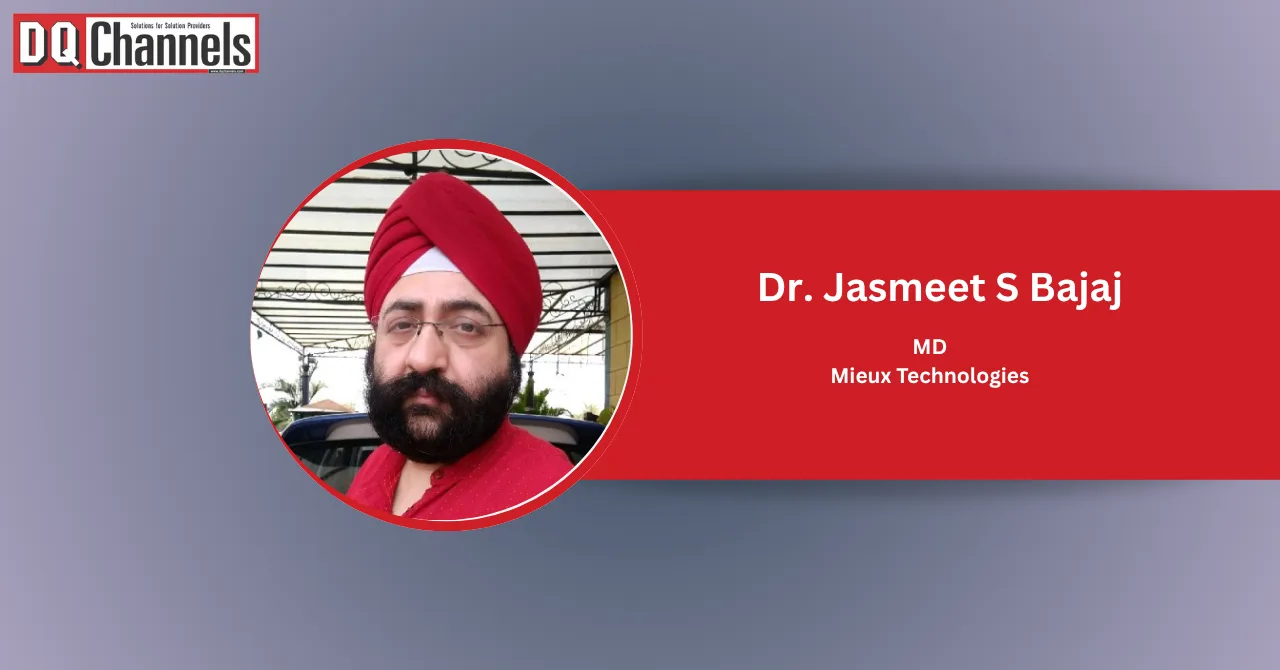
According to Jasmeet S Bajaj, Managing Director, Mieux Technologies, enterprises have entered a new phase of cloud maturity where the focus has shifted from adoption to optimisation.
"Enterprises today are not struggling with cloud adoption anymore. They are struggling with cloud sprawl, fragmented visibility, rising operational costs and inconsistent security across environments."
As organisations continue to distribute workloads across multiple platforms, operational complexity has become one of the most pressing concerns for technology leaders. Different cloud environments often create management silos, resulting in inconsistent processes, duplicated effort and growing administrative overheads.
In this environment, managed service providers are increasingly becoming strategic operational partners rather than traditional infrastructure vendors.
Hybrid and multi-cloud complexity is driving demand for unified operations
The rapid growth of hybrid and multi-cloud environments has fundamentally changed customer expectations. Enterprises no longer want to manage separate vendors, multiple monitoring tools and disconnected support structures.
Instead, they are looking for a unified operational model that can simplify management across increasingly diverse technology environments.
Bajaj believes MSPs are stepping into this role by providing centralised monitoring, workload optimisation, governance frameworks, automation capabilities, backup orchestration and round-the-clock operational support.
"The real value MSPs bring today is simplification. Customers no longer want to manage multiple vendors, consoles and disconnected support teams. They want accountability, faster resolution and predictable operations from a single strategic partner."
This shift reflects a broader change in enterprise buying behaviour. Technology investments are now being evaluated not only on performance but also on operational simplicity and business impact. Customers increasingly expect their service providers to take ownership of outcomes rather than simply delivering infrastructure.
Managed cloud services are creating predictable, recurring revenue
For channel partners, the transition towards managed services is reshaping business models and long-term growth strategies.
Bajaj argues that the traditional cloud resale model is becoming increasingly transactional and margin-sensitive. As cloud infrastructure becomes more commoditised, sustainable profitability is shifting towards recurring services that provide ongoing business value.
"The traditional resale-driven cloud business is becoming increasingly transactional and margin-sensitive. Long-term profitability for channel partners is now being driven by managed services, not infrastructure resale alone."
Services such as managed backup, disaster recovery, cybersecurity operations, cloud monitoring and compliance management are creating stronger customer retention while generating predictable recurring revenue streams.
More importantly, these services position partners deeper within the customer's operational ecosystem. Instead of participating in isolated deployment projects, MSPs become embedded within daily business operations, creating longer-term and more strategic relationships.
Bajaj sees this as a fundamental transformation of the channel landscape.
"What this really means is that the channel ecosystem is shifting from product fulfilment to business continuity enablement."
Security and resilience are becoming boardroom priorities
Security, resilience and data protection have moved far beyond traditional IT discussions. Today, they are increasingly viewed as business-critical priorities that directly impact organisational stability, reputation and revenue.
Bajaj notes that customer expectations have evolved significantly in recent years.
"Earlier, security and backup were often treated as secondary IT functions. Today, they are board-level priorities."
As cyber risks continue to grow, enterprises are expecting MSPs to deliver much more than basic security tools. Organisations now want proactive security monitoring, ransomware resilience, immutable backup strategies, rapid recovery capabilities and continuous compliance visibility as standard service offerings.
Importantly, customers are also recognising that backup alone does not guarantee resilience.
There is growing demand for tested recovery plans, cyber recovery readiness, incident response coordination, SOC integration and clearly defined recovery objectives. The conversation is shifting away from reactive support towards continuous operational resilience.
"The expectation is shifting from reactive support to continuous operational resilience."
Visibility and governance are becoming critical in distributed environments
As cloud environments become more distributed, enterprises face growing challenges around visibility, governance and cost control.
Maintaining operational transparency across multiple platforms while ensuring scalability requires a more structured approach to cloud management. Partners are increasingly helping customers address these challenges through unified monitoring platforms, policy-driven governance models and automation frameworks.
Bajaj highlights that workload optimisation, centralised security visibility, compliance management and FinOps practices are becoming equally important components of cloud operations.
"The successful partners are the ones helping customers balance agility with governance."
This balancing act is becoming increasingly important. Enterprises want the flexibility to scale quickly and innovate rapidly, but they also require predictable costs, regulatory compliance and operational consistency.
As a result, MSPs are evolving into advisors who help shape both technology strategy and operational governance frameworks.
The future belongs to outcome-driven MSPs
Looking ahead, Bajaj believes infrastructure expertise alone will no longer be enough to differentiate service providers.
As infrastructure becomes increasingly automated and standardised, customers will place greater value on partners who can consistently deliver measurable business outcomes.
"The real differentiator will be the ability to deliver continuous business outcomes through integrated managed services."
Future-ready MSPs will need to combine cloud expertise with cybersecurity readiness, automation capabilities, disaster recovery proficiency, compliance alignment and AI-driven operational monitoring. Their role will increasingly centre on reducing operational risk, improving resilience and helping customers navigate complex technology environments.
According to Bajaj, the most successful partners will be those that move beyond vendor relationships and become trusted long-term advisors.
Operational accountability will define the next phase of MSP growth
The responses from Jasmeet S Bajaj point towards a significant evolution in the managed services landscape. Cloud adoption has matured, but operational complexity continues to increase as enterprises expand across hybrid and multi-cloud environments.
This shift is creating new opportunities for MSPs, not through infrastructure deployment alone, but through operational ownership, resilience management and continuous business support.
As security, governance and business continuity become board-level priorities, customers are increasingly looking for partners capable of delivering predictable outcomes rather than isolated technology projects.
The next phase of growth in the channel ecosystem is likely to belong to MSPs that can simplify complexity, improve resilience, optimise operations and provide measurable business value throughout the customer lifecycle. In a world where technology environments are becoming more fragmented, operational accountability may ultimately become the most valuable service of all.




 2 Min read