From Brazil to Bharat: Nine Months of Witnessing India Rewrite the Tech Playbook

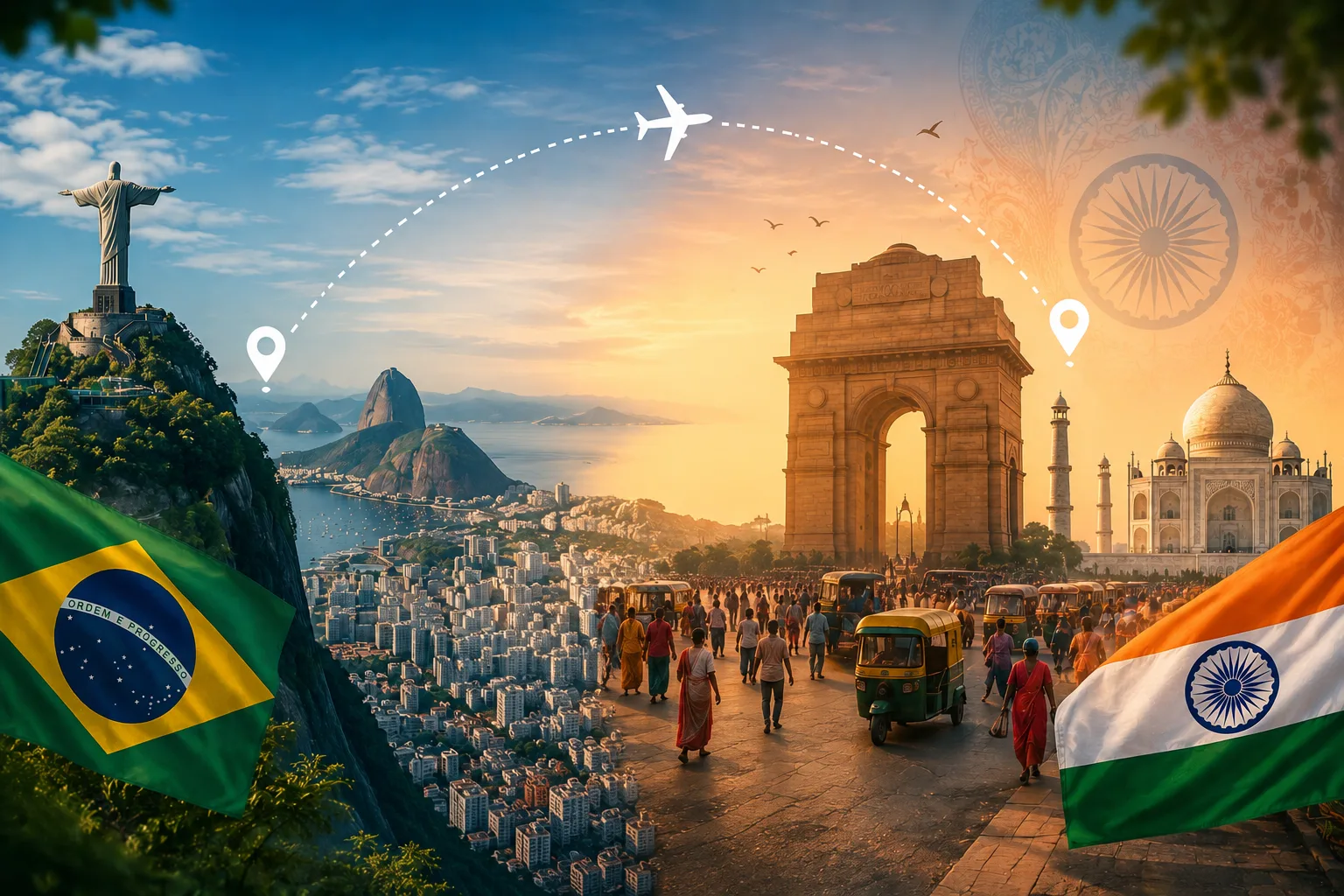
Nine months ago, I moved from Brazil to India with what I thought was a reasonable frame of reference. Brazil and India share many characteristics. Both are continental-sized economies, home to young populations, entrepreneurial energy, and rapidly evolving digital ecosystems. Having spent years leading businesses in Brazil, I expected to find similarities.
What surprised me was not how similar the two countries are. It was how differently India has approached the challenge of building a digital economy at scale. In many parts of the world, digital transformation is still discussed as a future ambition. In India, it is increasingly becoming the default way society operates.
Brazil has Pix, its instant payment system, and it has been a genuine success story since launching in 2020. However, India's Unified Payments Interface (UPI) operates at a scale that is difficult to comprehend until you experience it firsthand. In June 2026 alone, UPI processed more than 22 billion transactions worth roughly Rs. 29 lakh crore (over USD 300 billion). Over the full financial year, that number crossed 24,100 crore transactions worth Rs.314 lakh crore (over USD 3 trillion). UPI now accounts for more than 80% of all retail digital payments in the country and has expanded beyond India's borders, becoming a model studied by governments and central banks around the world.
Yet statistics only tell part of the story.
You feel the real impact when a vegetable vendor waves away your hundred-rupee note and points to a faded QR code taped to his weighing scale. That is not adoption. That is a new default. As a visitor, it catches your attention. As a business leader, it makes you ask a bigger question: what becomes possible when an entire economy operates on shared digital infrastructure?
Building the Digital Rails
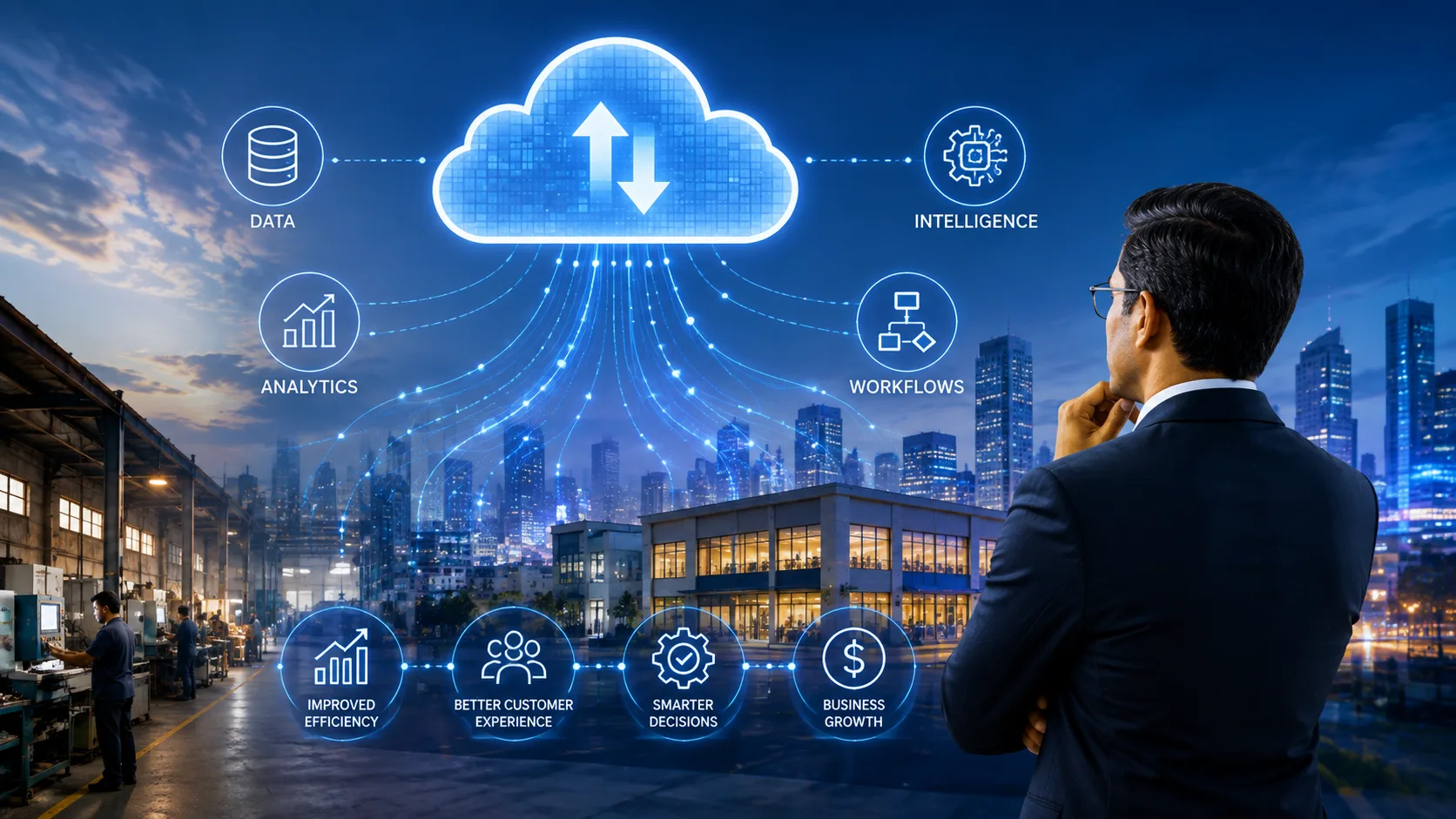
What impressed me most is that India's story is not really about payments. It is about infrastructure. The government has spent years building digital public infrastructure that businesses can build upon. Digital India, Aadhaar, UPI, ONDC, the India AI Mission, and the semiconductor incentives under the India Semiconductor Mission are not isolated initiatives. They form an interconnected ecosystem where each layer enables the next.
India's digital economy already contributes roughly 13% of GDP and is projected to reach nearly 20% by the end of the decade. According to Nasscom, the technology sector alone is expected to reach approximately $315 billion in revenue by FY2026.
More importantly, these are not projections built on future aspirations. They are built on infrastructure that is already being used every day by hundreds of millions of people. I see the impact of this every week. Cloud adoption, cybersecurity, AI, and digital platforms are no longer niche discussions. They are becoming business priorities across a much broader segment of the economy.
Quick Commerce and the Delivery of Disbelief
Nothing captures India's consumer technology ambition quite like quick commerce. Grocery delivery in under ten minutes sounds impossible until you live here. Then, after a few weeks, you stop thinking about it altogether. That may be the most remarkable part: what feels extraordinary to an outsider quickly becomes ordinary in India.
What impressed me was not simply the speed. Logistics can always be accelerated with enough investment. What stands out is the intelligence underneath. These platforms operate highly optimised micro-warehousing networks, using neighbourhood-level demand forecasting, curated inventory models, and real-time data to serve customers within incredibly small delivery radiuses.
Brazil has excellent food delivery platforms. Many countries do. What feels different in India is the density, scale, and operational sophistication supporting these experiences.
The Promising MSME Story
India's more than 60 million MSMEs contribute nearly 30% of GDP and over 45% of exports. They are unquestionably one of the country's greatest economic strengths.
Digital adoption among these businesses has accelerated significantly. Digital payments have become mainstream, cloud adoption is increasing, and cybersecurity is receiving growing attention.
Yet this is where the story becomes more nuanced.
While many MSMEs have successfully adopted basic digital tools, a significant portion still struggles to unlock the full value of technology investments. Access to capital remains uneven, digital literacy varies widely, and cybersecurity maturity often lags behind adoption. India also continues to face a substantial MSME credit gap, creating challenges for businesses that are otherwise ready to scale. This is where India's next chapter will likely be written.
The question is no longer whether the country can build world-class digital infrastructure. The question is whether that infrastructure can reach every entrepreneur, manufacturer, and business owner quickly enough to accelerate the next wave of growth. India has already built many of the tools. Execution is now the opportunity.
Beyond Services: The Rise of Deeptech
For years, global conversations about India's technology sector were dominated by IT services and talent.
What surprised me is how quickly that narrative is expanding.
India is increasingly becoming a hub for deeptech innovation across artificial intelligence, semiconductors, robotics, defence technologies, and advanced engineering. The combination of world-class technical talent, cost competitiveness, entrepreneurial ambition, and long-term government commitment is creating conditions that continue to attract growing global attention. India is no longer only participating in the next wave of technology innovation.
It helps shape it. What I Actually Learned. Nine months is not enough to understand India.
But it is enough to realise that many of the assumptions global business leaders hold about innovation, digital transformation, and economic development deserve to be challenged. For decades, emerging markets were expected to follow playbooks written elsewhere. India is doing something different. It is writing its own. Not perfectly. Not without challenges. But with speed, scale, and a level of ambition that are difficult to ignore.
If you are a technology leader sitting in São Paulo, Singapore, London, or San Francisco, my advice is simple: do not look at India only as a market of 1.4 billion people. Look at it as one of the world's largest laboratories for digital innovation.
Because the most important question is no longer whether India will learn from the rest of the world.
It is how much the rest of the world will learn from India.
Written by: Flavio Moraes, Chief Country Executive, Ingram Micro India
Read More:
SUSE Open source infrastructure powers enterprise AI roadmap
ENCIS Survey predicts 65% rise in Power Sector AI by 2030
Lumina Datamatics TNQTech acquisition reaches final milestone
LTM and Chainguard partnership focus on open-source security




 2 Min read