
Why Indian manufacturers are poised to lead the next global supply chain shift

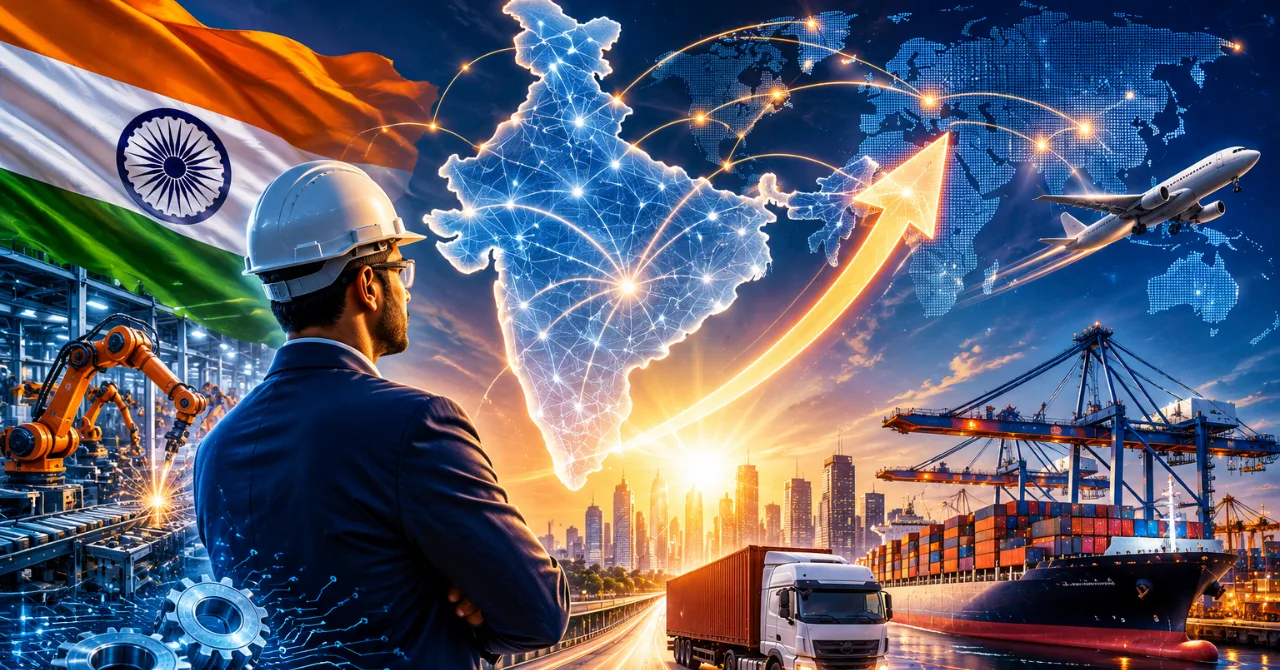
Over the last five years, global manufacturers have realised that efficiency without resilience is a risk. As companies rethink where and how products are made, India is emerging not merely as an alternative manufacturing base, but as a strategic long-term supply chain partner.
This shift is no longer theoretical. It is visible in sourcing conversations, industrial investments, and manufacturing expansion plans taking shape across industries worldwide. Global businesses are actively looking to diversify supply chains, reduce overdependence on single-country sourcing models, and build manufacturing ecosystems that are more flexible, reliable, and future-ready.
India is benefiting directly from this transformation.
The structural case for India
The global supply chain rethink that began during the pandemic and accelerated through geopolitical tensions has produced one clear conclusion among procurement leaders worldwide: concentrated manufacturing dependency creates vulnerability.
India offers something that very few countries can match at scale: a large and young workforce, strong engineering capabilities, improving infrastructure, and a domestic market significant enough to support long-term industrial investment.
In sectors such as engineering goods, industrial products, electronics, automotive components, and consumer goods, buyers are increasingly looking to diversify sourcing and build multi-country manufacturing ecosystems. India is becoming a serious part of that strategy.
The numbers are beginning to reflect this momentum. India's manufacturing sector grew at 8.5 percent in the financial year 2024–25, while merchandise exports crossed USD 437 billion in 2024. Engineering goods, electronics, and pharmaceuticals continue to drive this growth. These are not the indicators of a country waiting for its manufacturing opportunity. They are signs of a transition that is already underway.
Policy support is creating real momentum
One of the biggest differences today compared to previous manufacturing cycles is the seriousness with which industrial growth is being approached.
The Production Linked Incentive (PLI) schemes across multiple sectors have accelerated investment in electronics, pharmaceuticals, speciality chemicals, textiles, and advanced manufacturing. More importantly, they have helped improve confidence among global companies evaluating India as a long-term manufacturing destination.
Apple’s rapid expansion of iPhone manufacturing in India, with production reportedly crossing USD 14 billion in 2024, reflects more than policy support. It signals growing confidence in India’s supplier ecosystem, infrastructure, and manufacturing reliability.
Defence manufacturing has also witnessed significant progress. India’s defence exports crossed Rs 21,000 crore in 2024–25, demonstrating how focused policy frameworks and domestic capability development can create globally competitive manufacturing sectors.
The next opportunity is beyond low-cost manufacturing
India’s manufacturing growth story will not be defined by labour cost advantages alone. Competing purely on cost is no longer a sustainable long-term strategy in a world increasingly shaped by automation, precision engineering, and technological capability.
The next phase of growth will come from value-added manufacturing, specialised engineering, and advanced production systems.
Semiconductor design and assembly, aerospace components, electric vehicle supply chains, industrial automation, and specialised chemicals are all sectors where Indian manufacturers are building capabilities that are attracting global attention.
Another major shift is the growing adoption of Industry 4.0 technologies across Indian factories. Manufacturers are increasingly investing in robotics, smart production systems, process automation, data analytics, and quality traceability. This is helping Indian companies compete not just on pricing, but also on consistency, scalability, and operational efficiency.
For businesses operating within global industrial supply chains, the strategic question is no longer whether India should be part of the sourcing strategy. That question has largely been answered. The real question is how quickly organisations can build reliable supplier partnerships and manufacturing ecosystems within India.
Challenges still need honest attention
India’s manufacturing story must also be viewed realistically.
Challenges remain around logistics efficiency, regulatory consistency across states, and the availability of highly specialised technical talent at scale. These are genuine issues that global manufacturers continue to evaluate carefully.
At the same time, the pace of infrastructure and industrial investment taking place across India today is significantly stronger than in previous manufacturing cycles. Investments in industrial corridors, highways, ports, rail connectivity, and logistics networks are steadily improving the country’s manufacturing competitiveness.
The direction of progress is becoming increasingly clear.
What comes next
The manufacturers and global buyers who establish strong Indian supply chain relationships today are positioning themselves for long-term strategic advantage.
Manufacturing ecosystems are built over time through supplier development, process alignment, quality systems, and operational trust. Companies that invest early in these relationships are likely to benefit the most as India’s industrial capabilities continue to expand.
India is no longer being viewed as a backup manufacturing destination. It is increasingly becoming a strategic pillar in the next global supply chain framework.
The window is open. The question is who moves through it with conviction.
Written by: Aayaan Bery, Sales and Global Marketing Director at KSP Inc.
Read More:
Fulcrum Digital on how multi-cloud complexity is reshaping partner business models
Addverb on the rise of intelligent automation in manufacturing and logistics








 2 Min read