
CyBe AI Summit 2026: Eventus Security Showcases AI-Driven, Decision-Centric SOC Architecture

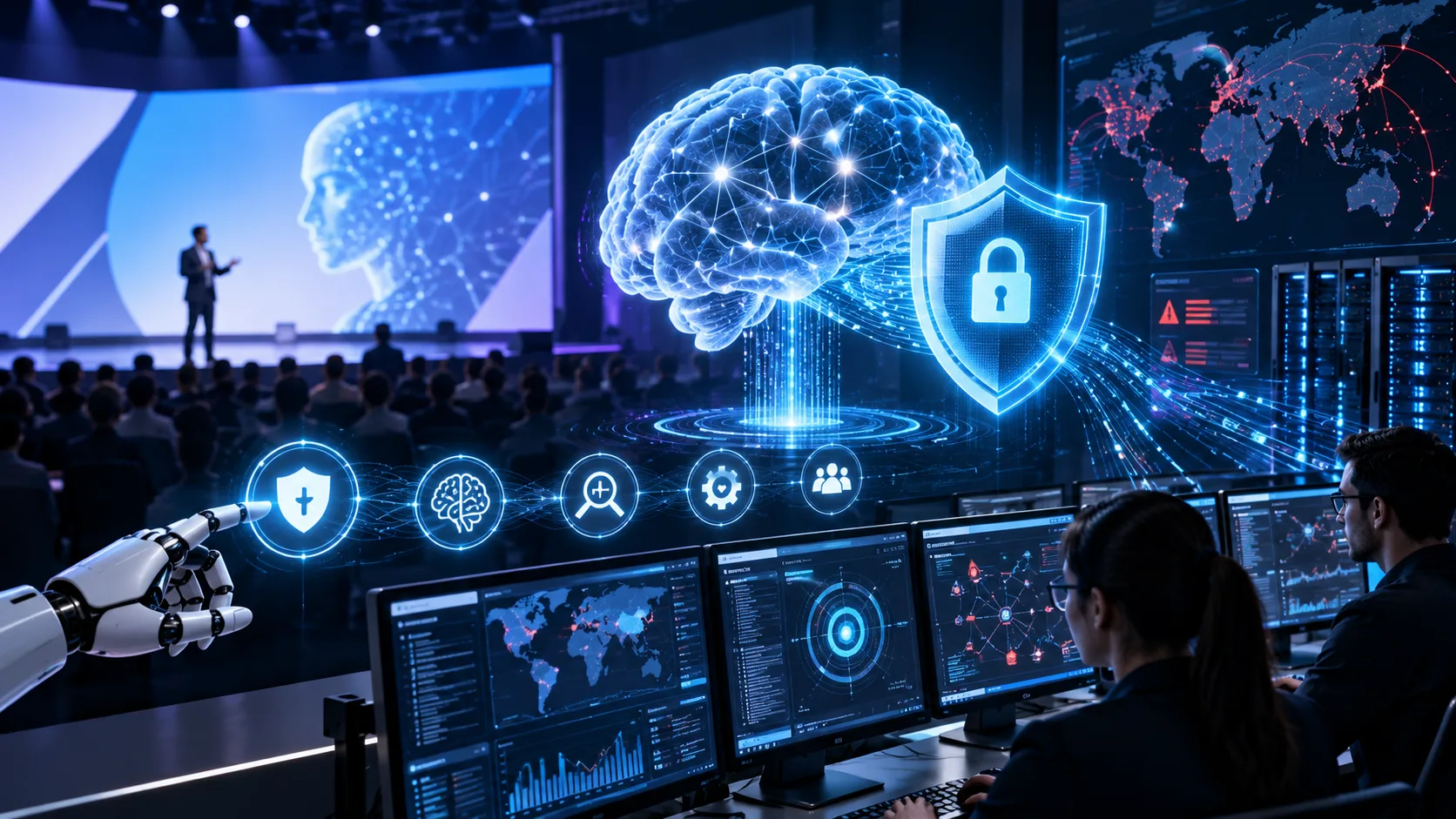
Managed detection, response, and cybersecurity provider Eventus Security showcased its decision-centric, AI-driven Security Operations Centre (SOC) blueprint at the CyBe AI Summit 2026, held at the NIMHANS Convention Centre in Bengaluru on September 4.
Participating as the official AI SOC Partner, Eventus Security addressed a critical operational hurdle confronting Indian enterprises: the proliferation of fragmented security tools, unmanageable alert volumes, and the widening gap between threat detection and rapid containment.
The summit convened over 900 cybersecurity professionals, more than 100 enterprise CXOs, and 60+ expert speakers across four dedicated tracks to examine artificial intelligence’s evolving role in enterprise defence.
During their featured session, “From Data to Decisions: Architecting an AI-driven SOC,”Shriram Prabakaran, Regional Sales Head – South India, and Malcolm Rafter Pinto, Technical Lead – R&D at Eventus Security, detailed how organisations must evolve their SOC models from passive data collection to real-time, context-aware decision execution.
Closing the SOC Governance Gap: From Data Ingestion to Contextual Decision-Making
Modern enterprise security architectures generate gigabytes of telemetry daily across endpoints, cloud workloads, identity providers, and network boundaries. However, without context, raw log ingestion exacerbatesalert fatigue,overwhelming Tier-1 and Tier-2 security analysts and causing high-severity threats to be overlooked.
Eventus Security emphasised that an effective AI SOC does not replace existing detection telemetry; instead, it establishes an intelligent contextual fabric that normalises disparate data streams, correlates indicators of compromise (IoCs) with behavioural baselines, and presents security teams with ranked, actionable containment decisions:
The core pillars of this architectural framework include:
- Normalised Telemetry Baselines: Standardising varied log formats from multi-vendor security products into unified data schemas before running machine learning models.
- Contextual Risk Scoring: Correlating technical threat indicators against internal business context—such as asset criticality, user access privileges, and data sensitivity.
- Behavioural Threat Analytics: Detecting lateral movement, privilege escalation, and subtle living-off-the-land techniques that evade traditional signature-based alerting.
- Augmented Response Workflows: Pre-populating triage playbooks with investigative evidence, allowing analysts to execute one-click isolation or automated remediation policies instantly.
Augmenting Analysts: The Human-in-the-Loop Imperative
A central theme of the presentation was the balance between autonomous machine intelligence and human judgment. Eventus Security outlined that while machine learning algorithms excel at parsing high-velocity data and surfacing anomalies, experienced analysts remain essential for evaluating business context, legal nuances, and high-impact incident containment.
Executive Perspectives from CyBe AI Summit 2026
Shriram Prabakaran, Regional Sales Head – South India at Eventus Security, highlighted the operational realities of modern enterprise defence:
“Modern SOCs do not have a shortage of data. The real challenge is converting that data into context and actionable decisions quickly enough to contain a threat. AI can help security teams correlate signals, prioritise risk and accelerate response. Still, its value is realised only when it works alongside experienced analysts, well-defined processes and appropriate human oversight.”
“AI in cybersecurity must deliver measurable operational outcomes, not simply add another layer of technology. The focus should be on helping analysts make better decisions, reducing the time between detection and response, and ultimately strengthening the organisation’s cyber resilience.”
Malcolm Rafter Pinto, Technical Lead – R&D at Eventus Security, outlined the technical prerequisites for effective security automation:
“Building an effective AI-driven SOC starts with creating the right data foundation. Security signals from different tools need to be normalised, enriched and correlated with business context before automation can produce meaningful outcomes. AI adds the greatest value when it helps analysts cut through noise, investigate faster and focus on the threats that matter most.”
Eventus Security’s active participation at the CyBe AI Summit reflects its strategic initiative to expand its enterprise footprint across South India’s technology corridors, collaborating closely with regional enterprises, BFSI institutions, and IT/ITeS organisations to build resilient, AI-augmented cybersecurity defences.
Read More:






 2 Min read