
Genesys and Dun & Bradstreet report reveals BFSI’s growing CX readiness gap

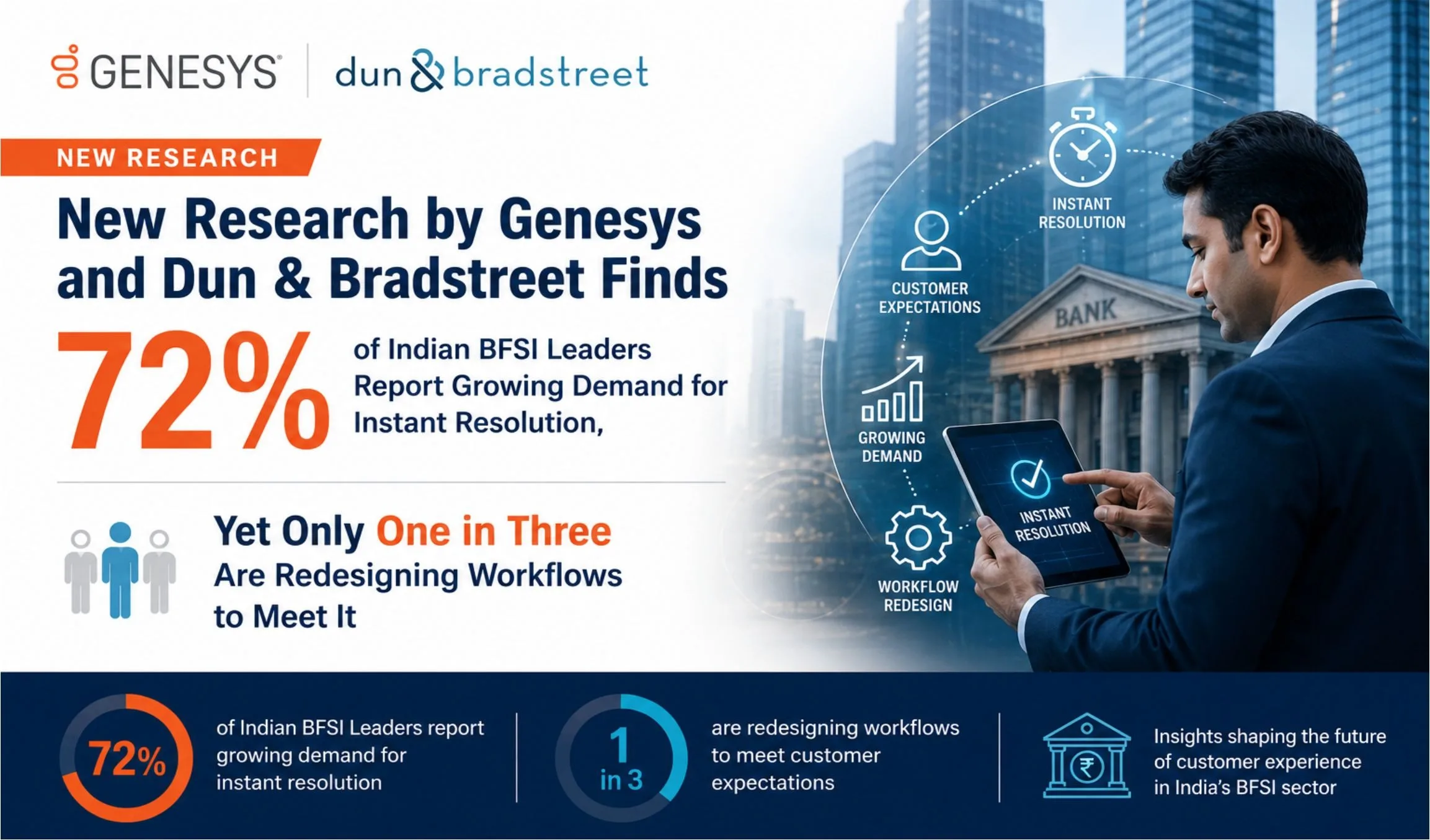
The latest Genesys and Dun & Bradstreet Indian BFSI research report paints a clear picture of an industry under pressure. Across banking, insurance, NBFCs, fintechs, and wealth management firms, customer expectations are evolving rapidly, while many organisations are still working through the operational challenges needed to meet them.
Based on feedback from more than 100 senior BFSI leaders, the study shows that customer experience (CX) has moved beyond being a support function. It is increasingly becoming a boardroom priority. Yet the report also highlights a growing disconnect between ambition and execution. While organisations are investing in AI and digital engagement, many continue to struggle with fragmented data, legacy systems, and workflow limitations.
Real-time service is becoming the new benchmark
The research shows that speed has become a defining factor in customer experience. Nearly three-fourths of respondents said customers now expect issues to be resolved in minutes rather than hours or days. Expectations around transparency and proactive communication are also rising, creating new demands on BFSI organisations.
This shift is changing how institutions think about customer engagement. The challenge is no longer simply offering digital channels. Customers increasingly expect seamless, responsive, and proactive experiences regardless of where interactions begin.
AI investments are accelerating, but readiness remains uneven
A key finding from the study is the strong interest in AI-driven customer experience. Most respondents identified AI-assisted agent productivity as a major priority over the next 12 to 18 months. However, only a small percentage reported having scaled AI deployments with the governance frameworks and performance metrics needed for long-term success.
The report suggests that technology adoption is moving faster than organisational readiness. Data quality issues, fragmented information sources, and integration challenges with legacy platforms continue to slow progress. Regulatory and privacy requirements are also emerging as significant considerations for modernisation efforts.
Data orchestration may define the next phase of competition
The study points to a future where customer experience will depend on how effectively organisations connect people, data, AI, and communication channels. Messaging platforms and mobile applications are expected to see the fastest growth, while proactive and predictive service models are emerging as key differentiators.
The findings suggest that competitive advantage in BFSI will increasingly come from operational coordination rather than technology deployment alone. Organisations that can transform disconnected data into real-time customer insights may be better positioned to meet rising expectations while maintaining trust and efficiency.
Read More:
Netskope Catalyst MSP/SP Program Launch Targets Faster Partner Growth
CGI and NetApp Expand Global Alliance Partnership to Advance AI and Data Infrastructure
OpenAI appoints Kiran Mani as the managing director to lead APAC growth
BD Soft cybersecurity network expansion targets Gujarat growth







 2 Min read