
IT distribution in India: MITSUMI Distribution focuses on AI vendors and Tier 2 market expansion

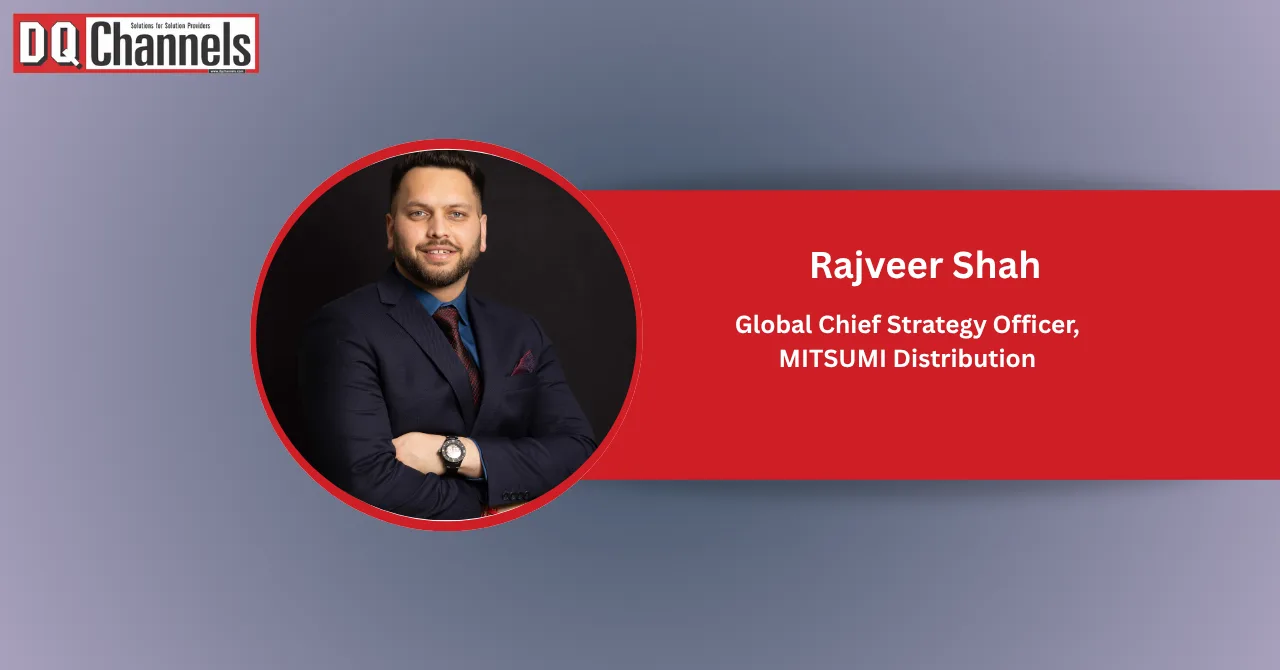
As India’s technology distribution landscape evolves with growing demand for AI, cloud, and digital infrastructure, global distributors are redefining how partner ecosystems can better support emerging markets beyond metro cities. MITSUMI Distribution is positioning itself as an agile distributor focused on underserved partners, Tier 2 and Tier 3 markets, and next-generation technology vendors.
In an interaction, Rajveer Shah, Global Chief Strategy Officer at MITSUMI Distribution, explained how the company’s India expansion strategy is built around AI-led vendor alignment, decentralised decision-making, and deeper engagement with channel partners across emerging markets.
AI-Led strategy driving MITSUMI Distribution expansion into India
Rajveer Shah brings a strong background in artificial intelligence and GenAI strategy, which continues to shape the company’s technology focus and vendor selection priorities. His mandate at MITSUMI initially involved building an AI and robotics business unit aligned with the company’s long-term innovation roadmap.
“I come from the background of artificial intelligence and Gen AI strategy. We built an AI and robotics wing that operates under me. Now we have a full team aligned with this vision,” he explained.
Following this, the company began expanding into new geographies, including Africa and the Middle East, eventually identifying India as a strategic opportunity driven by vendor demand and evolving market dynamics.
“The second year, I was tasked with region expansion. India came as part of that discussion from the vendors themselves, who saw strong opportunities in the Indian market,” Shah added.
Addressing distribution gaps in Tier 2 and Tier 3 cities
A key element of MITSUMI’s India strategy is expanding technology distribution access beyond Tier 1 cities into underserved Tier 2, Tier 3, and Tier 4 markets. According to Shah, many partners in these regions lack structured distribution access and often rely on fragmented supply sources.
“Our major focus is Tier 2, Tier 3, Tier 4 cities… rather than only focusing on Tier 1 metros. These partners were often getting goods through indirect channels instead of structured distribution,” he noted.
By bringing such partners into a formal distribution ecosystem, MITSUMI aims to provide predictable inventory planning and improved revenue opportunities for channel partners.
“When partners know how much stock they are going to get every month, it becomes easier for them to plan their inventory and generate additional revenue consistently,” Shah explained.
Agile and decentralised decision-making as a key differentiator
One of the core differentiators MITSUMI brings to India is its decentralised operational structure, developed through its experience operating across diverse global markets. The company has managed operations across 30 African countries, each with different business cultures and partner dynamics.
“We have worked in 30 countries, which means 30 different partner landscapes and working cultures. These decisions are not always managed from the top, but closer to where the partner engagement actually happens,” Shah said.
This decentralised structure allows quicker response times and improved flexibility compared to traditional distribution frameworks that often rely on multiple approval layers.
“We have an autonomy-driven culture where teams on the ground are empowered to make day-to-day decisions. This agility is something we are bringing into the Indian market,” he added.
Vendor alignment with AI, sovereign cloud, and market accessibility
MITSUMI’s vendor strategy reflects broader technology trends across AI, cloud computing, and digital sovereignty initiatives. Shah emphasised that vendor alignment plays a critical role in ensuring long-term relevance in India’s rapidly evolving technology ecosystem.
“The Indian market is moving strongly in the direction of AI and cloud, particularly sovereign cloud. We are aligning with vendors who support the vision of Atmanirbhar India and local innovation,” he said.
At the same time, the company is also working with vendors offering cost-effective solutions suited to price-sensitive markets in emerging cities.
“Not every customer is looking for a high-end product. There are vendors who provide strong specifications at affordable price points, which work very well in Tier 2 and Tier 3 markets,” Shah explained.
Building partner infrastructure across 17 states
Before initiating commercial operations in India, MITSUMI prioritised building the right operational infrastructure and leadership team. The company focused on onboarding experienced professionals from the industry and establishing warehousing capabilities across multiple locations.
“For the first two months, we had no billing. The focus was on getting the right manpower and infrastructure in place,” Shah said.
MITSUMI is currently operational across 17 states with fully functioning warehouse capabilities, enabling efficient inventory distribution and faster fulfilment.
“We have already onboarded around 2,000 partners in our system, and the aim is to grow this number to around 8,000 to 10,000 partners by Q3 2026,” he added.
The vendor ecosystem is also expanding gradually, with several new vendor partnerships expected to be announced in the coming months.
Partner-first approach rooted in reseller experience
MITSUMI’s partner engagement strategy is shaped by its origins as a reseller before evolving into a global distributor. This background enables the company to better understand the operational and financial challenges faced by channel partners.
“MITSUMI was never a distributor at the start. It began as a reseller, so we understand every pain point of resellers,” Shah noted.
This understanding has helped the company design a more flexible engagement approach that focuses on mutual growth and long-term collaboration.
“Our growth is directly linked to our partners’ growth. When partners succeed, we succeed,” he said.
Conclusion: Enabling AI-Driven growth through a strong distribution ecosystem
As India continues to strengthen its digital economy and expand AI adoption across industries, distribution ecosystems will play a crucial role in enabling technology accessibility beyond major metros.
MITSUMI’s India strategy focuses on building an agile partner ecosystem, aligning with AI-driven vendors, and expanding reach into emerging markets. By prioritising operational flexibility, local partnerships, and scalable infrastructure, the company aims to contribute to the next phase of growth in India’s IT distribution ecosystem.
Read More:
TrendAI channel partners driving cyber resilience in India’s AI threat landscape
Agentic AI and the new frontier of Bharat’s tech ambitions transform enterprise technology in 2026


 2 Min read