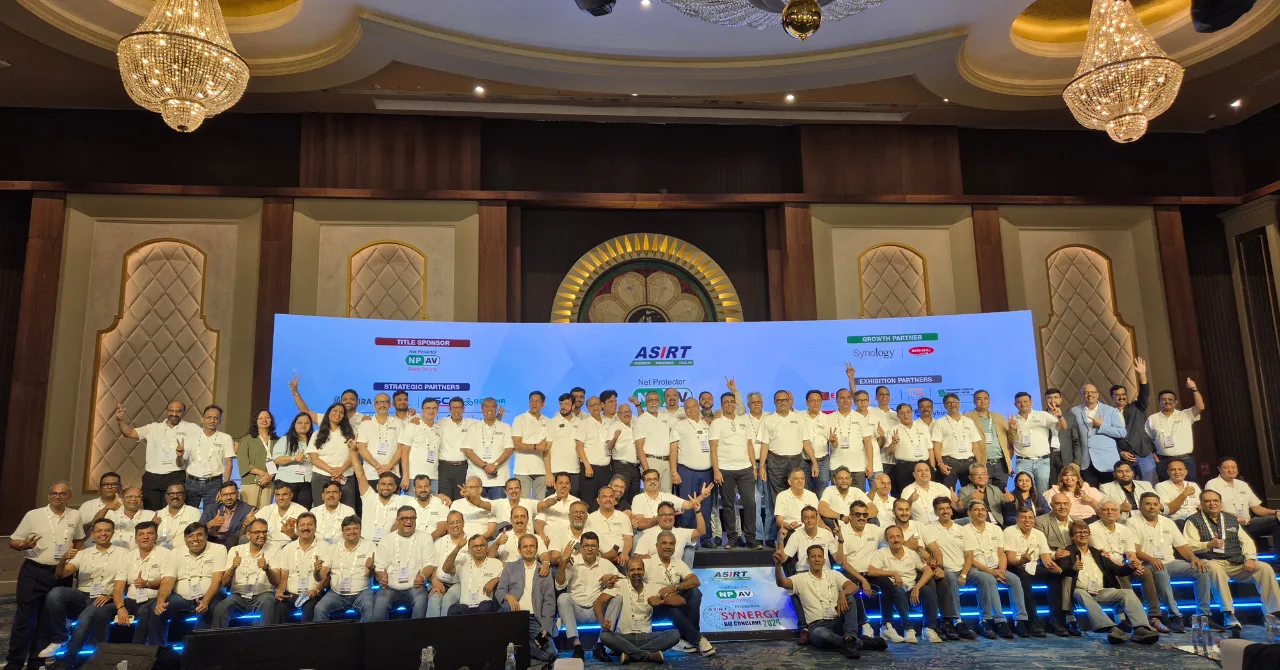
ASIRT Synergy Biz Conclave 2026: From trusted relationships to new business opportunities

The future of the IT channel will not be built only on technology. It will depend on trust, new revenue opportunities, stronger capabilities and the ability of businesses to work together.
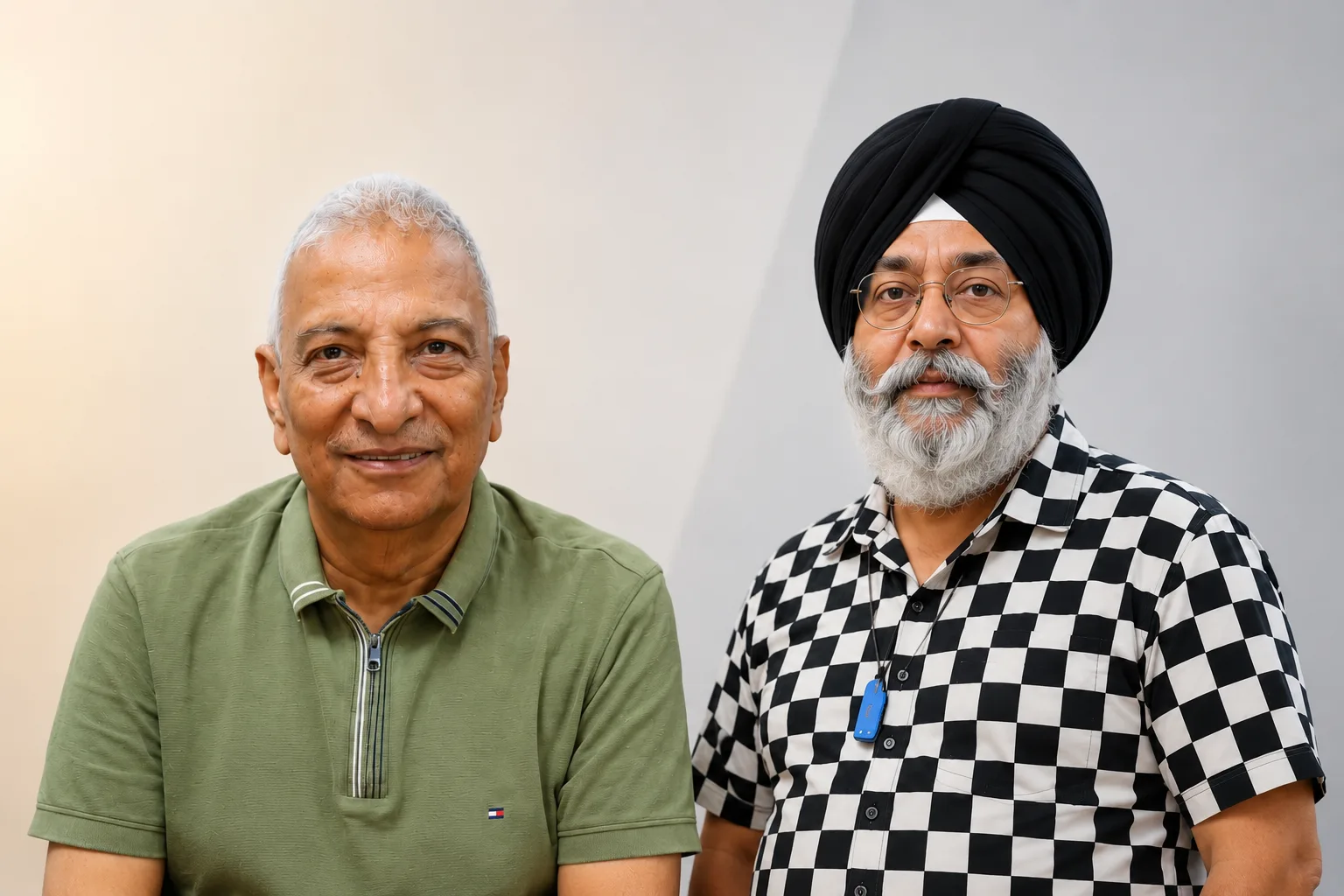
That was the broad message from Bharat Chheda, President, ASIRT, and Kaustabh Kulkarni, Chairman, ASIRT, at the ASIRT Synergy Biz Conclave 2026 in Karjat, Maharashtra.
While the two speakers approached the subject from different angles, their vision was closely aligned. Chheda looked at the evolution of ASIRT and where the association needs to go next. Kulkarni focused more closely on what individual members need to do to grow their businesses.
Together, their messages pointed to a simple idea: the strength of ASIRT lies not just in its member count but in the business relationships, knowledge, technology capabilities and opportunities that exist within the community.
From an association to a technology marketplace
Looking back at ASIRT’s journey, Chheda said the association started in 2012 with a simple objective, to help system integrators grow and ensure that they did not have to face their business challenges alone.
Fourteen years later, he said the organisation has grown from 50 members in its first year to more than 270 members. It has also conducted around 160 events and has eight consortiums.
Chheda put the cumulative turnover represented by ASIRT members at more than Rs 8,000 crore, while noting that the figure is conservative. But for him, the numbers tell only part of the story. The bigger change has been in the way members interact with each other.
What began as business conversations has developed into collaboration. Members who may compete with one another are also doing business together.
That is possible because of something Chheda described as the most important development in ASIRT’s 14-year journey: trust.
“Trust has become a currency for ASIRT,”
This was the central idea in his address.
That trust, he explained, allows members to transact with OEMs, distribution partners and other members with greater confidence. It has also changed the role of ASIRT itself.
Chheda described the association as a marketplace where solution providers, system integrators, distribution partners and technology companies can find one another under one roof. The next step is to make that marketplace broader.
Expanding the ecosystem
ASIRT began with a strong base of hardware system integrators. Over time, the ecosystem has expanded into areas such as networking, applications and system software, repairs and rentals and CCTV.
In recent years, members have also moved into AI-based solutions, data centre and Cloud solutions, cyber security and home automation.
Chheda said the association now wants to bring more technology companies and ecosystem participants into this network.
OEMs, distribution partners and value-added resellers are already part of the wider ecosystem. He also pointed to technology consultants as a newer addition.
There is another group he wants to see more closely involved: CTOs and CIOs. The reasoning is practical. Technology leaders influence business decisions and can help create new opportunities.
Chheda also highlighted the need to bring more product innovators and technology start-ups into the ecosystem. The direction is clear. ASIRT does not want to remain limited to one part of the channel.
It wants to connect more parts of the technology ecosystem and create opportunities across them.
The member opportunity: Look beyond existing revenue
Kulkarni took the discussion from the association level to the individual business.
He pointed out,
“Revenue is the most important thing.”
Without revenue, a business cannot exist, let alone grow. For ASIRT members, he said, the opportunity is to look beyond their existing customer base and traditional offerings.
That means identifying new customers, finding new revenue streams and exploring emerging markets. The conversations and presentations at the conclave, he suggested, should not remain inside the event.
Members may not immediately work with every technology or solution they see. But exposure to new products and ideas can lead to new thinking.
A product seen at the event today could become a business opportunity tomorrow. That is where the value of the wider ASIRT ecosystem comes in.
Better margins need better value
Revenue is only one part of the equation; margins matter too.
Kulkarni argued that businesses should not simply look for ways to protect existing margins. They should create opportunities to earn better margins by developing better solutions and offering higher-value services.
The important question is how customers see the technology partner. If a customer considers the partner a valuable part of the team, price becomes less important, which requires capability.
It means offering something that is difficult for another competitor to replace. The focus therefore shifts from selling a product at the lowest price to creating value that the customer is willing to pay for.
For system integrators and technology businesses, this can be an important change in thinking.
Instead of asking only, “What can I sell?”, the more useful question becomes, “What additional value can I create for this customer?”
Technology adoption starts with the team
Both speakers placed considerable emphasis on capability. Chheda spoke about the changing technology landscape and the need for ASIRT to keep adding new capabilities.
Kulkarni brought the same issue inside the member organisation. Technology adoption is not simply about buying or adding a new solution to a portfolio. The team has to understand it.
“Adaptation is the most critical and important thing,” Kulkarni said.
He urged business leaders to equip their teams with the technologies available in the market. He also pointed to the training support being offered by OEMs and technology companies.
Upskilling, therefore, becomes part of business growth rather than an activity that can be postponed until later.
The message is especially relevant as technologies such as AI, cyber security and other emerging areas become part of the IT channel conversation.
The opportunity exists. But capability determines whether a business can actually turn that opportunity into revenue.
Make in India and the opportunity for Indian technology
Kulkarni also highlighted the technology being developed within India.
While discussing quantum networks and the opportunities around new technology, he pointed to a company competing with international brands and offering a solution that is completely Make in India.
His message was straightforward: Indian businesses have the talent and the capability to develop differentiated technology.
For channel companies, this creates another area worth watching.
The role of the system integrator is changing. It is no longer enough to wait for established technologies to become mainstream. Businesses need to keep looking at what is emerging and decide where they can build capability.
That means keeping their eyes and ears open.
Sales cannot remain the same
Kulkarni also challenged the traditional approach to sales. Making more calls is only the first step, he said.
The real question is how a business can sell differently from its competition. That difference can come through the sales pitch, the sales team, the solution being offered or the way the customer relationship is managed.
It comes back to differentiation. If everyone is offering the same product in the same way, price becomes the obvious basis for comparison.
If the solution and the value offered are different, the conversation changes. This is also why Kulkarni linked sales with teamwork.
An individual cannot build every capability alone. A well-equipped team can do much more. He also noted that business leaders can learn from their own teams, particularly from the younger people bringing new ideas and different ways of working.
Relationships remain at the centre
For an association built around channel businesses, relationships are hardly a new idea. But both speakers placed relationships at the centre of their vision.
Chheda spoke about the trust built across ASIRT over 14 years.
Kulkarni looked at how members can use the relationships available to them to create new opportunities. He pointed out that many ASIRT members are already working with technology partners and other businesses in the room.
The conclave can take those relationships further. His advice was practical: do not sit with the same people throughout the event.
You have to change tables. Talk to people outside the usual comfort zone and meet newer members.
Have conversations beyond the people one already knows. The reason is simple. New relationships can lead to new ideas, new alliances and eventually new business.
The booths are more than exhibition spaces
Kulkarni also urged members to spend time at the booths. For him, the booths represent an opportunity to discover something that may not already be part of a member’s business.
A conversation with a technology company may reveal a solution that can be taken to an existing customer.
That creates an interesting link between customer relationships and new technology. A customer who has worked with a system integrator for years may already trust that partner.
The opportunity is to take that relationship forward with new offerings. The customer does not necessarily have to be new, but the offering can be new.
Alliances can extend the reach
Kulkarni also highlighted alliances with OEMs and new technology partners. But he added another important element: media.
Media, he said, can take the voice of an organisation beyond its existing boundaries.
Chheda made a similar point when he encouraged ASIRT members and sponsors to make full use of the media partners present at the conclave. The broader message is that business growth does not happen in isolation.
Technology partnerships, customer relationships, media relationships and peer networks can all contribute to building a stronger business.
Mentorship does not always need a formal structure
Another theme in Kulkarni’s address was mentorship. He said members do not necessarily need a specific person formally designated as a mentor.
There are already people within the community who can provide mentorship through experience sharing. That makes the conversations at an industry gathering valuable in a different way.
A member may come looking for business but leave with an idea, a lesson or a solution to a problem. Experience can be shared quickly when people are willing to talk openly.
And sometimes the person sitting at the next table has already faced the problem someone else is trying to solve.
From 270 members to a wider ecosystem
Chheda’s vision was to continue expanding ASIRT’s ecosystem.
Kulkarni took that ambition further by talking about the confidence that comes from having access to a large network of technology partners. He described how, with 270 members and a broad technology ecosystem, an ASIRT member can approach a customer with greater confidence.
The proposition is no longer limited to what one company can provide on its own.
The member can say, in effect: tell me your pain point and I will look for the right solution, including the right support and price. That confidence comes from knowing where the market is moving and having technology partners who can provide first-hand information.
It also gives the member a better view of what may come next.
The next generation has to be part of the journey
Chheda also brought the next generation into his vision for ASIRT.
He referred to the younger entrepreneurs who are joining the association and specifically mentioned Mehak, a 21-year-old who has joined her father’s business and is now an ASIRT member.
For an organisation that has been around for 14 years, this matters.
An association can preserve its existing relationships and knowledge, but it also needs new members who will carry that ecosystem forward.
The next generation brings a different perspective on technology, business and customer expectations.
Their involvement can help ensure that the community continues to evolve.
A shared vision, with different starting points
The two addresses were different in style but remarkably aligned in direction.
Chheda looked at ASIRT from the perspective of the ecosystem. His focus was on trust, collaboration, expansion and building a technology marketplace that brings more participants together.
Kulkarni looked at the same ecosystem from the perspective of the individual business.
His questions were more immediate: Where will the next revenue come from? How can margins improve? What new capabilities are required? How can a business differentiate itself? Which relationships can create the next opportunity?
Put together, the two messages form a practical roadmap. The association can create the environment which members can use.
ASIRT can bring technology companies, system integrators, distributors, resellers, consultants and other participants closer together. Members then need to explore those connections, build capabilities and turn conversations into business.
One idea to take back
Kulkarni ended with a simple challenge. Members should pick one idea they heard, one conversation they had, one opportunity they spotted or one change they intend to make, and take it back with them.
That may be the most useful way to look at the entire conclave. An industry event does not create value merely because people attend it. The value comes afterwards.
Of course, a new conversation can become a relationship and a relationship can become an alliance, which further leads to solutions that take us to the final outcome: revenue.
And repeated across a community, those individual opportunities can contribute to the growth of the wider ecosystem. That is where the visions shared by Bharat Chheda and Kaustabh Kulkarni converge.
Both the speakers have different visions -
- For Chheda, the foundation is trust and collaboration.
- For Kulkarni, the next step is to turn that foundation into capability, differentiation and new business.
ASIRT’s next phase, therefore, is not simply about becoming bigger. It is about becoming more useful to its members.
As their tagline suggests - Partner. Progress. Evolve.
The challenge now is to turn those words into the next generation of opportunities.
Read More:
ASIRT Synergy Biz Conclave 2025 ignites AI-led growth for India’s IT partners
ASIRT TechDay 136: Empowering Mumbai SIs with MSP growth strategy
How Digital Platforms Are Transforming India's IT Distribution





 2 Min read