
Next Three Months Will Decide General Trade's Fate: Founding President Confed-ITA
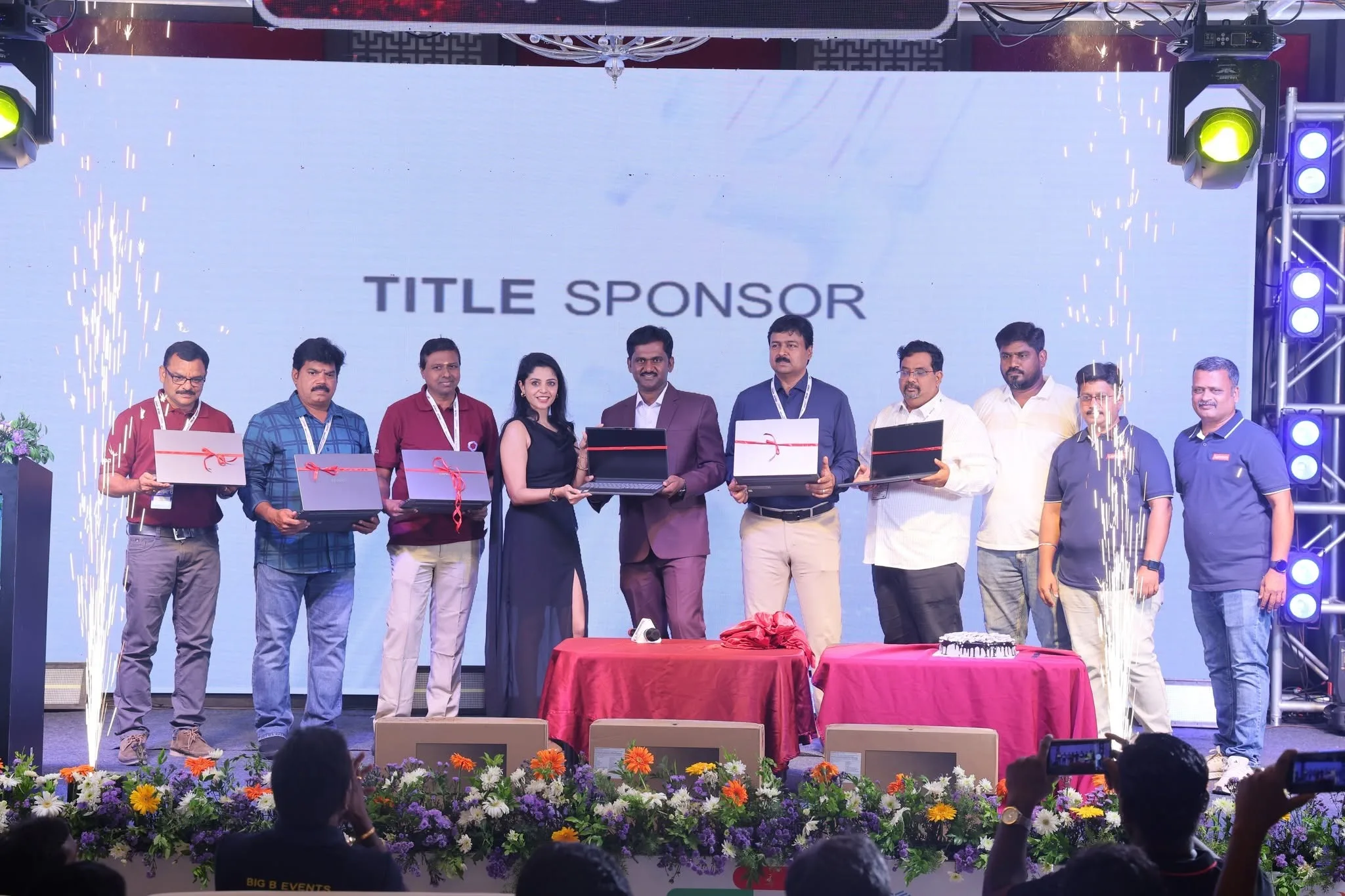
As prices climb every month and the festival season draws closer, S. Karthikeyan, Charter President of Confed‑ITA, says the coming quarter will show exactly which vendors are willing to protect India’s general trade IT retailers. Speaking on the sidelines of the Confed‑ITA Summit 2026 in Puducherry, he traces IT retail’s journey from neighbourhood shops to quick commerce, and explains why a shop counter still offers something no app can.
At the Confed‑ITA Summit 2026 in Puducherry this June, where more than 1,800 IT dealers from across Tamil Nadu and Puducherry gathered under the theme “Innovate, Collaborate, Elevate,” much of the talk on the sidelines had little to do with celebration. Vendors spoke of rising component costs, dealers spoke of shrinking margins, and one name kept coming up whenever the conversation turned to the future of general trade.

Karthikeyan was elected Confed‑ITA’s first, or Charter, President in 2007, when regional IT associations across Tamil Nadu came together at a meeting in Pondicherry to form the confederation. Nineteen years on, he remains one of the most recognisable voices in the state’s IT trade, having watched the business move through every retail format it has passed: the small standalone shop, the large format retailer (LFR), e‑tail, and now quick commerce. In conversation on the sidelines of the summit, he offered an unusually direct assessment of where general trade stands today, and how little time it has left to prove its worth to vendors.
A Calm Before a Costlier Storm
“The disruption is still not happening,” Karthikeyan said, when asked about the pressure general trade has faced over the past six months. But he was quick to add that the calm will not last. Prices, he explained, are rising every month in the current global scenario, and that changes the economics of who survives. Dealers who have held on to older inventory and who buy regularly enough to average out their purchase price will be better placed to weather the change. Smaller general trade partners with limited funds, on the other hand, are already stretched, having held inventory, and now need to clear.
The timing makes this worse. The IT trade is entering its busiest period, the festival season, and Karthikeyan believes the next three months will be a genuine test. LFRs and e‑tail players, he pointed out, have far deeper pockets and can sit on large volumes of older stock without the same pressure. General trade has no such cushion. “GT has a limited strength,” he said, “but on the other side, LFRs and e‑tail are big muscles. They will be holding old inventories in quite a large volume.” The responsibility, in his view, now rests with vendors, who must balance pricing across GT, e‑tail and LFR rather than let general trade absorb the cost of a volatile market. General trade, he argued, is where a brand is genuinely built, often over decades, and offers a personalised, trustworthy buying experience that neither e‑tail nor large format retail can match.
Numbers, Not Just a Sense of Grievance
It is one thing for a trade body to say general trade deserves protection. It is another to prove it. Pressed on whether his argument was backed by hard data rather than sentiment, Karthikeyan did not hesitate. He pointed dealers and vendors alike towards publicly available market data: comparing general trade’s share against LFR and e‑tail on a year-on-year basis, and on a quarter-over-quarter basis against the same quarter the previous year. “It’s all open data, available for everybody, and you can see it very well for yourself.” His point was less about defending GT on emotion and more about inviting anyone sceptical to go and check the trend lines themselves, both for the recent past and for the quarter ahead.
The Customer Who Has Already Decided
Karthikeyan also flagged a shift in how Indian consumers shop for technology. Walk‑ins used to arrive with a vague need: a computer, a laptop, something in a category. Increasingly, customers arrive with a specific brand and model already in mind, a change he attributes to the sheer amount of information and AI-driven exposure available to the average buyer today. That puts pressure on the retailer. Partners who do not invest in understanding the customer’s mindset, he warned, will struggle to keep up. Even so, he maintains that general trade retains an edge over e‑tail and LFR, precisely because a knowledgeable salesperson can still add value that a product listing cannot.
Advantage Touch-and-feel
Asked what advantage physical retail still holds against online and quick commerce, Karthikeyan’s answer was straightforward. A shop is the only place where a customer can touch and feel the product before buying it, receive personalised attention at the point of sale, and rely on someone to turn to if something goes wrong after they take the laptop or desktop home. That after-sales backup, he said, is an experience that “can never be got from anybody else, anything else as well.” It remains, in his telling, general trade’s strongest and most defensible advantage.
From Laptops to Solar Panels
Karthikeyan also sees diversification as inevitable for traditional IT partners, pointing specifically to electric vehicle accessories and solar products as natural extensions of the trade. He linked this to the government’s broader push on energy conservation, framing it as a direction every IT partner ought to get behind. “Our Prime Minister’s direction is on saving energy, saving the country,” he said. “I think all of us have to get into that. That is the way to go forward.”
The conversation closed on the structure of the channel itself, the layers of tier one and tier two partners and distributors that sit between vendor and retailer. Karthikeyan was blunt about where this is heading: more tiers mean more price difference along the way, and that gap is what the market will eventually squeeze out. He expects the channel to simplify into a flatter, more direct model, which will be particularly hard on the middle layer of partners who today sit between the retailer and the vendor. Asked if this shift is already underway, he was certain. “It’s a matter of time,” he said, “and we are closer to it.”
Read More:
The missing layer in enterprise AI: Why data trust is becoming the new priority
Why Data Readiness for AI Is Becoming the Biggest Opportunity for Channel Partners
Partner Pulse: Celebal Technologies | Cloud Partner (India)
Partner Pulse: TO THE NEW | Cloud and Digital Transformation Partner (India)




 2 Min read