
CrowdStrike Appoints Bartley Richardson to Advance Autonomous Cybersecurity

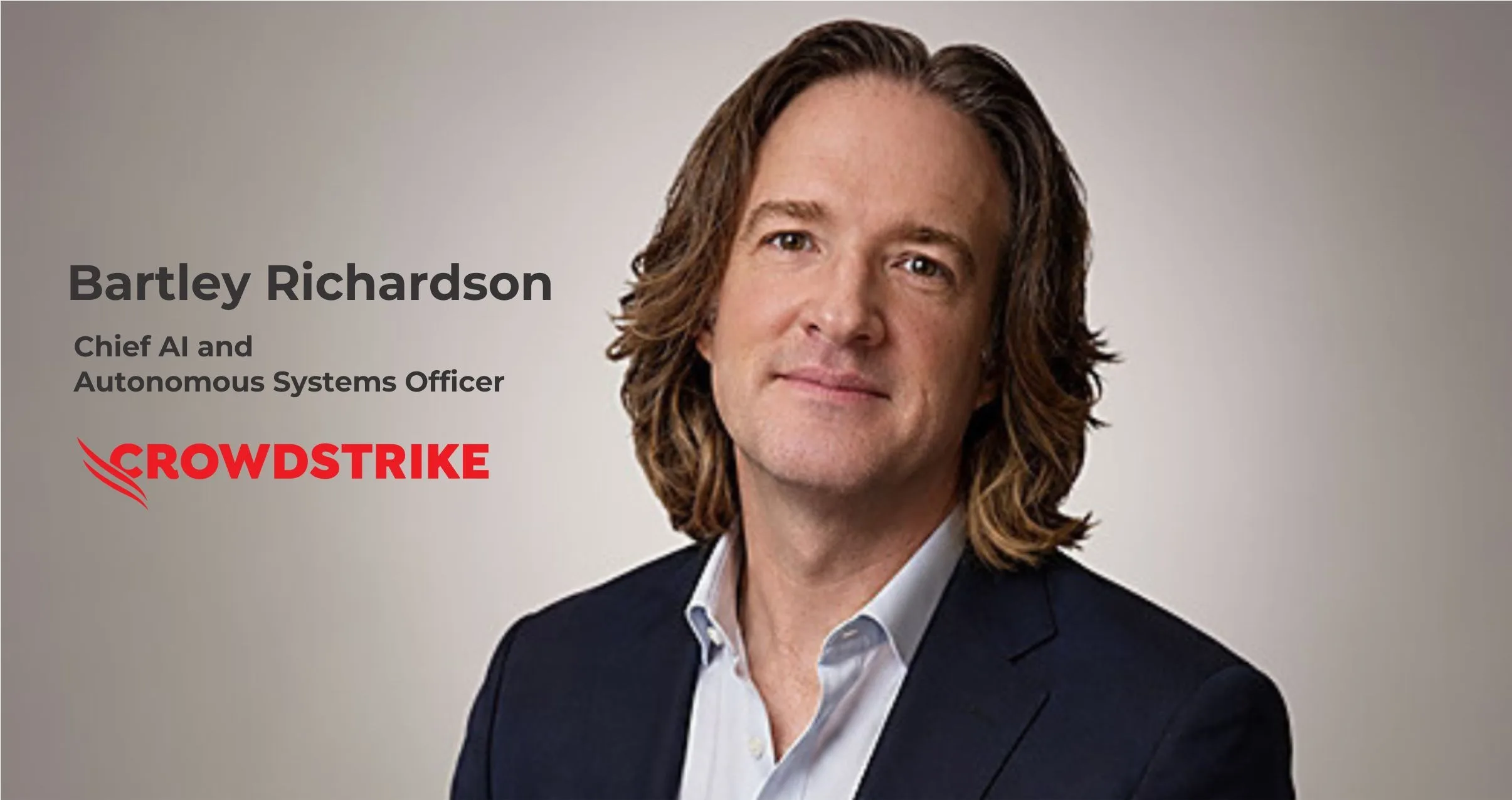
As cyber threats become faster, more complex, and increasingly AI-driven, cybersecurity vendors are racing to automate detection and response. Against this backdrop, CrowdStrike appoints Bartley Richardson as Chief AI and Autonomous Systems Officer, a leadership move that highlights the growing importance of AI-native security operations.
The appointment places Richardson at the centre of CrowdStrike’s AI strategy as the company pushes toward more autonomous and deterministic security outcomes powered by its Falcon platform.
A Strategic AI Leadership Move
Richardson joins CrowdStrike from NVIDIA, where he led engineering efforts spanning agentic AI, cybersecurity AI, and AI infrastructure. His work included foundational technologies such as the NVIDIA NeMo Agent Toolkit and the AI-Q research assistant, both designed to help organisations deploy AI at scale.
His transition reflects a broader industry trend: cybersecurity is increasingly becoming an AI problem as much as a security problem. Organisations now need systems capable of analysing vast amounts of data and responding to threats in real time.
Turning Data Into Autonomous Security Outcomes
According to CrowdStrike, its competitive advantage lies in the real-time security data generated through the Falcon platform, threat intelligence operations, and expert-led incident response activities.
Richardson's mandate is to transform that data advantage into more autonomous security outcomes. The company believes its combination of proprietary telemetry, expert validation, and AI models creates a feedback loop where human expertise continuously strengthens machine intelligence.
This approach is expected to further advance Charlotte AI, CrowdStrike's agentic Security Operations Centre (SOC), alongside its AI Detection and Response (AIDR) initiatives.
The Push Toward Level 5 Autonomous Security
One of the most notable goals outlined by Richardson is advancing the Security Operations Centre toward Level 5 autonomy. The objective is to enable security systems to identify, investigate, and respond to threats with minimal human intervention while maintaining accuracy and reliability.
The vision reflects a future where AI and human analysts work together, helping organisations address growing cybersecurity challenges without relying solely on larger security teams.
Read More:
International Police Expo 2026 Debuts 300+ Homeland Security Innovations in Delhi
TallyPrime 7.1 Introduces Tally Ira AI for Faster Workflows
TP-Link India Omada Learning Programs Expansion Strengthens Partner Skills
Genesys and Dun & Bradstreet report reveals BFSI’s growing CX readiness gap







 2 Min read