
LOGIC Workspaces modular collaboration infrastructure pushes smarter enterprise collaboration

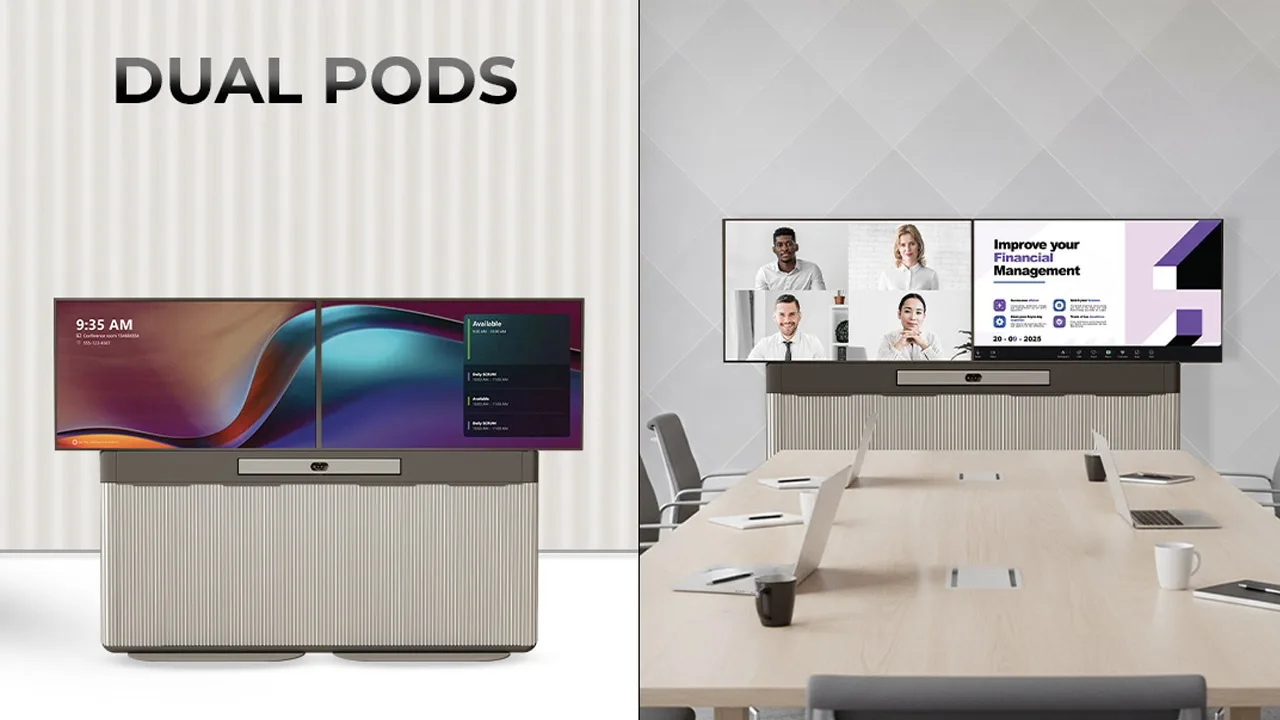
As enterprises continue to redesign workplaces around hybrid work models, collaboration spaces are becoming more important than ever. The focus is no longer only on displays or conferencing tools. Organisations now want environments where technology, usability, and workspace design work together. Against this backdrop, LOGIC Workspaces modular collaboration infrastructure is emerging as an integrated approach that brings displays, conferencing peripherals, AV equipment, and cable management into a single structured framework.
Why Enterprises Are Looking Beyond Traditional AV Setups
Many meeting rooms still rely on conventional AV installations that often involve multiple devices, visible wiring, and fragmented infrastructure. While functional, these setups can create complexity for both users and IT teams. LOGIC Pods, developed by LOGIC, a visual solutions brand from Online Instruments (India) Limited, aim to address this challenge through a consolidated framework designed specifically for modern collaboration environments.
The solution combines displays, conferencing devices, and supporting AV equipment into one organised structure. The objective is not simply aesthetics. By reducing clutter and simplifying deployment, enterprises can create collaboration spaces that are easier to manage and more intuitive for employees to use.
Built Around the Needs of Hybrid Work
A key aspect of the platform is flexibility. LOGIC Pods support both single and integrated dual display AV mounting frames, making them suitable for a variety of room formats, from small meeting spaces to boardrooms, training centres, and conference halls. Support for displays ranging from 43 inches to 110 inches allows organisations to adapt deployments according to workspace requirements.
Compatibility also plays an important role. The platform supports collaboration ecosystems built around Zoom, Cisco Webex, and Microsoft Teams Rooms compatible furniture pods, helping enterprises align their workspace investments with existing communication platforms.
Creating Future-Ready Collaboration Spaces
The broader significance of LOGIC Workspaces modular collaboration infrastructure lies in how it reflects changing workplace priorities. As organisations seek better collaboration between in-office and remote teams, there is a growing demand for infrastructure that is scalable, organised, and easy to maintain. LOGIC Pods are positioned to support that transition by helping enterprises make better use of available space while keeping collaboration technology accessible and ready for daily use.
According to the company, the solution can be deployed across executive boardrooms, innovation centres, training facilities, meeting lounges, and collaboration hubs, providing a structured foundation for workplace communication.
The Bigger Workplace Design Shift
The story behind LOGIC Workspaces modular collaboration infrastructure is ultimately about simplification. Enterprises are increasingly looking for technology environments that remove friction rather than add to it. By bringing displays, conferencing systems, cable management, and AV equipment together within a single framework, LOGIC Pods highlight a growing shift toward integrated collaboration infrastructure. As hybrid work continues to influence workplace design, solutions that balance usability, flexibility, and deployment simplicity are likely to become an increasingly important part of enterprise technology planning.
Read More:
Genesys announces 2026 APAC Partner Award Winners in Bangkok
HPE unifies partner programmes into a channel growth model
Partner Pulse: TO THE NEW | Cloud and Digital Transformation Partner (India)
Dell PowerEdge Servers Adopt AMD Instinct MI350P PCIe GPUs for On-Prem AI Scaling





 2 Min read