
Qualcomm and Samsung partnership takes Galaxy AI further

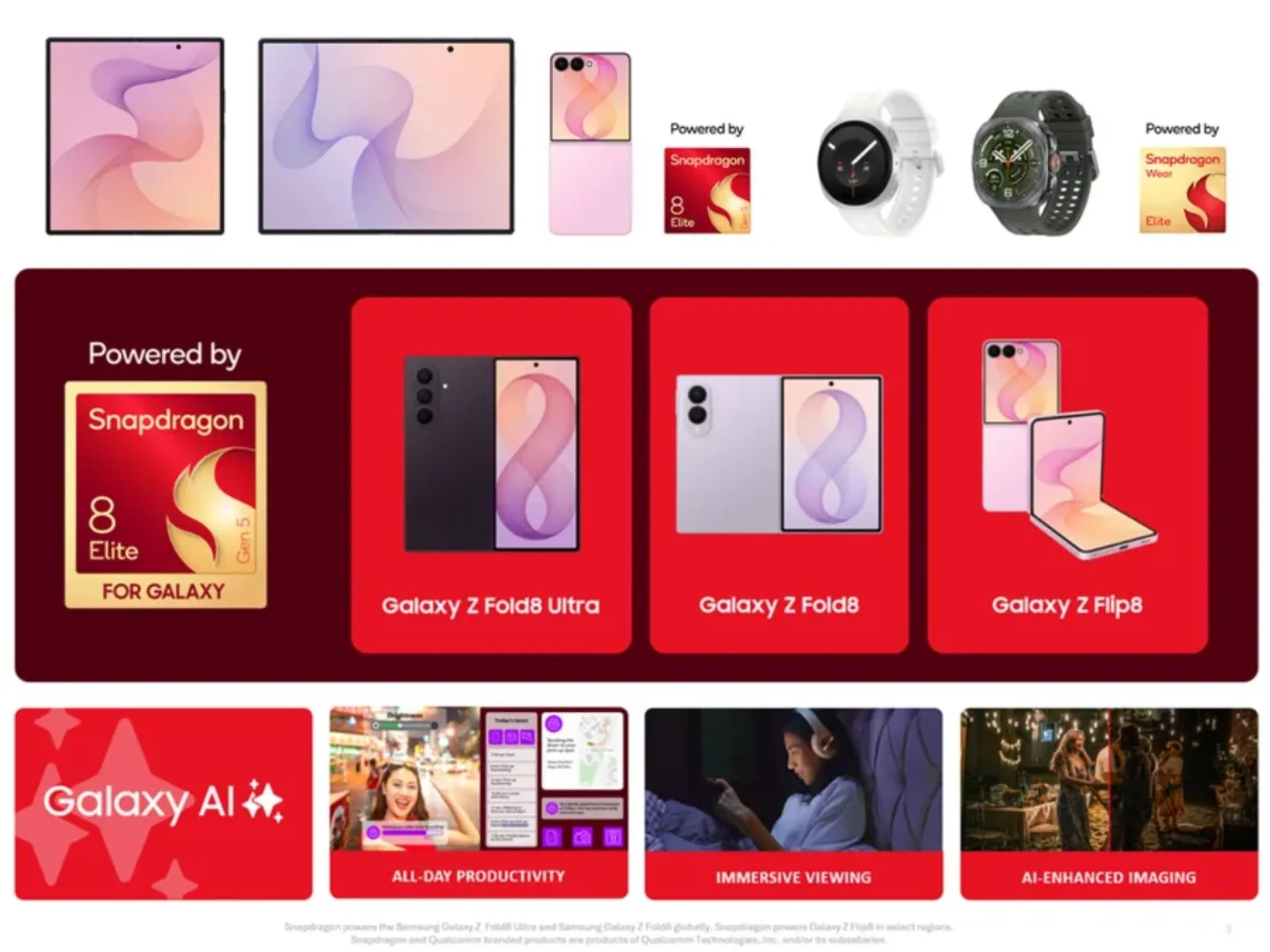
The Qualcomm and Samsung partnership is moving into a broader phase as Snapdragon platforms power Samsung’s newest smartphones, smartwatches and intelligent eyewear. The collaboration is aimed at building a more connected Galaxy ecosystem where AI can work across devices rather than remain limited to a single screen.
The latest Galaxy lineup includes the Samsung Galaxy Z Fold8 Ultra, Galaxy Z Fold8, Galaxy Z Flip8, Galaxy Watch9, Galaxy Watch Ultra2 and new intelligent eyewear. Qualcomm says its platforms will provide the underlying processing and connectivity needed to create more consistent and context-aware experiences across these form factors.
Snapdragon AI platforms link the Galaxy ecosystem
The focus of the partnership is shifting from individual device performance to how different products work together. Snapdragon is positioned as the foundation for a unified AI experience spanning smartphones, wearables and intelligent eyewear.
According to Qualcomm, on-device processing and cross-device connectivity will allow experiences to become more responsive and personalised. The broader direction points towards devices that can understand context and adapt to how users live, work and create.
For Samsung, the collaboration also reflects a closer engineering relationship with Qualcomm. The companies say they optimised Snapdragon platforms for different Galaxy form factors, with a focus on performance and efficiency to support Galaxy AI experiences.
Snapdragon 8 Elite Gen 5 for Galaxy powers foldables
The Snapdragon 8 Elite Gen 5 for Galaxy is at the centre of Samsung’s latest foldable smartphone push. Built on the Qualcomm Oryon CPU, the platform is designed to deliver high performance while maintaining power efficiency.
The processor will power AI experiences across the Galaxy Z Fold8 Ultra, Galaxy Z Fold8 and Galaxy Z Flip8. These include intelligent camera features, immersive gaming, AI-enhanced connectivity and more personalised interactions.
The key shift is that AI is being positioned as a core part of the smartphone experience rather than an add-on feature. The combination of on-device processing and the Snapdragon platform is intended to support more advanced, real-time AI capabilities.
Snapdragon Wear Elite extends personal AI
The move towards personal AI also extends to Samsung's wearables. The Snapdragon Wear Elite platform will power the Galaxy Watch9 and Galaxy Watch Ultra2, bringing advanced sensor fusion, high performance and connectivity to the devices.
The watches are positioned as always-on companions that can continuously capture signals and use them to understand user context. This could enable more personalised health insights and guidance throughout the day, while also allowing the watches to interact more naturally with other connected Galaxy products.
The broader idea is clear: AI experiences are no longer being designed around a single device. Instead, smartphones and wearables are becoming part of a continuous ecosystem that can respond to users across different situations.
Snapdragon AR1 Gen 1 expands Galaxy intelligent eyewear
The partnership also moves beyond phones and watches through intelligent eyewear powered by the Snapdragon AR1 Gen 1 platform. Qualcomm, Samsung and Google are expanding their Android XR collaboration beyond Galaxy XR headsets into this emerging category.
At Samsung Unpacked, Gentle Monster and Warby Parker introduced two additional eyewear designs as part of larger collections planned for the fall. The products are being built on Snapdragon to support more contextual and helpful experiences.
This expansion is significant because it brings intelligent eyewear into the same broader ecosystem as Samsung's smartphones and wearables. Rather than treating smart glasses as a standalone category, the collaboration suggests a future where different devices can contribute to a more continuous AI experience.
Read More:
AMD and Anthropic partnership targets gigawatt-scale AI
CrowdStrike and Cerebras partnership aim for faster AI security
Liferay strengthens digital experience platform as AI adoption grows
Sophos Report: Why ransomware is becoming an identity problem







 2 Min read