
SiMa.ai Palette Neat Agentic AI Aims to Cut Physical AI Development from Months to Days

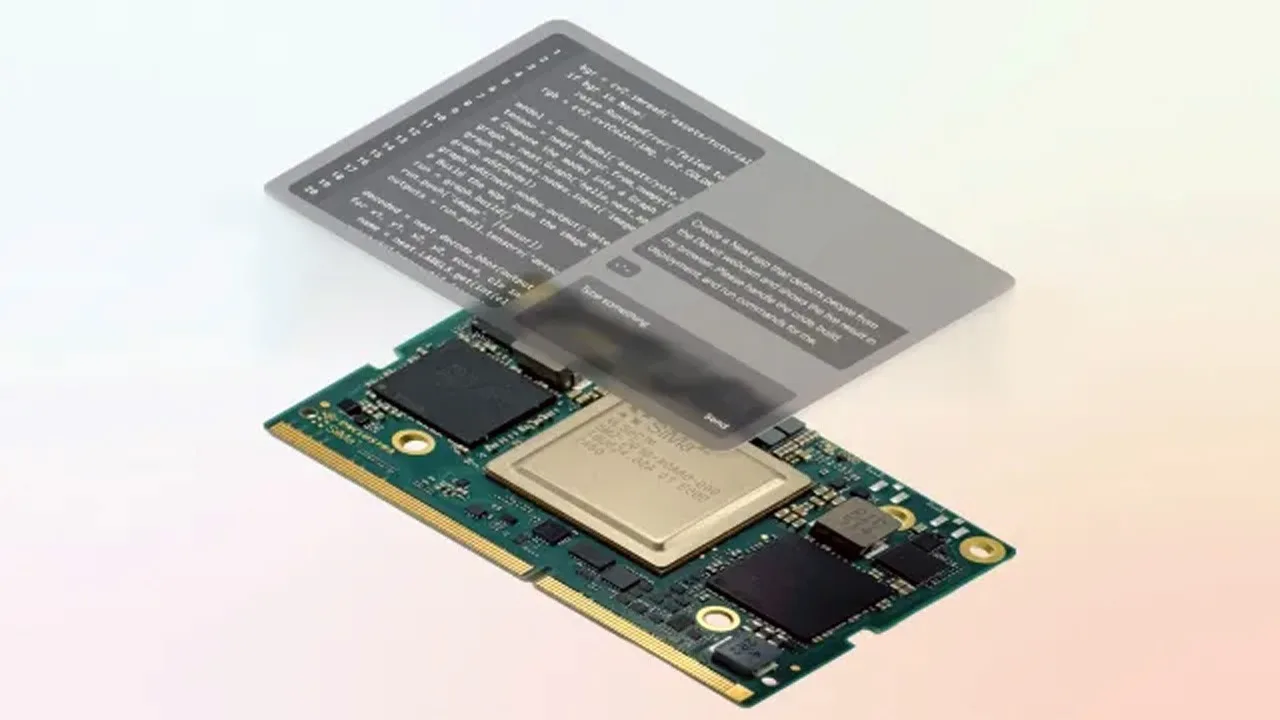
The race to deploy Physical AI is no longer just about building smarter models. It is increasingly about reducing the time, cost, and engineering effort needed to move those models into real-world systems. With the launch of SiMa.ai Palette Neat agentic AI, the company is positioning itself around that challenge, introducing what it describes as the industry's first agentic development environment built specifically for Physical AI applications.
The announcement combines software, silicon, and deployment tools into a single platform designed for industries such as robotics, automotive, drones, industrial automation, aerospace, defence, healthcare, and smart vision systems.
A Shift Toward Natural Language Development
One of the most notable aspects of the launch is the move toward natural language-driven development. According to SiMa.ai, Palette Neat allows developers to use plain English commands to build and deploy Physical AI systems.
The platform combines an open-source development environment, a Physical AI execution library, and an agent workflow layer. Rather than requiring teams to spend months adapting applications to new hardware, the system is designed to automate much of the integration and deployment process. The goal is straightforward: reduce development cycles from months to days, and in some cases even hours.
This approach also allows organisations to reuse existing application code, helping preserve a large portion of previous software investments while reducing migration challenges.
Breaking Hardware Dependency
A major theme behind the launch is reducing dependence on traditional GPU-centric development models. SiMa.ai says the combination of Palette Neat and its pin-compatible hardware architecture is aimed at lowering the barriers associated with changing AI hardware platforms.
The company introduced its production-ready Modalix MLSoC System-on-Module alongside a new PCIe companion card form factor. The hardware is designed to run multiple large language models, vision workloads, and sensor-based applications simultaneously while operating below 10 watts of power.
By maintaining compatibility with existing system designs, organisations can adopt the platform without redesigning carrier boards or rebuilding software stacks from scratch.
What This Means for Physical AI
The launch reflects a broader trend in Physical AI development. As AI moves beyond data centres and into machines, vehicles, industrial systems, and edge environments, simplicity and deployment speed are becoming as important as raw compute performance.
The focus on edge AI development, natural language programming, combined with the company's effort toward dismantling the GPU moat in physical AI, suggests an attempt to make Physical AI deployment more accessible to engineering teams working under tight timelines and resource constraints.
Read More:
Genesys announces 2026 APAC Partner Award Winners in Bangkok
HPE unifies partner programmes into a channel growth model
Partner Pulse: TO THE NEW | Cloud and Digital Transformation Partner (India)
Dell PowerEdge Servers Adopt AMD Instinct MI350P PCIe GPUs for On-Prem AI Scaling





 2 Min read