
Why Indian IT distributors are shifting to recurring revenue models

The IT distribution landscape is undergoing one of its biggest transformations in decades. Traditional distribution models built around product fulfilment and quarterly sales are gradually giving way to service-led engagements, subscription-based offerings and recurring revenue. For distributors, the challenge is no longer limited to moving products through the channel. Instead, they are increasingly expected to help partners build sustainable businesses around Cloud, managed services and AI-driven solutions.
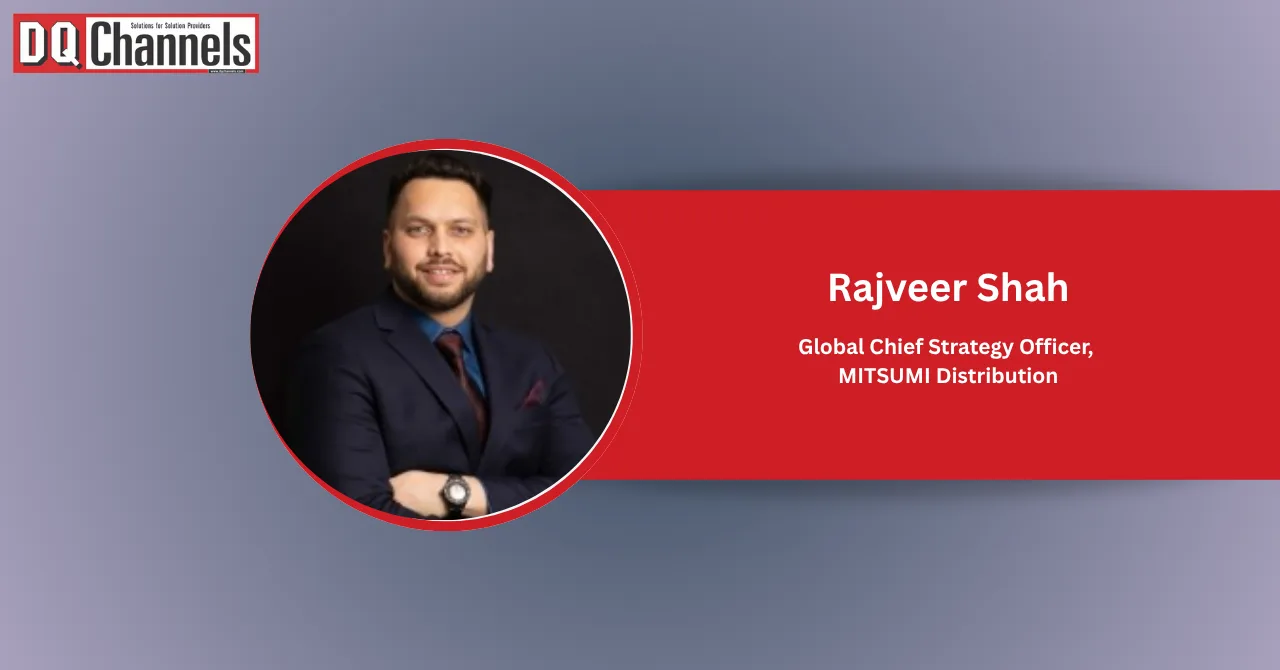
According to Rajveer Shah, Global Chief Strategy Officer, MITSUMI Distribution, this shift is changing the very foundation of distribution. Rather than focusing only on logistics and product availability, distributors must now invest in partner enablement, financial support and service capabilities that strengthen long-term customer relationships.
"The distributor's role has fundamentally changed. We are no longer simply moving boxes from vendor to partner; we are building the infrastructure that enables long-term relationships."
He believes the economics of the industry are increasingly rewarding customer retention alongside customer acquisition, making recurring revenue an essential pillar of future channel growth.
Managed services distribution is becoming central to channel growth
The transition towards recurring revenue is influencing how distributors organise their operations and expand their portfolios. While traditional product distribution continues to remain an important business, managed services and subscription-led offerings are steadily becoming a larger strategic priority.
Shah explains that MITSUMI is expanding its managed services distribution alongside its traditional product portfolio, recognising that long-term value is increasingly created through ongoing customer engagement rather than one-time transactions.
"Partners need a distributor who understands annuity models, not just quarterly sell-through."
Drawing on the company's experience across markets in the Middle East and Africa, he notes that this transition has accelerated significantly over the past two to three years. As a result, distributors are having to rethink logistics, financing, enablement programmes and operational processes around recurring revenue cycles instead of transactional sales models.
Although MITSUMI does not publicly disclose the contribution of Cloud, subscriptions or managed services to its business, Shah says the company's strategic direction is clear. The objective is to strengthen traditional distribution while simultaneously expanding service-led capabilities, enabling partners to work with a distributor that supports both product and recurring business models.
Channel partners need operational support, not just product fulfilment
Building a recurring revenue business requires far more than selling subscriptions. Shah believes partners need distributors that help them develop new operational capabilities to support long-term customer relationships.
He explains that MITSUMI invests in structured training programmes that focus on solution selling rather than product knowledge alone. The company also supports partners through marketing initiatives designed to maintain customer engagement beyond the initial sale and throughout subscription renewal cycles.
"Moving to recurring revenue requires financial support and new business capabilities, not just a different sales approach."
Financial enablement is equally important. Subscription models often create a timing gap between upfront costs and monthly customer revenue, making credit support a critical component of the distributor's role. According to Shah, distributors that focus solely on logistics cannot effectively help partners navigate this transition.
AI and Cloud are reshaping distributor expectations
The rapid growth of AI and Cloud technologies is also changing what channel partners expect from distributors. Instead of simply offering product availability and competitive pricing, partners increasingly seek distributors that provide technical expertise, market intelligence and strategic guidance.
Shah says MITSUMI's entry into India remains in its early stages, with the organisation actively listening to partners and understanding evolving market requirements. Even at this stage, however, one trend is already evident.
"Partners are looking for a distributor who can grow with them, one with a credible roadmap into Cloud and AI, not just a current catalogue."
Leveraging experience across 36 markets in the Middle East and Africa, the company intends to apply those learnings as it continues building its India operations.
Digital marketplaces are changing the economics of distribution
Digital marketplaces, consumption-based pricing and Cloud subscriptions are compressing the traditional transactional layer of distribution. Shah believes distributors that ignore this structural shift face considerable strategic risk.
Although MITSUMI is not currently active on marketplace platforms, he acknowledges that procurement is becoming increasingly digital and that consumption-based pricing is rapidly becoming standard across Cloud and AI workloads.
Rather than competing within digital marketplaces, he argues that distributors must create value above the platform layer by strengthening customer relationships, extending credit facilities and delivering enablement services that cannot easily be automated.
"The distributor's value proposition must sit above the platform layer, not within it."
Services will define the future of IT distribution
Looking ahead to 2030, Shah believes scale and portfolio breadth will remain important for distributors seeking to establish themselves in India's diverse market. However, he expects services to become the defining differentiator over the longer term.
MITSUMI is actively expanding its brand portfolio while also preparing to introduce broader managed services capabilities as its India business grows. The company already operates its own Cloud platform across Africa, and Shah indicates that similar service capabilities could become part of its long-term strategy for India.
"The distributors who will lead in India by the end of this decade are those building service infrastructure today, not waiting for demand to force their hand."
Conclusion
The shift towards recurring revenue is redefining the role of IT distributors across the channel ecosystem. As Cloud, AI and subscription-based business models continue to expand, distributors are expected to provide far more than product fulfilment. Rajveer Shah's perspective suggests that long-term success will increasingly depend on service infrastructure, financial enablement, technical expertise and ecosystem development. For distributors and partners alike, the future appears less focused on individual transactions and increasingly centred on building sustained customer value through long-term engagement.
Read More:
AI Channel Partners: Why Advisory Services Will Define the Next Growth Phase
The missing layer in enterprise AI: Why data trust is becoming the new priority


 2 Min read