FAIITA urges government to declare global memory and SSD shortage Force Majeure

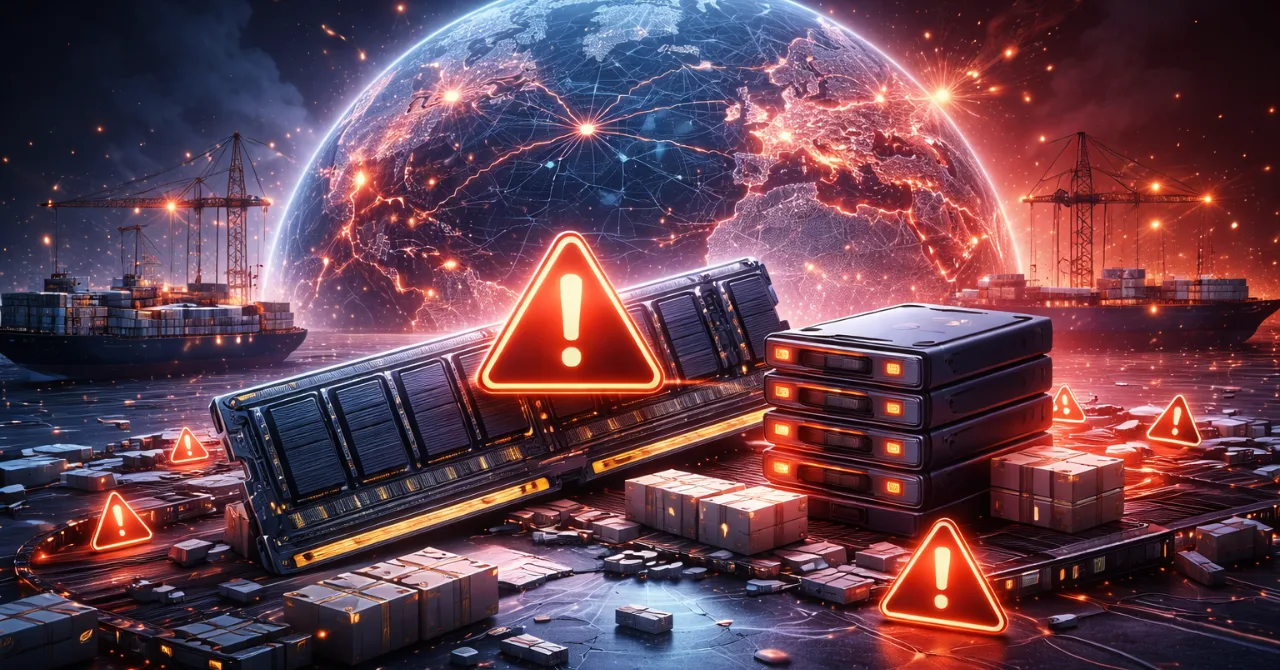
Federation of All India IT Associations (FAIITA) has raised an alarm over a growing global supply chain disruption affecting the desktop computer ecosystem and has urged the Government of India to declare the ongoing DRAM and SSD shortage as a Force Majeure event.
In a formal representation to the Government e-Marketplace (GeM), FAIITA highlighted that the global semiconductor industry is currently facing an extraordinary supply imbalance due to the rapid expansion of AI infrastructure and hyperscale data centres, which is diverting manufacturing capacity away from conventional PC components.
The representation was addressed to Ajit B Chavan and outlines the severe challenges faced by thousands of Indian small and medium IT businesses that depend on a stable supply of memory modules and storage components for desktop systems.
Rising Component Prices and Extended Delivery Timelines
According to industry data cited by FAIITA, the shortage has triggered unprecedented price increases in key PC components since mid-2025.
DDR4 RAM prices have surged from Rs. 1,900 to Rs. 7,200.
DDR5 RAM prices have increased from Rs. 2,850 to Rs. 11,500.
1TB SSD prices have jumped nearly 350%, rising from Rs. 5,200 to Rs. 18,900.
In addition to price volatility, delivery timelines for memory-dependent hardware have stretched to as long as eight months, making it extremely difficult for suppliers and system integrators to meet contractual delivery obligations.
Industry Leadership Drives Policy Representation
The issue was formally brought to the government’s attention through the leadership of Navin Gupta and strategic guidance from Kaushik Pandya.
FAIITA coordinated with global OEMs and studied market insights from companies such as Micron Technology and research firms like IDC to present a data-backed case for government intervention.
Navin Gupta emphasised that the current supply disruption is beyond the control of IT channel partners and system integrators.
“These circumstances are extraordinary, unforeseen, and completely beyond the control of channel partners. This disruption arises from a global semiconductor crisis rather than any vendor default. Without immediate policy support, genuine GeM sellers face unfair penalties and significant financial losses.”
Key Policy Demands
FAIITA has urged the Ministry of Electronics and Information Technology (MeitY) and the Department of Expenditure to intervene and introduce policy relief similar to the measures implemented during the COVID-19 pandemic.
The association has proposed several immediate steps:
Force Majeure Recognition
Recognise the DRAM and SSD shortage as an Act of God event to protect sellers from contractual penalties and liquidated damages.Price Variation Clauses
Allow revisions in government procurement contracts based on global component price benchmarks.Advisory for GeM Sellers
Issue a government circular safeguarding the performance ratings of genuine sellers affected by supply chain disruptions.Supply Chain Monitoring Task Force
Establish a dedicated body to monitor global component price trends and provide regular procurement guidance.
Protecting India’s IT Hardware Ecosystem
FAIITA’s appeal comes at a critical time when government procurement traditionally peaks toward the end of the financial year. Without timely policy intervention, many IT hardware vendors and system integrators risk penalties for delays caused by global component shortages.
By seeking official recognition of the crisis, the association aims to safeguard thousands of businesses in India’s IT channel ecosystem while ensuring continuity in government technology procurement.
Read More:
AI PCs and the channel shift: Hype to reality
Lenovo AI channel strategy: How Lenovo 360 is transforming partner growth in the AI era




 2 Min read